License-Plate Cameras Track People Without Warrants
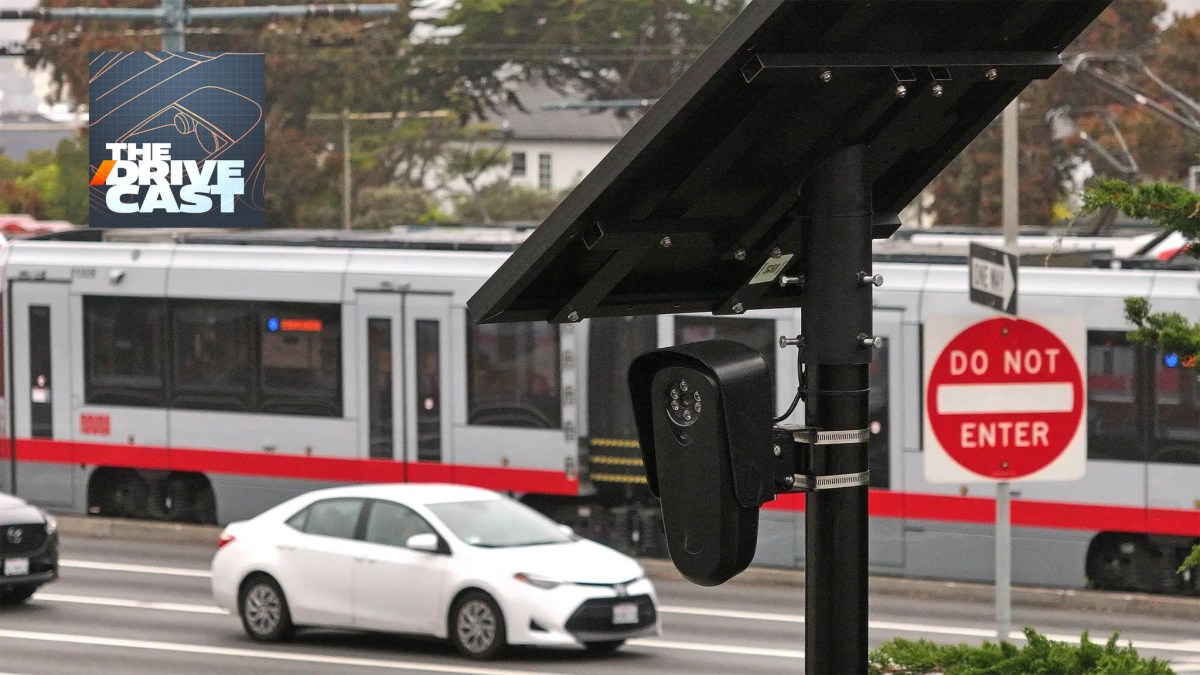
AI-enhanced automated license plate reader (ALPR) cameras now deployed by roughly 40% of US law enforcement agencies capture every passing vehicle with no warrant or individualized suspicion required. Vendors such as Flock Safety store data in searchable databases accessible to thousands of officers. Active legal challenges and new state legislation are testing where Fourth Amendment protections apply to AI-assisted mass location tracking.
What the technology does
AI-enhanced automated license plate reader (ALPR) systems go beyond simple OCR. A Department of Homeland Security market survey (June 2025), cited by the Boston Bar Journal (Winter 2026), notes that modern ALPR systems can read much more than plates: they can detect dents, search for specific bumper stickers, process specialty tags, and recognize rideshare logos. Private vendors such as Flock Safety, Motorola Solutions, and PlateSmart supply cameras and databases to law enforcement; those databases can be shared automatically across departments nationwide, with no warrant required to conduct a search (Institute for Justice, August 2025).
Scale and documented abuses
Approximately 40% of US law enforcement agencies now use ALPR systems, per Boston Bar Journal research citing Police Chief Magazine (Oct. 2025). The Institute for Justice's Plate Privacy Project, launched in August 2025, documents concrete abuses: one police chief used cameras to track his ex-girlfriend and her new boyfriend more than 200 times; another officer allegedly tracked a woman he was dating nearly 180 times over two months before resigning and facing criminal charges (IJ, August 2025). ALPR data builds persistent movement histories over months or years, enabling retrospective tracking of individuals who have never been suspected of any crime.
Legal landscape
Courts have not yet established a national standard. The Massachusetts SJC (2020) permitted warrantless access to four bridge-mounted cameras but noted that a more extensive network could trigger constitutional protection. The Fourth Circuit (2021) ruled that Baltimore's aerial surveillance program violated the Fourth Amendment because it enabled deducing the "whole of individuals' movements." In January 2026, a federal district court ruled in favor of the City of Norfolk's 170-camera Flock Safety network, distinguishing it from Carpenter v. United States on continuity and density grounds, though it acknowledged the constitutional calculus could shift as camera networks expand (Boston Bar Journal, Winter 2026). The EFF and ACLU of Northern California filed suit in November 2025 challenging ALPR use under the Fourth Amendment and California's right to privacy.
Regulatory developments
Washington state SB 6002, imposing new restrictions on ALPR deployments including Flock Safety systems, took effect March 30, 2026. The Institute for Justice is pursuing model legislation in state legislatures alongside its litigation campaign. A Congressional Research Service report (July 2025) provides a detailed federal-law background on ALPRs and Fourth Amendment doctrine.
Relevance to AI practitioners
ALPR surveillance is an active test case for how courts and legislatures apply privacy doctrine to AI-powered, continuously collecting systems. For practitioners deploying computer vision or location-linked AI in public contexts, the evolving legal landscape - active litigation, new state laws, and unresolved Fourth Amendment doctrine - is practical context for compliance and system-design decisions.
Key Points
- 1AI-enhanced ALPR cameras photograph all passing vehicles with no warrant required, feeding shared databases searchable by thousands of officers across jurisdictions.
- 2Courts have not settled a national Fourth Amendment standard; 2026 developments include a Norfolk ruling upholding a 170-camera network and Washington state SB 6002 imposing new restrictions.
- 3For AI practitioners, ALPR litigation is a live test of how privacy doctrine applies to continuously collecting, AI-assisted public surveillance systems.
Scoring Rationale
ALPR surveillance with AI enhancement is a real and active policy/legal story relevant to AI practitioners in computer vision and data collection. However, the original source is a podcast from a car media outlet rather than a primary reporting or legal/policy outlet. Active litigation (IJ Norfolk case, EFF California suit) and Washington state SB 6002 add timeliness, but the story covers ongoing trends rather than a distinct new development. Score reflects solid civil-liberties and AI-governance relevance with limited direct practitioner action signal.
Sources
Public references used for this report.
Practice interview problems based on real data
1,625 SQL & Python problems across 15 industry datasets — the exact type of data you work with.
Try 250 free problems