Jensen Huang Says Nvidia Loses China Market Share
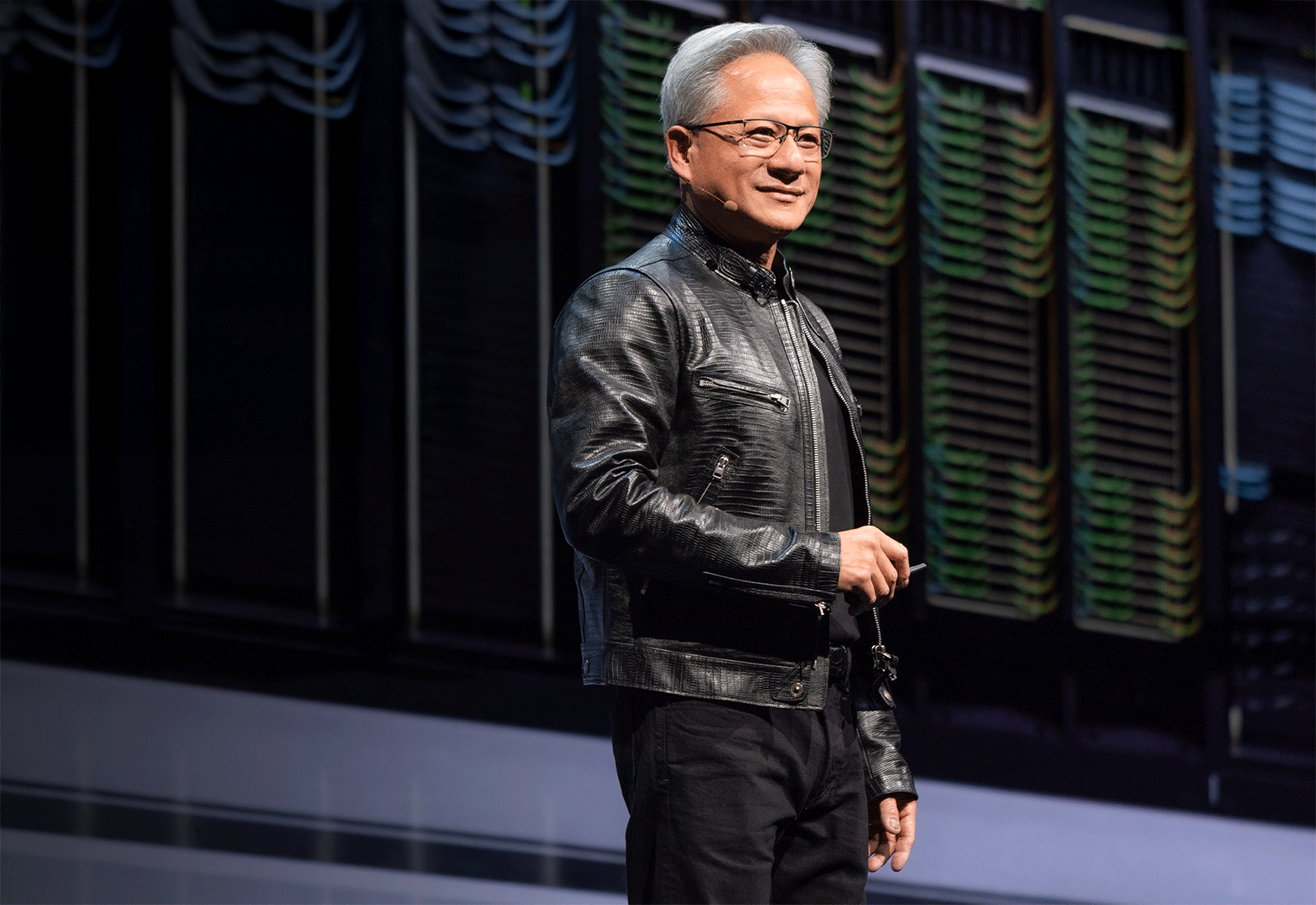
At a Citadel Securities event, Nvidia CEO Jensen Huang said the company has gone "from 95% market share to 0%" in China, with China effectively a zero column in Nvidia's forecasts, according to coverage by Quartz and TechRadar. Tom's Hardware reports Huang also said, "In China, we have now dropped to zero," and characterised U.S. export controls as having "already largely backfired." Reporting by Quartz and others links the loss to successive U.S. export restrictions on high-end AI GPUs and parallel Chinese moves to adopt domestic alternatives. Tom's Hardware cites a Bernstein estimate that Nvidia's China share could fall from 66% in 2024 to roughly 8% in coming years. Quartz notes investors have largely priced the loss in, while reporting that Beijing-backed procurement and domestic chips such as Huawei's Ascend have reduced Nvidia's addressable market in China.
What happened
At a Citadel Securities event, Nvidia CEO Jensen Huang said "we went from 95% market share to 0%," and that "In China, we have now dropped to zero," according to reporting by Quartz and TechRadar. Tom's Hardware quotes Huang as saying U.S. export restrictions "have already largely backfired." Coverage links the decline to successive U.S. export controls on advanced AI accelerators and to Chinese adoption of domestic alternatives, as reported by Quartz, TechRadar, and Tom's Hardware. Tom's Hardware cites a Bernstein estimate that Nvidia's share of China's AI GPU market could fall from 66% in 2024 to roughly 8% in coming years. Quartz reports that investors have largely priced a China loss into Nvidia's valuation.
Technical details / Editorial analysis - technical context
Industry-pattern observations: Export controls that restrict access to the most advanced accelerators create a clear floor for substitution, because model builders can either wait, route around controls, or adopt domestic hardware and software stacks. Reporting notes Chinese vendors and state-linked procurement programs have accelerated development of alternatives such as Huawei's Ascend line, which reduces demand for foreign high-end GPUs (Quartz, Tom's Hardware). Analysts cited in the coverage describe a layered ecosystem where compute, software, and talent interact; removing one vendor from a market often prompts local firms and integrators to fill the gap.
Context and significance
The reported collapse of Nvidia's China business matters because China has been one of the largest markets for data-center GPUs and houses a large pool of AI researchers, a point underscored in Quartz and TechRadar coverage. The shift alters where large-scale training and inference capacity will be procured and supported. Tom's Hardware and TechRadar highlight both revenue implications and strategic tradeoffs arising from industrial policy on both sides: U.S. curbs on exports and Chinese procurement and domestic chip development.
What to watch
Editorial analysis
For practitioners building training pipelines and planning capacity procurement, the episode illustrates how geopolitics changes supplier risk. Firms deploying large GPU fleets should treat regional availability and vendor diversification as operational variables. Industry observers should also monitor the maturation of Chinese software stacks and interoperability work, since model portability determines how rapidly buyers can switch to local hardware.
Reported quotes and sourcing
Quartz and TechRadar carried Huang's direct remark that the company went "from 95% market share to 0%." Tom's Hardware reported Huang saying the policy "has already largely backfired." Bernstein's market-share projection is cited in Tom's Hardware. TechRadar and Quartz reported on investor reaction and related SEC disclosures. All high-stakes numbers and direct quotes in this summary are attributed to those outlets in text.
Bottom line
Industry context
Observers will track several indicators reported in the coverage: licensed export approvals from the U.S. Treasury and Commerce Department, Chinese procurement rules and state-backed purchasing, announcements and benchmarking from domestic silicon vendors, and SEC disclosures from Nvidia on China-related charges and revenue impacts. TechRadar reports Nvidia recognised $4.5 billion in charges tied to export restrictions in the first fiscal quarter of 2026; that kind of disclosure is a concrete financial signal to watch.
The coverage documents a rapid contraction of a major vendor's addressable China market following export limits and reciprocal Chinese measures. For practitioners, the episode reinforces that procurement, regional compliance, and hardware-software portability must be part of long-term capacity planning.
Key Points
- 1U.S. export controls and reciprocal Chinese procurement have coincided with Nvidia's reported drop from high share to effectively zero in China, accelerating local substitution.
- 2When a major supplier is excluded, domestic vendors and procurement rules can capture large portions of demand, shifting where training and inference capacity is sourced.
- 3Practitioners should treat regional availability and vendor diversification as operational risks because geopolitics can rapidly change hardware supply footprints.
Scoring Rationale
The story reports a major, observable market shift for a leading GPU vendor that affects global compute supply and procurement planning, but coverage is not a fresh breaking event and much of the reporting dates to October 2025, reducing immediacy.
Sources
Public references used for this report.
Practice interview problems based on real data
1,625 SQL & Python problems across 15 industry datasets — the exact type of data you work with.
Try 250 free problems