KPMG: AI Spurs India Data Centre Market Growth
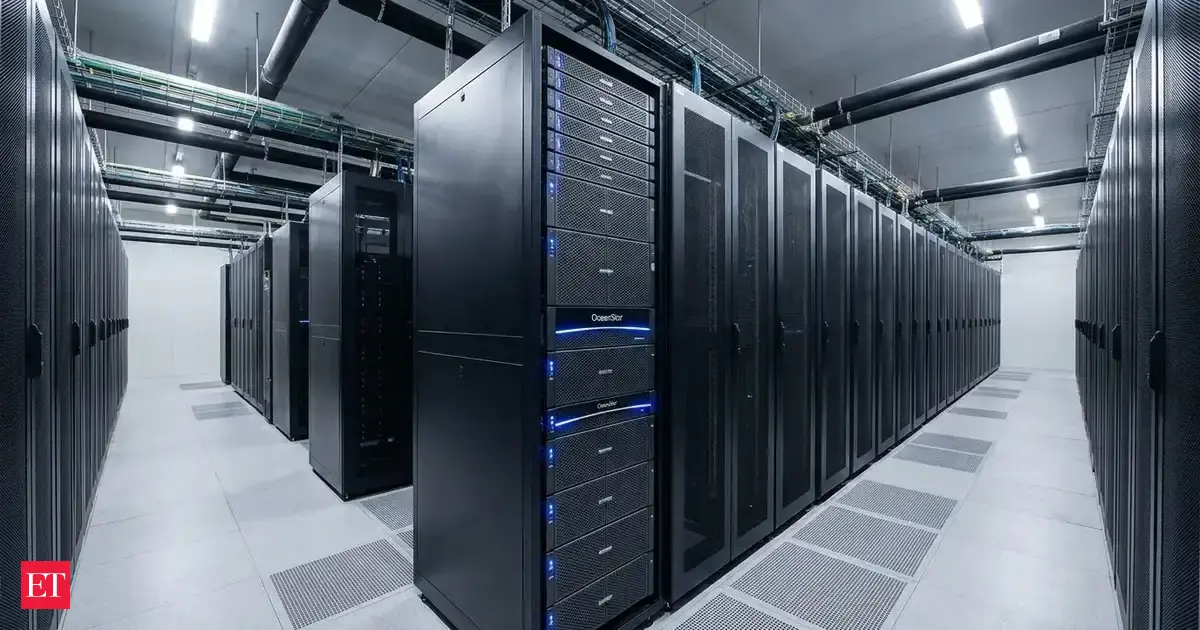
The KPMG report "India's Data Centre Revolution: The Integrated Lifecycle Blueprint (2026-2030)" projects India's total data centre sector revenue will reach approximately $45.69 billion by 2033. Per the report, the AI-optimised data centre market is expected to grow from about $588.6 million in 2024 to $3.55 billion by 2030, a 35.1% CAGR. The report flags that many older facilities use legacy air-cooling systems unsuitable for high-density GPU clusters, and it describes execution complexity caused by fragmented providers across construction, cooling, technology and operations. The report proposes an "integrated lifecycle partner" model to centralise land, power, AI deployment, compliance and maintenance. It also highlights the Digital Personal Data Protection (DPDP) Act and rising ESG priorities as forces accelerating local infrastructure demand.
What happened
The KPMG report "India's Data Centre Revolution: The Integrated Lifecycle Blueprint (2026-2030)" projects India's total data centre sector revenue will reach approximately $45.69 billion by 2033. Per the report, the AI-optimised data centre market is expected to grow from about $588.6 million in 2024 to $3.55 billion by 2030, a 35.1% compound annual growth rate. The report notes many older facilities still rely on legacy air-cooling systems that cannot efficiently support high-density GPU clusters used for AI workloads. The report states, "With one billion internet users and businesses rapidly adopting cloud services, building domestic data centres is now a necessity."
What the report identifies as structural frictions
The consultancy describes the sector's primary challenge as execution complexity, driven by a fragmented supplier base across construction, cooling, technology and operations, often creating delays and unclear accountability. To address that, the report proposes an "integrated lifecycle partner" model where a single provider would oversee land acquisition, power procurement, AI deployment, compliance and maintenance. The report also highlights the role of the Digital Personal Data Protection (DPDP) Act in increasing onshore data residency demand and notes investor attention to ESG factors as influencing operator choices.
Editorial analysis - technical context
Industry-pattern observations: AI training and inference workloads typically push facilities toward higher rack power densities, concentrated GPU deployments and tighter SLAs for latency and throughput. In comparable markets, this shift increases demand for advanced cooling (liquid, immersion) and upgraded power distribution, and it often exposes limitations in legacy air-cooled colocation sites.
Industry context
Editorial analysis
Regulatory moves that restrict cross-border data flows, like India's DPDP Act, generally accelerate local capacity builds by global cloud and enterprise customers. Separately, investor emphasis on ESG drives operators to prioritise energy efficiency and decarbonisation, which affects site selection, cooling technology, and power procurement strategies. The report's emphasis on an integrated delivery model aligns with broader trends toward vertically coordinated data-centre services in fast-growing markets.
What to watch
- •Regulatory clarifications and guidance under the DPDP Act that materially change cross-border operations.
- •Large-scale investments in liquid or immersive cooling and corresponding supply-chain moves for transformers, UPS and switchgear.
- •Emergence of integrated lifecycle providers or consortia that combine land, power contracts and operations.
- •How ESG-linked financing and corporate procurement criteria influence site energy sourcing and design.
Key Points
- 1AI workloads increase demand for high-density GPU racks, pushing operators to upgrade from legacy air-cooling to liquid or immersion cooling solutions.
- 2Regulatory moves such as India's DPDP Act are accelerating onshore data-centre builds as enterprises seek physical data residency.
- 3KPMG projects India's total data-centre revenue near $45.69B by 2033, indicating a large planned infrastructure build-out opportunity for operators and integrators.
Scoring Rationale
The report quantifies large market growth and identifies operational bottlenecks relevant to engineers and infrastructure planners. It is nationally significant for India but not a global paradigm shift.
Practice with real Ad Tech data
90 SQL & Python problems · 15 industry datasets
250 free problems · No credit card
See all Ad Tech problems