ICRA 2026 Convenes Robotics Community in Vienna
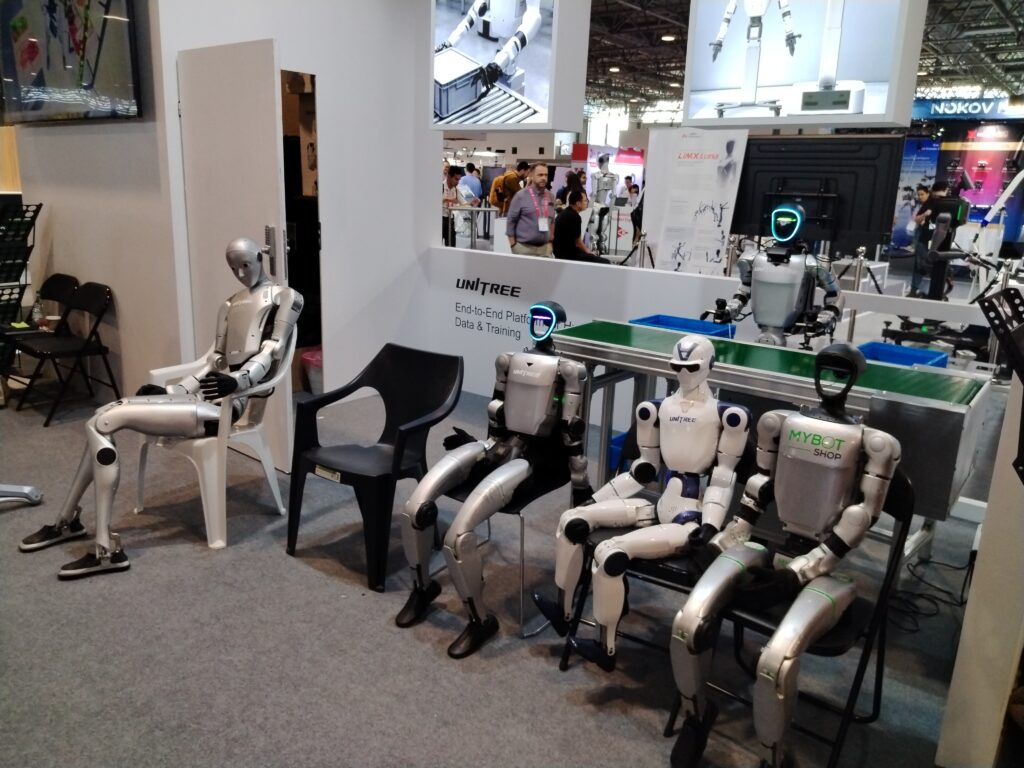
The 2026 IEEE International Conference on Robotics and Automation (ICRA) ran June 1-5, 2026 in Vienna at Messe Wien, drawing thousands of researchers and companies to what Robohub's first-person recap calls a showcase increasingly focused on closing the gap between lab demonstrations and real-world deployment. In a plenary titled "A Tale of Two Cultures: Can Agentic Coding Close the Gap?", UC Berkeley's Ken Goldberg argued that robot manipulation remains data-starved compared to vision-language models, noting that training a modern VLM takes the equivalent of roughly 100,000 years of physical experience. On the exhibition floor, robotic hand dexterity, rather than humanoids, was the standout trend, exemplified by Chinese startup TARS's DexHand, a 21-degree-of-freedom hand that won a Guinness World Record for wiring-harness insertion speed. The UK's ARIA research agency also detailed its Smarter Robot Bodies funding program targeting dexterity and locomotion bottlenecks.
For robotics practitioners, this recap is useful less as news and more as a snapshot of where the field's hardest open problems currently sit: not humanoid form factors, but data scarcity for manipulation and the mechanical/control gap in dexterous hands.
What happened
ICRA 2026 was held June 1-5 at Messe Wien in Vienna, and Robohub's Ella Scallan published a first-person reflection covering its workshops, exhibition floor, and plenary talks (Robohub). In the conference's flagship plenary, Ken Goldberg of UC Berkeley and Ambi Robotics argued that while internet-scale data has effectively solved computer vision and language modeling, robot manipulation has state spaces exceeding 50 dimensions with far too little training data, estimating that current vision-language model training data is equivalent to about 100,000 years of physical experience. He outlined four paths to closing that gap: simulation, world models, human teleoperation, and real production data, drawing on his own 22 years running the robotic bin-picking company Ambi Robotics as an example of the fourth approach. Separately, Stefanie Tellex of Brown University presented work on robots understanding complex, goal-based commands in partially observed environments, including a proposed "grounded Turing test" for embodied AI.
Technical context
On the exhibition floor, Robohub reports that dexterous robotic hands, not humanoids, were the standout capability trend this year. Chinese startup TARS, founded 18 months earlier by Dr. Ding Wenchao, showed its DexHand, a hand replicating the human wrist's 21 degrees of freedom that set a Guinness World Record for flexible wiring-harness insertion and can reportedly distinguish surface texture via tactile feedback in real time. The UK's ARIA research agency (Advanced Research and Invention Agency) presented its Smarter Robot Bodies program, split into robot dexterity and robot locomotion tracks; ARIA has separately disclosed roughly 56 million pounds in dexterity-program funding across dozens of research teams, with a locomotion track set to launch in early 2027.
For practitioners
Goldberg's framing is a useful checkpoint for teams building manipulation systems: if internet-scale data isn't available for your task, the practical options remain simulation (strong for locomotion, weaker for contact-rich manipulation), world models (still limited by physics fidelity), teleoperation (highest quality but low volume), or harvesting data from robots already in production. Teams evaluating dexterous-hand hardware should treat competition-style benchmarks like TARS's wiring-harness record as narrow capability demonstrations rather than evidence of general-purpose dexterity.
What to watch
Whether Goldberg's agentic-coding approach to combining model-free and model-based manipulation methods produces published results beyond Ambi Robotics' internal deployment; ARIA's robot-locomotion program launch in early 2027; and whether TARS and similar dexterous-hand startups publish benchmarks beyond single-task speed records.
Key Points
- 1ICRA 2026 in Vienna (June 1-5) shifted focus from proving robot capability toward closing the gap to reliable real-world deployment.
- 2Ken Goldberg's plenary highlighted that robot manipulation training data lags vision-language models by roughly 100,000x in physical-experience equivalents.
- 3Dexterous robotic hands, led by demonstrations like TARS's 21-DOF DexHand, emerged as the exhibition floor's standout trend over humanoids.
Scoring Rationale
A substantive first-person recap of a top-tier robotics conference with genuine research signal (Goldberg's data-gap framing, ARIA's dexterity funding, TARS's hand demo), useful to practitioners tracking embodied-AI research trends, but it is a single-source conference reflection rather than a discrete news event with independent verification, which caps it below the 'notable' tier.
Sources
Public references used for this report.
Practice interview problems based on real data
1,625 SQL & Python problems across 15 industry datasets — the exact type of data you work with.
Try 250 free problems