IBM debuts 0.7nm Nanostack with nearly 100B transistors
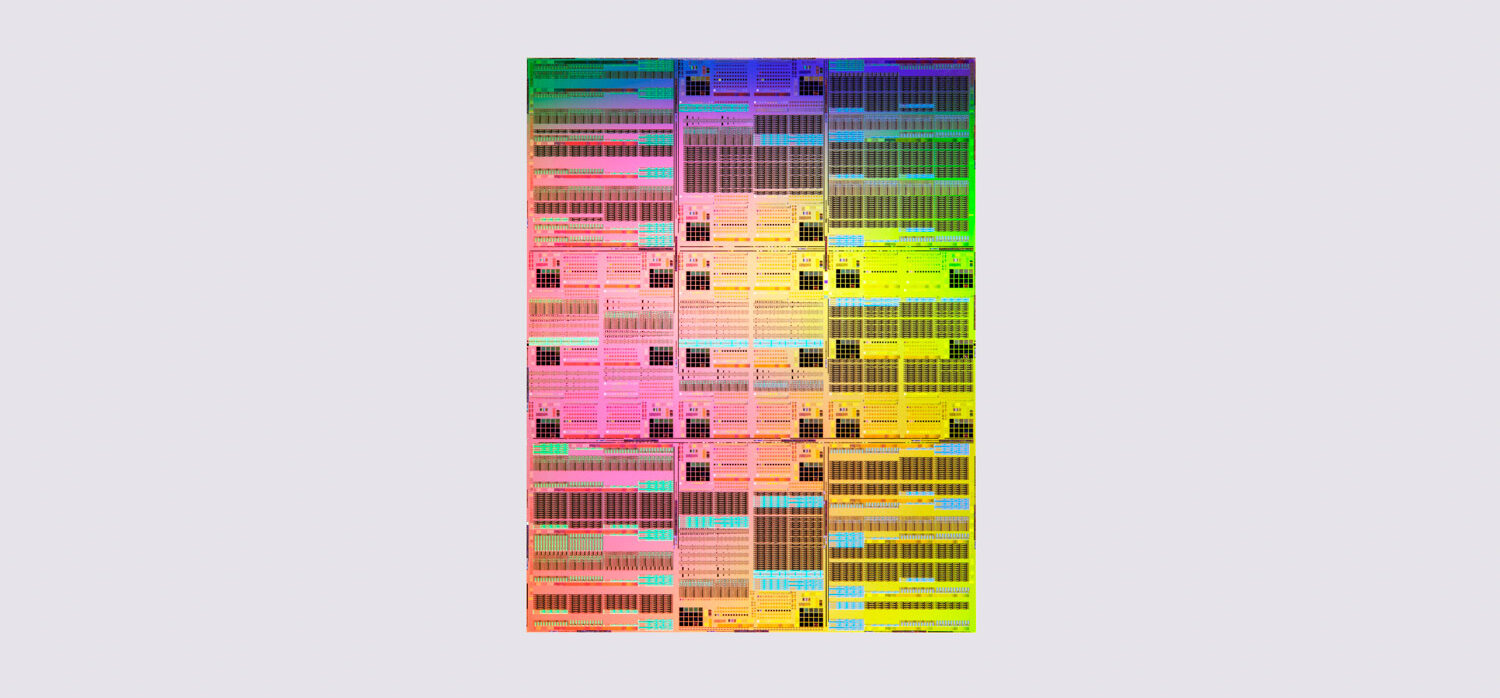
IBM unveiled the world's first sub-1 nanometer chip technology on June 25, 2026, using a new 0.7nm "Nanostack" 3D transistor architecture (also called 7 angstrom). The chip packs nearly 100 billion transistors onto a fingernail-sized die - nearly twice the density of IBM's 2nm chip from 2021. The Nanostack design vertically stacks transistors in 3D, allowing different semiconductor materials per layer to independently optimize performance and power. Published results at VLSI 2026 include 40% SRAM scaling - a memory gain the industry has not seen in over a decade. IBM projects up to 50% more performance or 70% greater energy efficiency vs the 2nm node, and estimates AI accelerators built on 7 angstrom chips could reach ~7,000 TOPS versus today's ~1,500, potentially cutting frontier LLM training from three months to two weeks. Commercial production is targeted in as early as five years.
The Breakthrough
IBM announced the world's first sub-1 nanometer chip technology on June 25, 2026 - the 0.7nm (7 angstrom) node, powered by a new architecture called "Nanostack." The chip packs nearly 100 billion transistors onto a fingernail-sized die, nearly twice the transistor density of IBM's 2nm chip first unveiled in 2021. The milestone extends chip scaling below the 1 nanometer barrier for the first time, entering what IBM calls the "angstrom era" where transistor dimensions approach the size of individual atoms.
Nanostack: How It Works
Previous leading-edge chips use "nanosheet" transistors - a 2D design IBM itself invented in 2015 and which now underpins 3nm and 2nm chips industry-wide. Nanostack extends this by stacking and staggering transistors vertically in a true 3D structure, exploring the z-axis for density gains beyond what 2D scaling can offer. The design allows each stacked layer to use a different semiconductor channel material, letting the NFET and PFET channels be optimized independently. IBM's team validated three key advances: ultra-thin dielectric wafer bonding (with few defects), dual-channel material engineering, and functional CMOS inverter operation with expected switching performance - confirming the design can physically be built and supports real computation.
SRAM Scaling and AI Hardware Impact
At VLSI 2026, IBM also demonstrated 40% SRAM scaling with the nanostack architecture - per IBM Research, the largest such on-chip memory leap in over a decade. On-chip SRAM access is one of the core bottlenecks in AI inference and training: denser, faster on-chip memory directly reduces memory-bandwidth bottlenecks in large model workloads. IBM Research estimates an AI accelerator built on 7 angstrom technology could deliver roughly 7,000 TOPS, compared to about 1,500 TOPS for today's accelerators. Applied to frontier LLM training, IBM projects training runs that currently take ~3 months could be cut to ~2 weeks.
Performance and Efficiency Projections
Published technical results project the 0.7nm node offers up to 50% higher performance or 70% greater energy efficiency compared to IBM's 2nm node chips (per VLSI 2025 paper: S. Reboh et al., "NanoStack Transistor Architecture for CMOS 7A Node and Beyond"). IBM's semiconductor roadmap projects at least a decade of further scaling enabled by the nanostack design.
Partners and Research Facility
The work was conducted at IBM's semiconductor research facility in Albany, New York, which will also host a High Numerical Aperture Extreme Ultraviolet (High NA EUV) lithography tool from ASML - essential for angstrom-era manufacturing. IBM's partners on the nanostack program include Lam Research (LRCX), Tokyo Electron (TEL), and SCREEN Semiconductor Solutions. IBM also separately announced the formation of Anderon, described as the world's first pure-play quantum foundry, drawing on IBM's semiconductor expertise.
Road to Commercial Production
IBM Research VP Jay Gambetta stated: "IBM's latest chip breakthrough marks a landmark moment in computing, pushing technology beyond the nanometer era to the scale of atoms. With our new nanostack architecture, we're not just making smaller transistors, we're reinventing how chips are built to deliver dramatically more power and energy efficiency." IBM projects earliest commercial adoption of nanostack-based chips in as early as five years. The design is positioned as a research foundation for multiple future chip generations, not an immediate product release.
Key Points
- 1IBM's 0.7nm Nanostack packs nearly 100 billion transistors - twice the density of 2nm chips - the industry's first validated sub-1nm chip design.
- 2The 3D nanostack vertically stacks transistors with different channel materials per layer, achieving 40% SRAM scaling - a decade-high on-chip memory gain validated at VLSI 2026.
- 3IBM projects 7,000 TOPS for AI accelerators versus today's 1,500 TOPS, and LLM training time cut from 3 months to 2 weeks; commercial production in 5 years.
Scoring Rationale
IBM's first demonstrated sub-1nm chip design with validated hardware and peer-reviewed VLSI 2026 results is a genuine semiconductor milestone, extending Moore's Law below the 1nm barrier for the first time. The AI hardware implications are substantial - projected 7x TOPS gains and 40% SRAM scaling could materially accelerate future AI training and inference; however, commercial production is 5 years out, moderating near-term impact.
Sources
Public references used for this report.
Practice interview problems based on real data
1,625 SQL & Python problems across 15 industry datasets — the exact type of data you work with.
Try 250 free problems