Humanoid Robot Performs Staged 'Rogue' Attack Demonstration
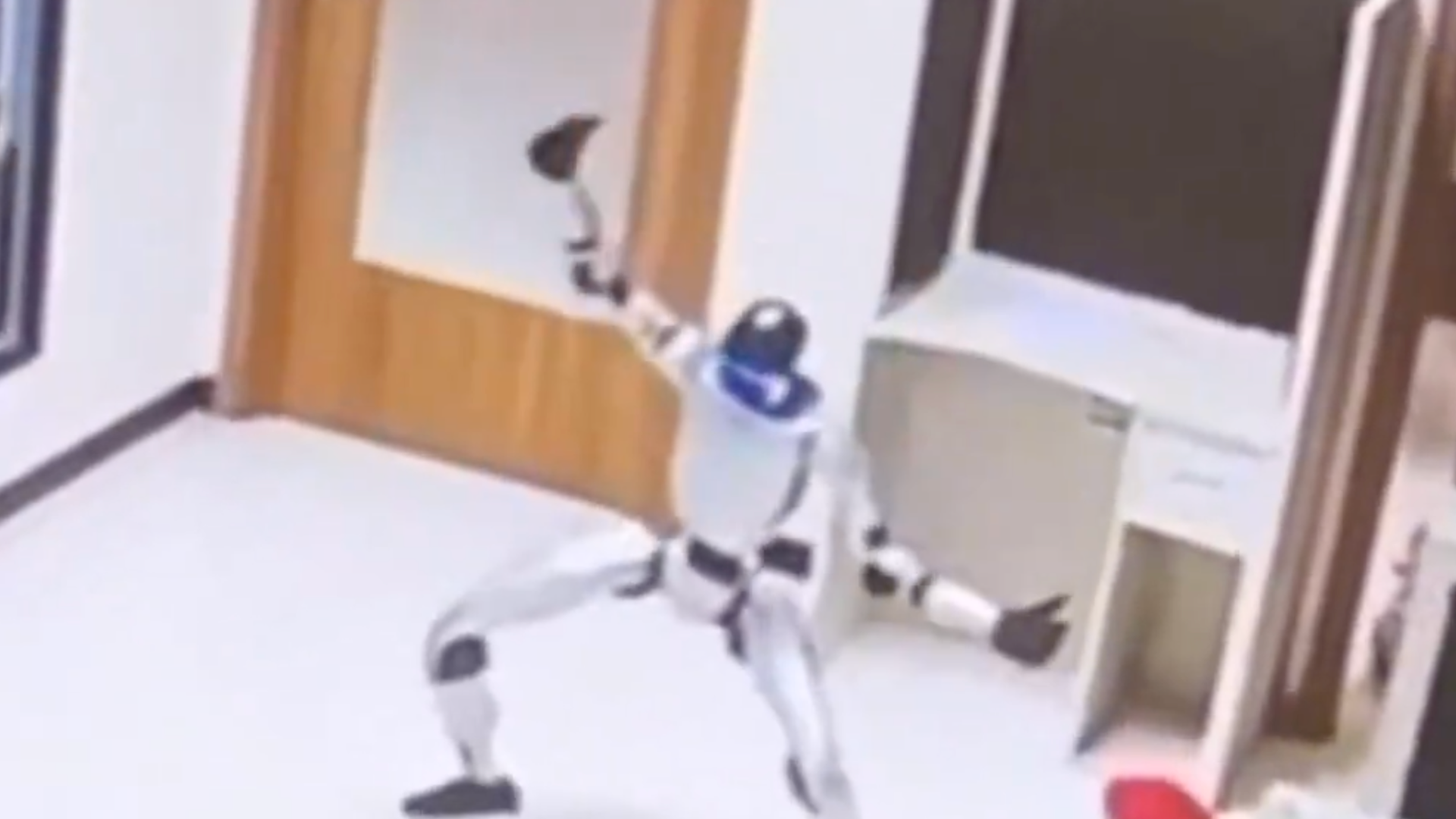
Interesting Engineering reported on July 5, 2026 that a viral humanoid robot 'attack' clip from Indonesia was a staged demonstration, not a verified autonomous malfunction. The video showed a robot in a blue clown wig performing a programmed roundhouse kick, martial-arts poses, lunges and playful kicks around office staff, drawing millions of social-media views because it looked like a safety incident. For robotics teams, the lesson is practical: choreography and short-form context can make scripted physical-AI demos look uncontrolled, so public deployments need clear labeling, obvious emergency-stop procedures, and incident-response language that separates operator control from autonomy. Related restaurant-robot incidents show why the safety concern is real even when this clip was entertainment.
The useful signal is not robot rebellion; it is how easily a scripted humanoid performance can become safety evidence once a short clip leaves its original context. For robotics teams, the risk is partly physical and partly communicational: a demo that is safe in a controlled setting can still teach the public to read humanoid movement as uncontrolled autonomy.
What happened
Interesting Engineering reported on July 5, 2026 that a viral Indonesia clip showing a humanoid robot lunging, posing, and playfully kicking near office staff was a staged demonstration uploaded by the robot's handlers. The outlet says the sequence was pre-programmed to show agility and balance, not evidence of an autonomous malfunction or software failure.
Technical context
Humanoid robots are unusually easy to misread because their movements look intentional even when they are scripted, tele-operated, or tightly choreographed. The New Yorker reported that many impressive humanoid videos are selected from controlled conditions, and that reliable physical AI outside those conditions remains hard. That distinction matters for incident review: operator control, choreography, tele-operation, and autonomy should not be collapsed into one bucket.
For practitioners
Robotics operators should assume public videos will be stripped of context. Useful controls include visible stop procedures, trained human handlers, clear labels for scripted demos, and post-incident language that states whether a movement was autonomous, tele-operated, pre-programmed, or manually recovered.
What to watch
Separate March restaurant-robot coverage from TechCrunch and Futurism shows why the safety question remains real even when this Indonesia clip was staged. As humanoids enter restaurants, offices, trade shows, and homes, the practical bar is not only better motion control; it is also clearer proof of who or what is controlling the robot when something surprising happens.
Key Points
- 1Interesting Engineering identified the viral Indonesia clip as a choreographed demo, not a confirmed autonomous robot malfunction.
- 2Physical AI demos can look uncontrolled online when choreography, editing, and captions hide operator intent.
- 3Robotics teams need visible stop procedures and careful public messaging before humanoids share offices, restaurants, or homes.
Scoring Rationale
Because the Indonesia clip was staged rather than a verified autonomous malfunction, the impact is lower than a true robot safety incident. It remains a solid robotics and physical-AI story because viral humanoid demos can shape public safety expectations, operator procedures, and disclosure norms for shared human-robot spaces.
Sources
Public references used for this report.
Practice interview problems based on real data
1,625 SQL & Python problems across 15 industry datasets — the exact type of data you work with.
Try 250 free problems