Hong Kong Debuts Humanoid-Run 24-Hour Convenience Store
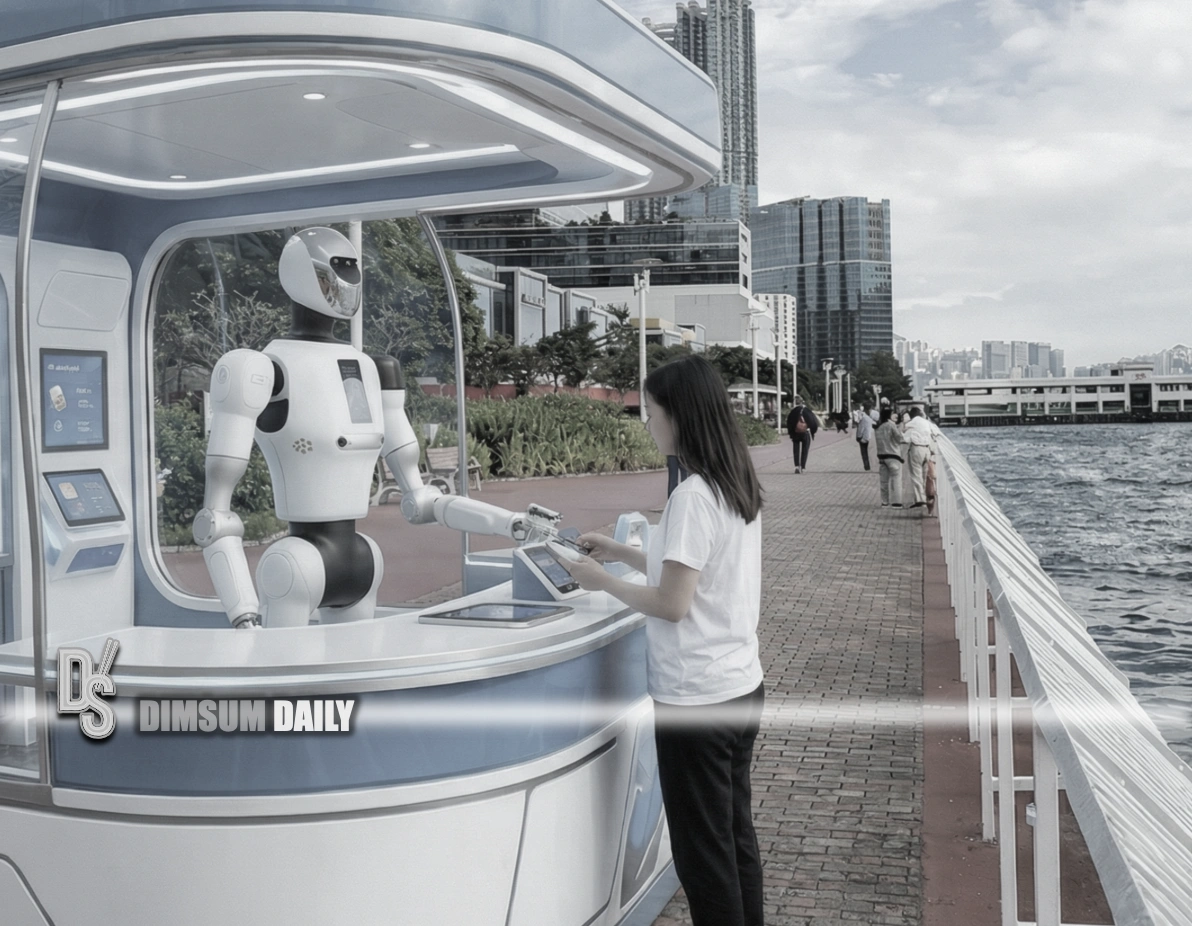
Hong Kong will open a 24-hour convenience store on the Hung Hom waterfront staffed by a humanoid robot, Financial Secretary Paul Chan disclosed in his weekly blog, according to the South China Morning Post. SCMP reports the robot, named Xiao Gai and built by a mainland Chinese embodied-AI firm, sells snacks, merchandise, and over-the-counter medicines from a booth of about nine square meters, operating continuously without human supervision and able to converse with customers in multiple languages. Chan framed the store as part of Hong Kong's drive to showcase hands-on AI, and his office has announced a high-level AI development committee. dimsumdaily.hk separately reports the company earlier opened a Galaxy Space Capsule store in Beijing and says it plans to expand to 100 capsules across 10 cities, a vendor projection that has not been independently verified.
What happened
Hong Kong will open a 24-hour convenience store on the Hung Hom waterfront operated by a humanoid robot, according to the South China Morning Post, which cites Financial Secretary Paul Chan's weekly blog. SCMP reports the robot, named Xiao Gai and developed by a mainland Chinese embodied-AI firm, works from a booth of about nine square meters, sells snacks, creative merchandise, and over-the-counter medicines, runs around the clock without human supervision, and can converse with customers in several languages. dimsumdaily.hk additionally reports that the company previously opened a Galaxy Space Capsule store in Beijing and that the firm says it intends to roll out 100 capsules across 10 cities; those figures are reported by a single outlet and have not been independently confirmed.
Why it matters
Class B analysis: A continuously operating, unsupervised humanoid in a public retail setting is a visible step from staged robotics demos toward sustained real-world deployment. For robotics and applied-AI practitioners, stores like this become sources of field data on perception, multilingual speech, and human-robot interaction under uncontrolled conditions, even though no new model or technical specification was disclosed.
Industry context
Pilot and capsule-format stores have become a common way for robotics vendors to demonstrate reliability and gather usage data before wider rollouts. SCMP frames the launch within Hong Kong's broader strategy to position itself as a hub for embodied intelligence, including a newly announced high-level AI development committee.
What to watch
Independent data on uptime, transaction volume, and any incidents; technical disclosures on the robot's sensor suite and the split between on-device and cloud inference; and whether the vendor follows through on the dimsumdaily.hk-reported expansion plan, which would materially increase available field data for embodied-AI systems.
Key Points
- 1Hong Kong's first humanoid-operated convenience store puts embodied AI into continuous, unsupervised public retail service from a roughly nine-square-meter Hung Hom booth.
- 2SCMP reports the robot, Xiao Gai, handles multilingual customer interaction and sells snacks, merchandise, and over-the-counter medicines without human backup.
- 3The launch is positioned within Hong Kong's broader AI push, though the vendor's reported plan for 100 capsules across 10 cities remains unverified.
Scoring Rationale
A first-of-its-kind, unsupervised humanoid-operated convenience store is a tangible embodied-AI deployment of interest to robotics and applied-AI practitioners and advances Hong Kong's AI-hub positioning. It is a single, PR-driven pilot with no new model or technical disclosure, and its headline scale plan is an unverified single-outlet vendor projection, so it sits in the solid rather than notable band.
Sources
Public references used for this report.
Practice with real Retail & eCommerce data
90 SQL & Python problems · 15 industry datasets
250 free problems · No credit card
See all Retail & eCommerce problems