Google launches Gemini Spark personal AI agent
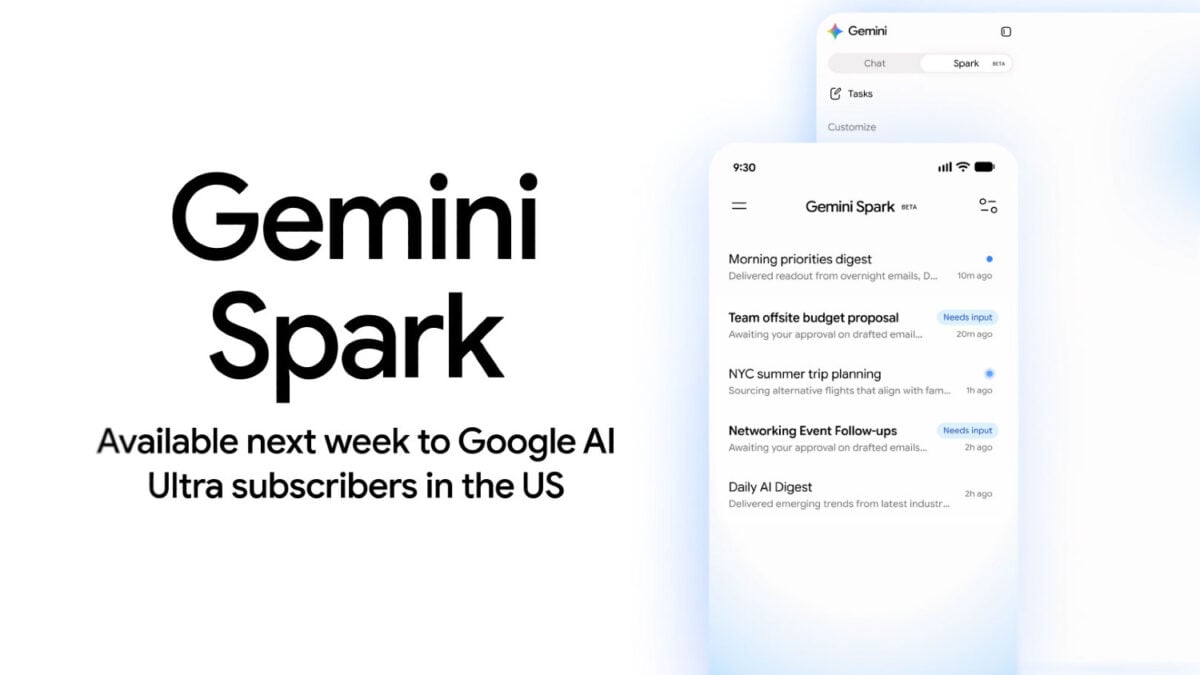
At Google I/O 2026, Google announced Gemini Spark, an always-on personal AI agent, according to reporting by The Verge and Gizmodo. The Verge reports Spark runs on Google's Gemini family and uses virtual machines on Google Cloud to operate in the background 24/7, and that it will integrate with Workspace apps like Gmail, Docs, Sheets, and Slides as well as third-party services including Canva, OpenTable, and Instacart. Gizmodo and The Verge describe Josh Woodward demonstrating Spark drafting email threads and compiling auto-updating event documents. Business Insider earlier reported an internal codename, "Remy," and employee testing of a 24/7 agent in internal builds, citing an internal document and two people familiar with the matter.
What happened
Google announced Gemini Spark at its Google I/O developer conference, a personal AI agent designed to run continually in the background, reporting by The Verge and Gizmodo states. The Verge reports Spark is powered by the Gemini model family and runs inside virtual machines on Google Cloud to maintain persistent, always-on functionality. Gizmodo and The Verge describe product demos by Josh Woodward, vice president of Google Labs, Gemini, and AI Studio, in which Spark gathered information from Gmail, Docs, and chats to draft an email in Woodward's voice and compiled a live, auto-updating document listing who RSVP'd to a block party.
Technical details
The Verge reports Spark will connect to Workspace apps such as Gmail, Docs, Sheets, and Slides and will expand integrations to third-party services via an open standard, naming Canva, OpenTable, and Instacart as early examples. The Verge also reports Google intends to add local-file access through the Gemini app on macOS this summer and to add Chrome integration for live updates. Gizmodo documents the agent executing multi-step skills that run autonomously and update outputs when related incoming messages arrive.
Industry context
Business Insider reported that an internal Google project codenamed "Remy" has been tested internally and described it as a "24/7 personal agent," citing an internal document and two people familiar with the matter. Business Insider also notes that improving model reliability has made more autonomous agent behavior feasible, per its reporting.
Editorial analysis - technical context
Running an agent continuously on cloud VMs, as The Verge reports for Spark, means nontrivial engineering trade-offs: background compute cost, state management across sessions, safe invocation of external APIs, and rate-limiting of sensitive operations. Industry-pattern observations: teams building comparable systems commonly adopt capability-based access tokens, scoped refresh policies, and extensive server-side audit trails to reduce risk while retaining autonomy.
Editorial analysis - privacy and compliance
Public reporting emphasizes deep access to user data sources (Gmail, Docs, chats), which triggers privacy and compliance considerations for organizations and practitioners. Industry-pattern observations: enterprises deploying analogous agents often demand admin controls, data residency guarantees, and explicit user consent workflows before enabling action-taking features.
What to watch
- •Integration breadth and standards: The Verge identifies early third-party partners and an "open standard" approach; observers will watch whether those connectors use vetted, auditable APIs.
- •Controls and transparency: Watch for the scope of user permission controls, audit logs, and revocation mechanisms once Google publishes product details.
- •Local and browser access: The Verge reports macOS local-file access and Chrome integration as upcoming capabilities; their security model and sandboxing will be important for practitioners.
- •Availability and pricing: Business Insider and other reporting note internal testing but do not provide broad availability or consumer pricing details; observers should watch official product pages and developer documentation for those announcements.
Editorial analysis
Companies building always-on, action-taking agents are converging on a similar technical stack - persistent compute instances, deep integration with user data sources, and plugin-style third-party connectors. These design choices raise operational questions around authentication, granularity of permissions, audit logging, and secure long-running execution, all of which are technical problems practitioners have encountered in other persistent-agent prototypes.
For ML engineers and platform teams, deploying or integrating with always-on agents requires thinking beyond single-request APIs. Operational concerns - background orchestration, long-term state, model update paths, and secure third-party integrations - become primary engineering challenges. Practitioners should track documentation and early SDKs to assess integration effort and security posture.
Quoted material
The Verge records Josh Woodward saying, "Even when you close your laptop or turn off your phone, Spark can keep working in the background as you go through your day," during a briefing.
Reporting gaps
Business Insider reports internal testing under the codename "Remy" and quotes an internal document; neither The Verge nor Gizmodo supply comprehensive availability, pricing, or enterprise governance details at announcement time. Google has not provided a full public specification in the cited reporting.
Key Points
- 1Gemini Spark is an always-on agent announced at Google I/O, integrating deeply with Workspace and third-party apps, per The Verge and Gizmodo.
- 2Business Insider reports Google's internal agent work under the codename "Remy" with employee testing, highlighting internal progression toward autonomous agents.
- 3Industry-pattern observations: always-on agents shift engineering focus to persistent compute, fine-grained access controls, and auditability, which are operational priorities for practitioners.
Scoring Rationale
A major cloud-and-model vendor (Google) announced an always-on, action-taking agent with deep Workspace and third-party integrations; this materially changes developer and ops concerns around persistent agents, privacy, and background compute.
Sources
Public references used for this report.
Practice with real Ad Tech data
90 SQL & Python problems · 15 industry datasets
250 free problems · No credit card
See all Ad Tech problems