Google Introduces AI Search Bar, Reshaping Traffic Flow
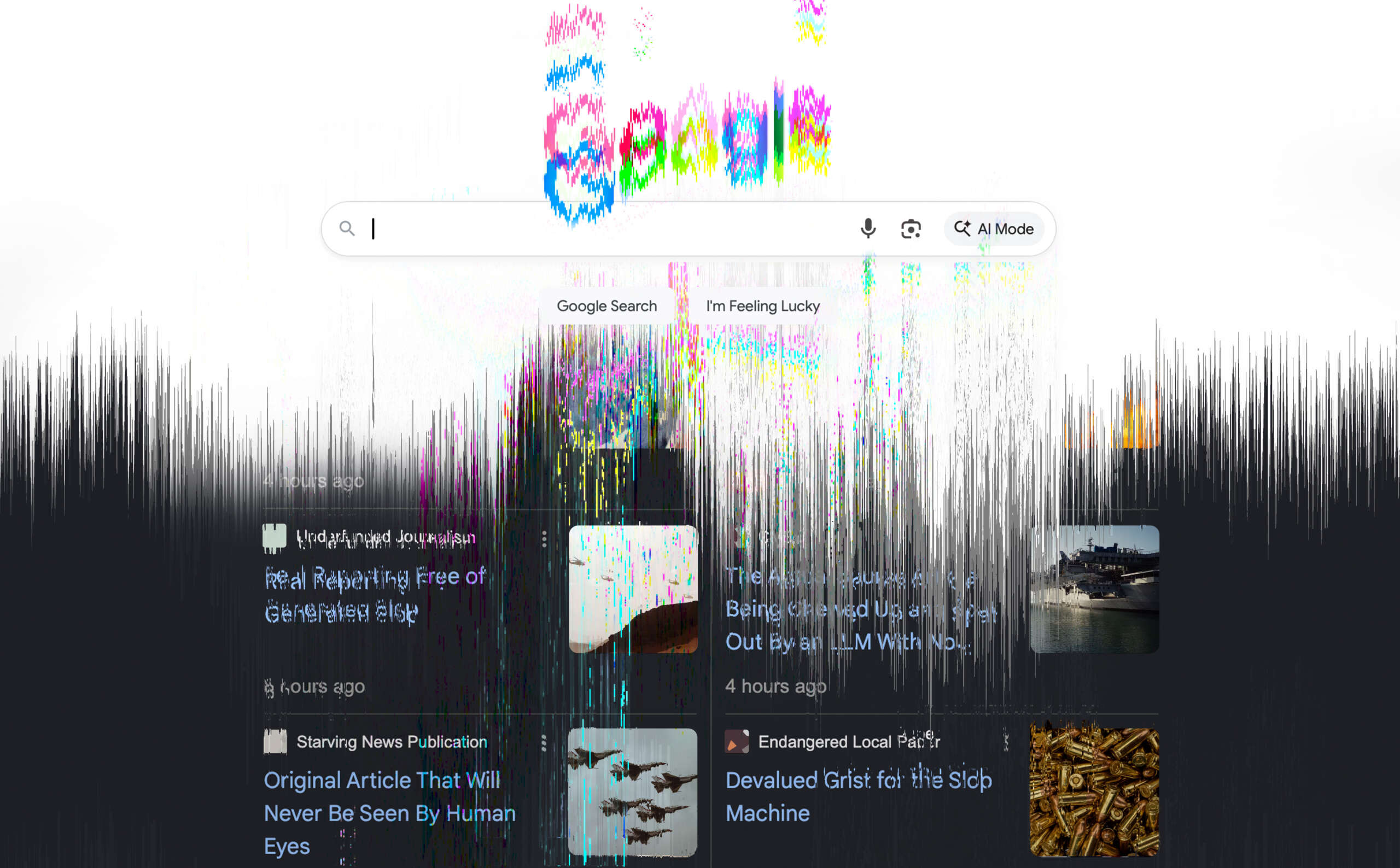
Google unveiled its biggest search redesign in 25 years at I/O 2026, replacing the traditional text box with an AI-powered interface built on Gemini 3.5 Flash, per The Next Web (May 19, 2026). The new interface accepts text, images, video, files, and Chrome tabs, returning AI summaries, generative UI widgets, and background 'information agents' that monitor the web continuously. AI Mode has reached 1 billion monthly users and AI Overviews reaches 2.5 billion, per The Next Web. Adweek and Similarweb (March 2025 data) reported 77% of searches with AI Overviews ended without any publisher clicks. Truthout, the primary source, frames the redesign as accelerating an AI-driven shift that threatens independent journalism. Publisher tools such as Google's Offerwall, documented by Ad Age (2025), aim to mitigate lost referral revenue but coverage suggests they may not fully offset the shortfall.
The redesign
Google unveiled a complete overhaul of its search interface at I/O 2026 on May 19, 2026, replacing the traditional text box with an AI-powered interface built on Gemini 3.5 Flash, per The Next Web. The redesigned interface accepts text, images, video, files, and open Chrome tabs, and returns AI-generated summaries, generative UI widgets, and "information agents" that monitor the web around the clock on behalf of users. Liz Reid, Google's vice president and head of Search, called it "the biggest upgrade to our iconic search box since its debut over 25 years ago," per The Next Web. AI Mode has surpassed 1 billion monthly users with queries doubling every quarter; AI Overviews reaches 2.5 billion monthly users.
Publisher and traffic impact
Truthout reports the redesign accelerates a shift away from traditional link results toward on-page AI summaries, reducing the incentive for users to click through to publisher sites. Per Adweek and Similarweb (March 2025 data), 77% of Google searches that include an AI Overview ended without a click to any external site. Adweek also documented that AI Overviews appear on some 13% of all search results. The EU is watching: the European Commission set a July 27, 2026 compliance deadline under the Digital Markets Act requiring Google to share anonymized search data with rival search engines and AI chatbot providers, per The Next Web. Information agents are launching this summer for Google AI Pro and Ultra subscribers in the US; generative UI will be free for all users.
Revenue and publisher context
In its Q2 2025 earnings call, Google reported 12% year-over-year search revenue growth to $54.2 billion, per Adweek, with CEO Sundar Pichai stating: "We see AI powering an expansion in how people are searching for and accessing information, unlocking completely new kinds of questions you can ask Google." Google's core ad business has since accelerated; Q1 2026 search revenue reached $60.4 billion at 19% year-over-year growth, per Search Engine Journal. Ad Age (June 2025) reported Google developed an "Offerwall" publisher monetization tool as a mitigation measure, though coverage suggests it may not fully replace lost click-driven revenue.
What practitioners should monitor
Industry-pattern observations: As search interfaces generate more on-page answers and zero-click sessions grow, content teams and analytics practitioners should reassess organic CTR baselines for AI Overview queries, update attribution models to account for reduced search referral traffic, and evaluate monetization alternatives - subscriptions, direct-payment models, and federated identifiers - that reduce dependence on search-driven pageviews. Changes in referral headers and citation metadata from AI-generated results are also worth tracking as they shape content discovery signals.
Key Points
- 1Google's I/O 2026 search overhaul replaces the traditional text box with Gemini 3.5 Flash-powered AI agents, its biggest change in 25 years.
- 2AI Overview and zero-click growth have pushed 77% of AI Overview searches to end on the results page without publisher clicks, per Similarweb.
- 3Content and analytics teams should reassess referral traffic models, organic CTR baselines, and monetization strategies as search increasingly resolves on-page.
Scoring Rationale
Google's I/O 2026 search redesign - replacing the traditional box with Gemini 3.5 Flash-powered agents - is the platform's biggest architectural change in 25 years and has measurable consequences for publisher traffic and analytics, directly relevant to AI/DS/ML practitioners. The score reflects genuine industry significance while accounting for the advocacy framing of the primary Truthout source and the three-week lag since the I/O announcement.
Sources
Public references used for this report.
Practice with real Ad Tech data
90 SQL & Python problems · 15 industry datasets
250 free problems · No credit card
See all Ad Tech problems