Genesis AI unveils GENE-26.5 robotic brain for dexterity
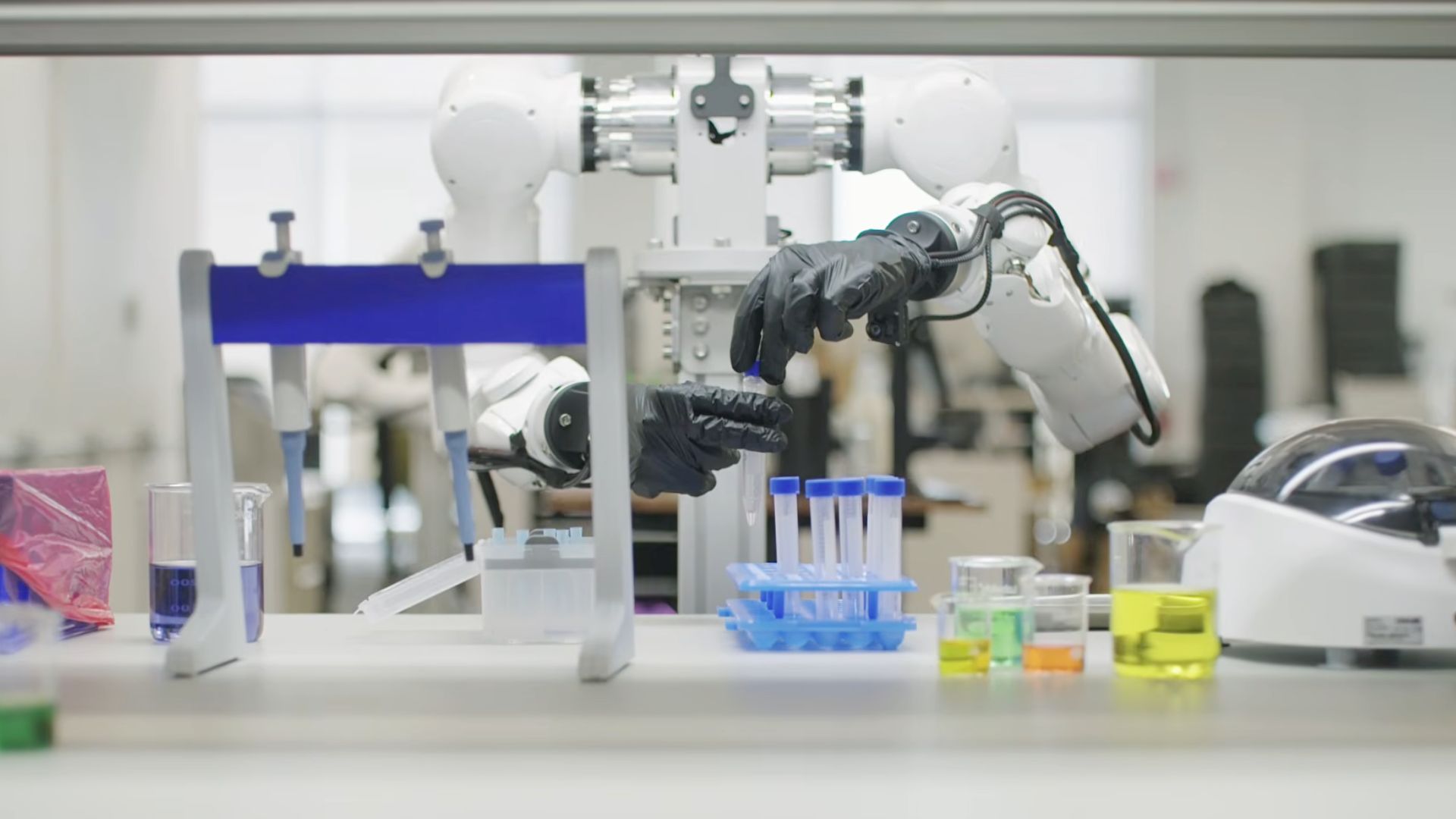
Per PR Newswire, Genesis AI announced GENE-26.5, an AI foundation model for robotics that the company describes as enabling human-level physical manipulation (PR Newswire, May 6). The release is accompanied by a proprietary human-scale dexterous robotic hand, a noninvasive motion/force glove, a simulator, and a new high-capacity data engine that PR Newswire and Interesting Engineering report is intended to unlock much larger training datasets. Forbes reports Genesis AI has raised $105 million from backers including Eclipse, Khosla Ventures, Bpifrance, and Eric Schmidt. Demonstration videos cited by Forbes, Interesting Engineering, and Fox News show the system performing complex tasks such as multi-step cooking, Rubik's cube solving, lab work, and piano playing; Fox News includes direct quotes from Theo Gervet describing GENE-26.5 as "like a robotic brain."
Technical details
Per the company materials summarized in PR Newswire and covered by Forbes and Interesting Engineering, GENE-26.5 is presented as a robotics-native foundation model designed to absorb large, diverse interaction data across environments. The reported hardware stack includes a dexterous five-finger hand built to human scale and a wearable glove sensor to capture human demonstrations, plus a simulator that Genesis says compresses weeks of experiments into minutes (Forbes; PR Newswire). Fox News printed a direct quote from Theo Gervet: "Think of GENE-26.5 like a robotic brain that takes in information and tells the robot what to do," which the outlet used to explain the system's role.
Industry context
Editorial analysis - technical context
Robotics researchers and practitioners have long identified two core bottlenecks for dexterous manipulation: the lack of large-scale, high-fidelity kinesthetic and tactile datasets and the gap between human hand complexity and common gripper hardware. Public reporting places Genesis AI's pitch squarely on those two points by combining a capture pipeline (glove), human-scale hardware (hand), a simulation stack, and a foundation-model approach. Comparable projects in academic and industrial labs have mixed hardware, imitation learning, and sim-to-real techniques; assembling them into an integrated product is a frequently pursued but technically challenging approach.
Context and significance
If the demonstrations generalize beyond a controlled setting, the combination of high-fidelity human data, human-scale actuators, and large-model training could materially raise the ceiling for general-purpose robotic manipulation. For practitioners, that matters because richer demonstration datasets and more realistic hands can reduce reliance on brittle task-specific programming and on expensive per-task engineering. However, reporting from Forbes and Interesting Engineering also highlights the common caveat: impressive demo videos do not by themselves prove robustness in unconstrained real-world operations.
What to watch
independent evaluations and peer benchmarks of GENE-26.5 in varied, unstructured environments; third-party replication of long-horizon, multi-step tasks at full speed and without human intervention (Forbes, Interesting Engineering); details about dataset scale and diversity from Genesis AI or partners; and integration/compatibility with existing robot platforms and control stacks. Observers should also look for technical documentation or papers that disclose training data composition, simulator fidelity, tactile sensing resolution, and failure modes. Finally, contracts, pilot deployments, or partnerships with manufacturing, logistics, or lab-automation customers would provide clearer evidence of real-world utility.
Limitations in reporting
What happened
Per PR Newswire (May 6), Genesis AI unveiled GENE-26.5, an AI foundation model the company frames as a robotic "brain" for enabling human-level physical manipulation. The announcement is paired with a proprietary human-scale dexterous robotic hand, a noninvasive data-capture glove for motion/force/touch, a simulator, and a new data engine that PR Newswire and Interesting Engineering report is intended to produce far larger datasets for training robotics models. Forbes reports Genesis AI has secured $105 million in funding from investors including Eclipse, Khosla Ventures, Bpifrance, and Eric Schmidt. Multiple outlets (Forbes, Interesting Engineering, Fox News) published demonstration videos showing robots performing tasks such as multi-step cooking, Rubik's cube solving, delicate part handling, object separation, and piano playing.
Most public coverage to date is based on company-released videos and a PR Newswire announcement; multiple outlets (Forbes, Interesting Engineering, Fox News) reproduce those demos and company claims. There is limited independent verification in the scraped coverage. Genesis AI has presented direct quotes (Fox News quotes Theo Gervet), but I did not find peer-reviewed evaluations or third-party benchmark results in the available reporting.
Key Points
- 1Genesis AI announced GENE-26.5 plus a human-scale dexterous hand and data pipeline, aiming to address robotics data scarcity.
- 2Combining demonstration capture, a simulator, and a foundation-model approach seeks to make long-horizon manipulation tasks tractable for robots.
- 3Industry observers should prioritise independent robustness tests and dataset disclosure before treating demo videos as production-readiness evidence.
Scoring Rationale
This is a notable product launch combining hardware, data capture, simulation, and a foundation model, which could shift practical dexterous-robot workflows if robustness and dataset scale are verified. The score is tempered by reliance on company demos and limited independent validation in the scraped coverage.
Sources
Public references used for this report.
View 6 more sources
- Genesis AI introduces GENE-26.5 model for more dexterous robot manipulationtherobotreport.com
- New AI brain lets robots move like humansfoxnews.com
- Genesis AI unveils GENE-26.5 robotic brain that enables human-level physical manipulationrobotics247.com
- GENE-26.5 brings dexterous AI robotics into focus ... - eeNews Europeeenewseurope.com
- New AI brain lets robots move like humans - AOL.comaol.com
- Genesis AI unveils robot brain and hand that chop tomatoescybernews.com
Practice interview problems based on real data
1,625 SQL & Python problems across 15 industry datasets — the exact type of data you work with.
Try 250 free problems