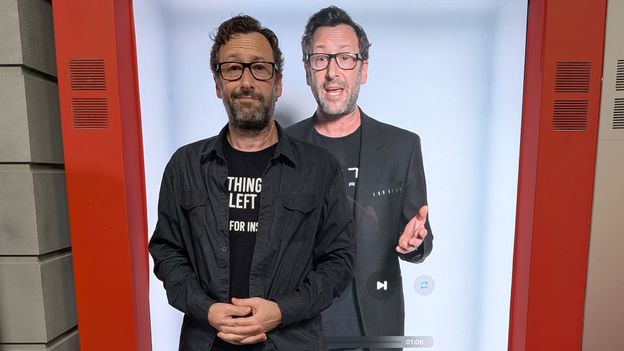
Former OpenAI Researcher's Fund Shorts Nvidia and AI Chip Names
Regulatory filings and market reports show that Leopold Aschenbrenner's hedge fund, Situational Awareness, placed large bearish option bets against major AI chip names. According to the firm's latest 13F filing, as reported by Business Insider and summarized by Yahoo Finance and Seeking Alpha, the filing disclosed roughly $1.56 billion in put options on Nvidia and more than $2 billion of puts tied to the VanEck Semiconductor ETF (SMH). The filings also show sizable put positions against Broadcom, Oracle, AMD, TSMC, ASML, and Intel, while the fund holds call or long-option exposure to a smaller set of infrastructure names including CoreWeave, per Yahoo Finance. Reporting notes Aschenbrenner previously worked on OpenAI's alignment team and gained public attention for a 2024 paper, according to the Wall Street Journal and Business Insider.
What happened
Regulatory disclosures show that the hedge fund Situational Awareness, founded by former OpenAI alignment researcher Leopold Aschenbrenner, reported large bearish option positions in its most recent 13F filing, according to Business Insider, Yahoo Finance, and Seeking Alpha. The filing disclosed roughly $1.56 billion in put options on Nvidia, and over $2 billion in puts tied to the VanEck Semiconductor ETF (SMH), per reporting by Business Insider and Yahoo Finance. The filing also lists multi-hundred-million to billion-dollar put positions against Broadcom, Oracle, AMD, TSMC, ASML, and Intel, as reported by Yahoo Finance and Seeking Alpha. The filings show the fund retained call-option or long exposures to a smaller set of companies including CoreWeave, according to Yahoo Finance.
Editorial analysis - technical context
Options-heavy positioning of the scale disclosed in the 13F is a fast-acting market signal rather than a disclosure of long-term engineering choices. Industry practitioners and infrastructure vendors watch concentrated derivatives positions because they can amplify short-term volatility in underlying hardware suppliers. Companies that supply GPUs, HBM, and fabs are already subject to cyclical capital spending and inventory dynamics, and large put volumes can reflect investor views on near-term revenue or pricing pressure rather than changes in underlying compute demand.
Context and significance
Public reporting frames this as one of several high-profile bearish stances on the so-called AI hardware trade, joining other notable short positions reported in recent months. The Wall Street Journal and Business Insider documented Aschenbrenner's rapid rise as a fund founder after publishing a widely read 2024 paper, and public coverage highlights that new, AI-focused hedge funds have drawn substantial capital. For practitioners, the immediate implication is market-driven: hardware vendors may see increased share-price volatility, which can affect vendor risk assessments, procurement timing, and conversations about spot versus contract pricing for GPUs and memory.
What to watch
Industry context
Observers will track several indicators to interpret the economic story behind these bets. Key items include published inventory and pricing reports for DRAM and HBM from major suppliers, quarterly revenue guidance from GPU and semiconductor firms, and actual execution data from cloud providers on GPU utilization and procurement. Another signal is activity in options markets and ETF flows around SMH, which can show whether the betting is concentrated in derivatives or mirrored in cash positions.
For practitioners
For data-science leaders and ML infrastructure teams, the filings do not change technical requirements but may influence procurement cadence. If capital markets pressure stock prices, that can translate into vendor caution around supply commitments and longer negotiation cycles for high-volume GPU and HBM purchases. Procurement teams and SRE/infra planners typically monitor both vendor guidance and secondary-market pricing when timing large buys.
Limitations and sourcing
What is reported: numerical positions and the fund founder's background are taken from the 13F disclosures as reported by Business Insider, Yahoo Finance, and Seeking Alpha. The Wall Street Journal and Business Insider reported on Leopold Aschenbrenner's prior profile and 2024 paper. The reporting outlets differ in detail and some figures are presented as rounded totals in secondary coverage. Situational Awareness has not provided a quoted rationale in the cited coverage.
Key Points
- 1Large puts on Nvidia and SMH, disclosed in the fund's 13F, increase short-term volatility risk for AI hardware suppliers and related ETFs.
- 2Industry observers note that options-heavy bets can amplify market moves, affecting procurement timing and vendor negotiations for GPU and memory purchases.
- 3High-profile, capitalized AI-focused funds are shifting public-market attention onto hardware economics, raising scrutiny of DRAM, HBM pricing and inventory metrics.
Scoring Rationale
This is a notable market development because large, publicized bearish option positions against core AI hardware names can amplify short-term volatility and influence procurement and vendor behavior, which matters to ML infrastructure planners. It is not a frontier-technology shift, so the story rates as notable rather than industry-shaking.
Sources
Public references used for this report.
View 4 more sources
- Leopold Aschenbrenner Forecasts Nvidia and AMD Crash with Massive Billion-Dollar Short Betstipranks.com
- Why AI's Next Bottleneck May Be Power, Not Chips | Investing.cominvesting.com
- Leopold Aschenbrenner's 'Situational Awareness' Files 13F Quarterly Investment Disclosurebankless.com
- Lumentum, Coherent fall after hedge fund manager Aschenbrenner dumps his holdingssherwood.news
Practice with real FinTech & Trading data
90 SQL & Python problems · 15 industry datasets
250 free problems · No credit card
See all FinTech & Trading problems