Epic Games Unveils Unreal Engine 6 Emphasizing Generative AI
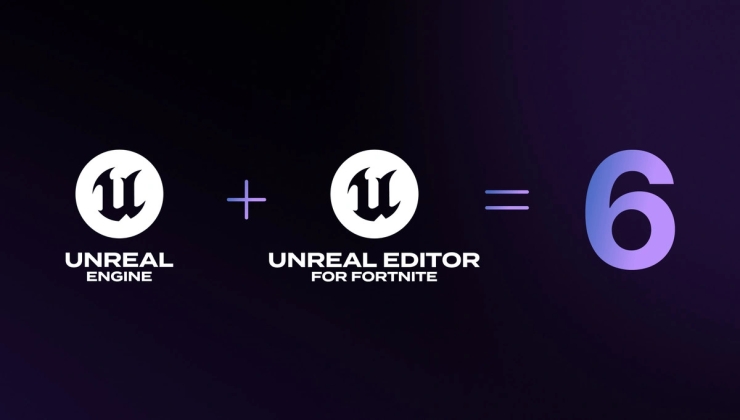
Epic Games unveiled its plans for Unreal Engine 6 in a June 17, 2026 blog post by lead developer Marcus Wassmer, targeting an early-access release at the end of 2027 and a full release 12-18 months after that. UE6 will merge Unreal Engine 5 and the Unreal Editor for Fortnite into one product, introduce a new programming language called Verse for building persistent, large-scale live worlds, and expose engine capabilities through an MCP protocol so developers can plug in models like Claude, Gemini, and Codex for content creation and code generation. Epic also plans to make Fortnite cosmetics portable to other games as a proof point for a broader shared economy of interoperable game assets. A public UE6 development branch is already live on GitHub.
Epic is betting that the next competitive line in game engines runs through concurrency-safe persistent-world programming and native generative-AI tooling, not just rendering fidelity. For studios planning multi-year projects, the concrete detail that matters most isn't the AI headline, it's the 2027-2028 timeline and the promise of a non-disruptive migration path from UE5, since that determines when and how teams actually need to plan for the transition.
What happened
Epic Games development lead Marcus Wassmer published an official blog post on June 17, 2026, outlining plans for Unreal Engine 6, which will unify the existing UE5 engine and the Unreal Editor for Fortnite into a single product over the next two years. UE6 introduces Verse, a new programming language built on a software transactional memory model that Epic says lets persistent, large-scale live game worlds handle global state and concurrency automatically at the runtime level, and a new gameplay framework called Scene Graph built on top of it. Epic is targeting an Unreal Engine 6 early access release at the end of 2027, with a full release 12-18 months later; a public UE6 development branch, including the Verse language implementation, is already visible on GitHub.
Technical context
Epic says UE6 will make open standards like glTF and USD first-class formats and will publish its own systems as open specifications with Verse APIs where no suitable standard exists, aiming for content and code portability across games and engines. Fortnite cosmetics will be the first proof point, with Epic planning to let players' entitled Fortnite outfits work in other games and let developers build outfits usable inside Fortnite. On the AI side, Epic is exposing engine capabilities through the MCP protocol so developers can mix models such as Claude, Gemini, and Codex for content generation and code generation; Epic says it has already expanded internal code-generation and AI-analysis usage across its engine and backend teams, including for crash analysis and automated test generation.
For practitioners
Epic's stated migration philosophy is continuity, not a hard break: Actors and Blueprints will remain supported in early UE6 versions, with conversion tools promised before they are eventually deprecated, and studios shipping on UE5 today are told to expect a "manageable" path forward. Given the roughly 18-month runway to early access, studios starting new multi-year projects now should factor UE6's architecture, particularly Verse's transactional concurrency model, into technical planning rather than treating it as a distant, incremental update.
What to watch
Key signals to track include the published Verse language specification and documentation for the open UE6 MCP foundation, sample AI-model integrations and how they're sandboxed, any additional UE5.9 point release (which Epic says it is reserving the option to ship), and how quickly the Fortnite-cosmetics portability proof of concept extends to other asset types.
Key Points
- 1Epic is targeting Unreal Engine 6 early access for late 2027 and full release 12-18 months later, merging UE5 and Fortnite's editor into one product.
- 2UE6 introduces Verse, a transactional-concurrency programming language for persistent live worlds, exposed through an open MCP foundation for plugging in AI models.
- 3Epic plans to make Fortnite cosmetics portable across games as a proof point for a broader shared economy of interoperable, code-and-logic-bearing game assets.
Scoring Rationale
A major game-engine roadmap announcement from the official source, with substantial verified technical detail (Verse's transactional concurrency model, MCP-based AI integration, a concrete 2027-2028 timeline) that materially affects technical planning for game studios and tool vendors. Modest upward revision from the original score given the official primary source filled in the previously-missing release timeline.
Sources
Public references used for this report.
Practice interview problems based on real data
1,625 SQL & Python problems across 15 industry datasets — the exact type of data you work with.
Try 250 free problems