D'Addario Says Demo Used AI-Assisted Mastering, Not Generative AI
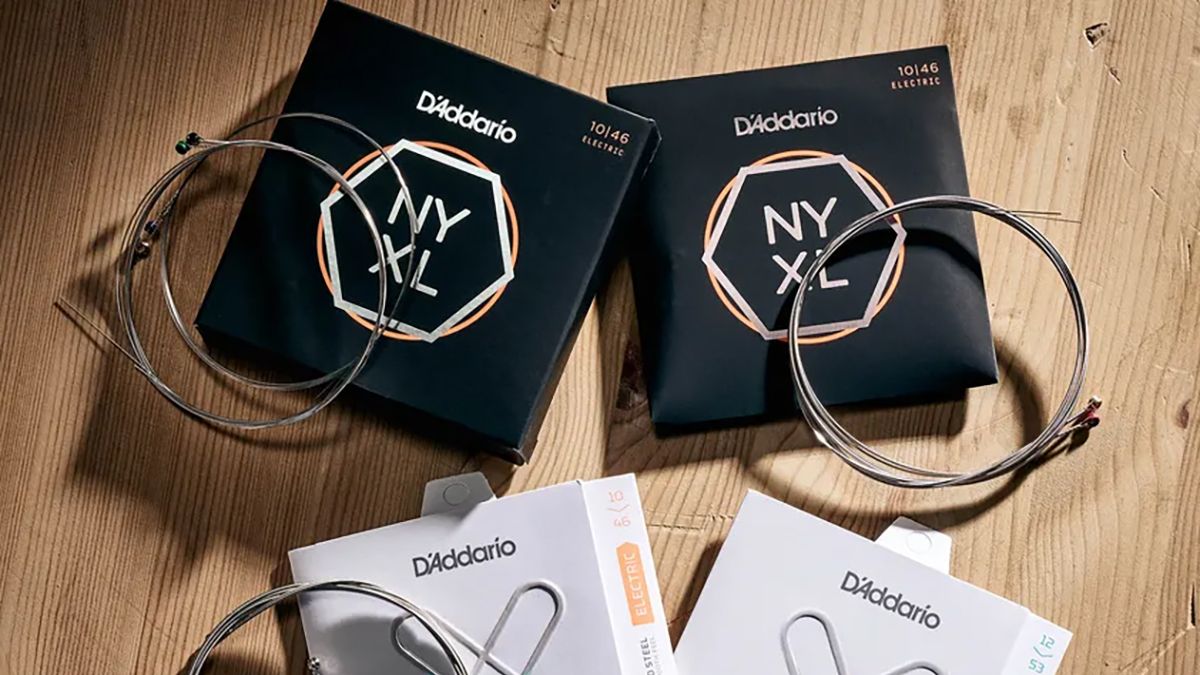
D'Addario said on July 30 that a musician wrote and performed its disputed string-demo track and that generative AI was not used to create the music. The company acknowledged that Logic's Mastering Assistant and LANDR's AI-assisted mastering were used after export, a distinction that explains why its earlier blanket denial left the production workflow unclear.
D'Addario said on July 30 that a musician wrote and performed the track in its disputed promotional demo for NYXL HD strings and that generative AI was not used to create the music. The company also disclosed that two AI-assisted mastering tools were used after the track left the digital audio workstation: Logic's Mastering Assistant and LANDR's assisted mastering.
That distinction materially updates the company's earlier response. On July 24, Guitar World reported D'Addario's denial of AI-generated music and its explanation that musicians tracked the guitars while drums and synthesizers were MIDI-programmed. D'Addario said its highly processed mix had backfired and promised both mixed and raw demonstrations.
Why the follow-up looked different
The initial workflow video did not settle the dispute. Ultimate Guitar and Guitar World reported that viewers found pitch, tempo, and performance differences between the original promotion and the follow-up session clip. Those differences did not prove generative-AI use, but they did show that the follow-up was not a direct reproduction of the released audio.
D'Addario's July 30 statement said the response clip showed a pre-mix, pre-master version. The company said the released promotion used extensive conventional processing—including compression, pitch correction, equalization, distortion, programmed synthesizers, and a processed drum track—before the two AI-assisted mastering tools were applied after export. It attributed the disputed noise and drift to that production chain.
The public evidence remains an explanation from D'Addario reported by music publications, not an independent forensic examination of the project files. It supports a careful conclusion: the company denied generative composition, acknowledged AI-assisted mastering, and explained why its response clip differed from the original.
Provenance needs precise language
The episode illustrates why a broad claim such as "no AI was used" can be misleading even when no model generated the underlying composition. Generative creation, MIDI programming, algorithmic plug-ins, AI-assisted mixing or mastering, and conventional editing are different production steps. A useful disclosure should identify which step used which tool.
For product demonstrations, raw audio, stems, session views, unedited footage, and an explicit tool list provide stronger provenance than a polished social-media clip. The point is not that heavy production proves generative AI. It is that audiences need enough evidence to distinguish performance, editing, and model-assisted post-production.
Key Points
- 1D'Addario says a musician wrote and performed the track and that generative AI did not create the music.
- 2The company acknowledged using Logic's Mastering Assistant and LANDR's AI-assisted mastering after export.
- 3Precise provenance should distinguish generative creation from MIDI, plug-ins, editing, and AI-assisted mastering.
Scoring Rationale
The story is a useful case study in media provenance, disclosure, and the difference between generative creation and AI-assisted post-production. Its direct relevance is strongest for practitioners building or governing generative audio and authenticity workflows.
Sources
Public references used for this report.
Practice with real Ad Tech data
90 SQL & Python problems · 15 industry datasets
250 free problems · No credit card
See all Ad Tech problems