AI-Voiced Bomb Hoax Closes Wheatland High School
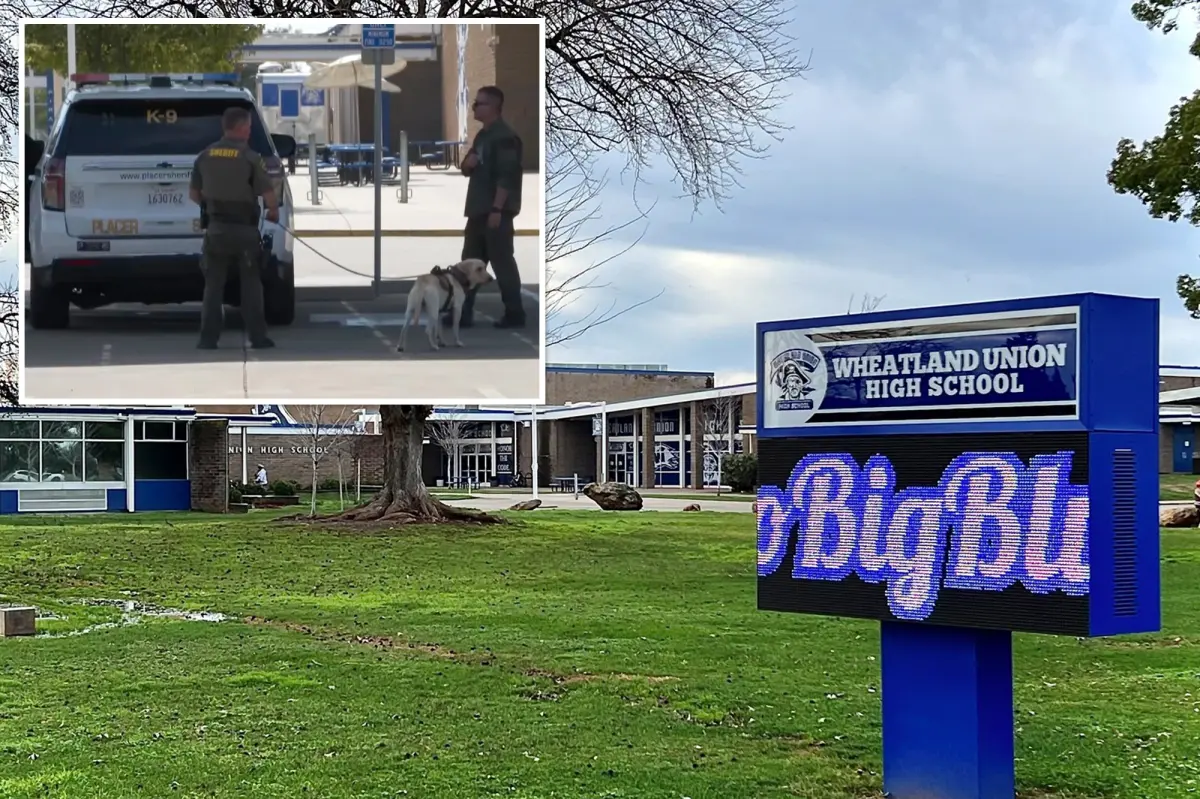
Wheatland Union High School in Yuba County, California, canceled classes on Aug. 18 after an anonymous bomb threat delivered through an AI-generated voice prompted an evacuation and campus search. KCRA and The Sacramento Bee reported that law enforcement cleared the campus, while Superintendent Nicole Newman described the call as consistent with a wider pattern of school hoaxes.
Wheatland Union High School in Yuba County, California, canceled classes Tuesday after an anonymous bomb threat made with an AI-generated voice prompted an evacuation, a multi-agency response, and a search of the campus, according to KCRA and The Sacramento Bee.
The Wheatland Union High School District was notified shortly before 6 a.m., Superintendent Nicole Newman said in communications reported by the outlets. Wheatland police searched the campus exterior, and explosives-detection K-9 teams were brought in to check classrooms and lockers. KCRA reported that law enforcement later cleared the campus and that classes were scheduled to resume Wednesday.
Students already at the school were moved to the parking lot and gym of a nearby Church of Jesus Christ of Latter-day Saints facility before being released or transported home, KCRA reported. The school initially delayed instruction from its regular 8:15 a.m. start, first to 8:50 a.m. and then to 11 a.m., before canceling the day.
Threat deemed non-credible
The Appeal-Democrat reported that police determined the threat was not credible. In a statement reported by the newspaper, Newman said the district was nevertheless treating it seriously and had added staff and law-enforcement presence while the campus was checked.
"Nothing has been found on campus," Newman wrote in an update cited by The Sacramento Bee. She said the sweep was taking longer because of the campus size and the availability of explosive-detection K-9 teams.
The Sacramento Bee reported that Wheatland police were investigating the incident. The available reports do not identify a voice-generation system, an alleged caller, or technical evidence used to characterize the voice as AI-generated.
Voice cloning raises an operational challenge
Newman described the call, in remarks reported by KCRA, The Sacramento Bee, and the Appeal-Democrat, as consistent with a pattern of hoax threats targeting schools nationally. The New York Post reported that the caller demanded $15,000, though the other retrieved local reports did not include that detail.
For security and ML practitioners, the incident illustrates a practical limitation of synthetic-media detection in time-sensitive public-safety incidents. Even when a voice appears artificial and a threat is later deemed non-credible, schools and law enforcement cannot safely treat that assessment as sufficient grounds to avoid a physical response. Comparable incidents create a dual requirement: preserve call recordings and associated metadata for investigation, while maintaining incident procedures that do not depend on real-time attribution of an audio model or speaker.
The case also underscores that voice-cloning risk is not limited to fraud, impersonation, or reputational harm. In public-safety settings, synthetic audio can impose immediate operational costs through emergency dispatch, evacuation, K-9 sweeps, school closures, and disruption for families and students.
Key Points
- 1An AI-voiced threat canceled a full school day despite being deemed non-credible, demonstrating that synthetic-media abuse can trigger costly physical responses.
- 2Authorities used evacuation and explosives-detection K-9 sweeps, while available reporting did not identify the voice-generation technology or a suspect.
- 3Comparable public-safety incidents show why audio provenance and forensic retention matter, although emergency response cannot depend on immediate deepfake attribution.
Scoring Rationale
This is a localized but concrete example of synthetic-audio misuse producing real-world security and operational consequences. It is relevant to practitioners working on voice systems, content provenance, fraud prevention, and incident-response workflows, but it does not establish a new technical capability or broadly applicable policy change.
Sources
Public references used for this report.
Practice interview problems based on real data
1,625 SQL & Python problems across 15 industry datasets — the exact type of data you work with.
Try 250 free problems