CoolIT Systems Demonstrates 15kW Coldplate for GPU Cooling
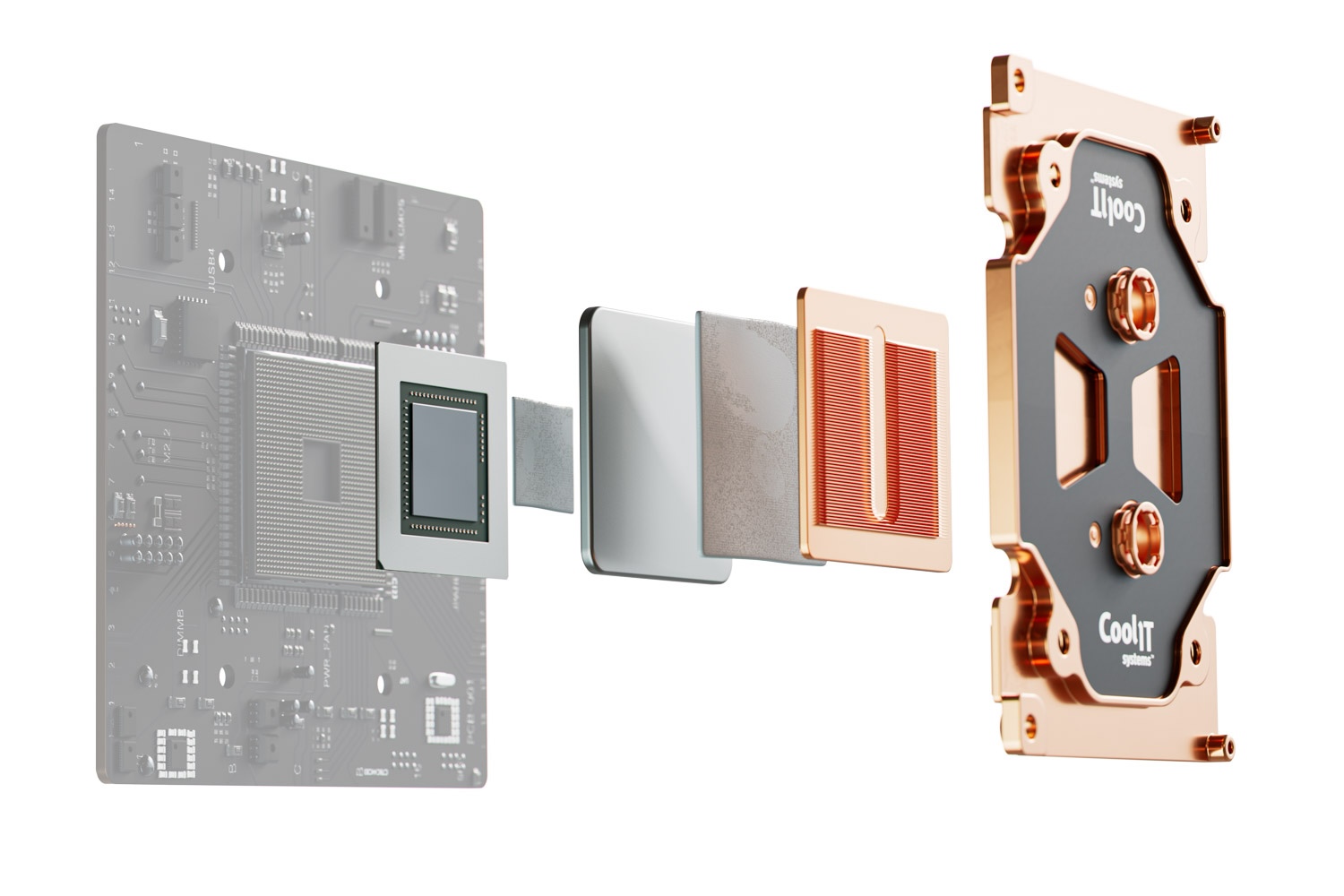
CoolIT Systems demonstrated a 15kW single-phase direct liquid cooling (DLC) coldplate at Computex 2026, according to the company's press release and coverage by DataCenterDynamics and StorageReview. CoolIT says the design delivers nearly 4x the capacity of its prior 4kW coldplate (announced March 2025) and more than 10x the cooling required by current-generation AI GPUs. It is built on the company's Split-Flow microchannel architecture and was validated on a thermal test vehicle using a water-glycol coolant at 1.2 L/min/kW, with system-level performance suited to 45C warm-water environments. DataCenterDynamics notes the headroom matters as Nvidia Blackwell GPUs draw up to 1,200W and Vera Rubin-class parts reach TDPs near 2,300W. Coverage frames the result as evidence that single-phase DLC retains scaling room for future high-density AI accelerators, pending independent system-level validation.
What happened
CoolIT Systems demonstrated a 15kW single-phase direct liquid cooling (DLC) coldplate design at Computex 2026, according to the company's press release and reporting by DataCenterDynamics and StorageReview. CoolIT says the design delivers nearly 4x the capacity of its previously demonstrated 4kW coldplate, announced in March 2025, and more than 10x the cooling required by current-generation AI GPUs.
Technical details
Per CoolIT's materials and trade coverage, the coldplate is based on the company's Split-Flow microchannel architecture and was validated on a thermal test vehicle using a standard water-glycol coolant at 1.2 L/min/kW, with system-level performance suitable for 45C warm-water environments. The company positions the result as proof that single-phase DLC can scale to future ultra-high-density accelerators rather than as a shipping specification for deployed racks.
Why it matters
Single-phase DLC moves heat from silicon into a liquid loop through engineered microchannels without phase change, and raising coolant supply temperatures toward 45C is a common way to improve facility efficiency and enable heat reuse. The headroom is relevant because next-generation accelerators run hot: DataCenterDynamics reports Nvidia Blackwell GPUs can draw up to 1,200W and Vera Rubin-class parts reach TDPs near 2,300W. A validated 15kW coldplate suggests single-phase architectures may remain viable for a broader set of high-power devices, potentially delaying the need for two-phase or full-immersion cooling in some deployments.
What to watch
- •Independent, third-party thermal validation beyond vendor test vehicles.
- •System-level demonstrations (rack, CDU and server integrations) and coolant-loop and connector standards in customer trials.
- •Server OEM and hyperscaler integration announcements referencing compatibility with 45C supply-temperature single-phase DLC.
Key Points
- 1A validated 15kW single-phase coldplate roughly quadruples CoolIT's prior capacity, extending direct-liquid-cooling headroom for denser AI accelerators.
- 2Warm-water operation at 45C and 1.2 L/min/kW validation align with industry moves toward higher supply temperatures for better data-center efficiency and heat reuse.
- 3It remains a vendor lab demonstration; independent system-level (rack, CDU, server) results and OEM integrations are the signals that it is field-ready.
Scoring Rationale
A validated 15kW single-phase coldplate is a meaningful thermal-headroom milestone for AI data-center cooling, directly relevant to infrastructure teams designing for Blackwell- and Rubin-class accelerators. It remains a single-vendor lab demonstration awaiting independent system-level validation and OEM integration, so it scores as notable rather than industry-shaking.
Sources
Public references used for this report.
View 7 more sources
- CoolIT Systems Demonstrates 15kW Coldplate, Extending Single-Phase DLC Roadmap Far Beyond 2030prnewswire.com
- CoolIT Systems Demonstrates 15kW Coldplate, Extending Single-Phase DLC Roadmap Far Beyond 2030hpcwire.com
- Computex 2026: CoolIT pushes single-phase DLC to 15 kWelectronics360.globalspec.com
- CoolIT Systems Demonstrates 15kW Coldplate, Extending Single-Phase DLC Roadmap Far Beyond 2030finance.yahoo.com
- CoolIT Systems unveils 15kW coldplate, extending single-phase cooling roadmap beyond 2030app.dealroom.co
- https://www.benzinga.com/pressreleases/26/06/n5292...benzinga.com
- CoolIT Systems Demonstrates 15kW Coldplate, Extending Single-Phase DLC Roadmap Far Beyond 2030wfmz.com
Practice interview problems based on real data
1,625 SQL & Python problems across 15 industry datasets — the exact type of data you work with.
Try 250 free problems