Consortium Integrates AI Into API Flow Production
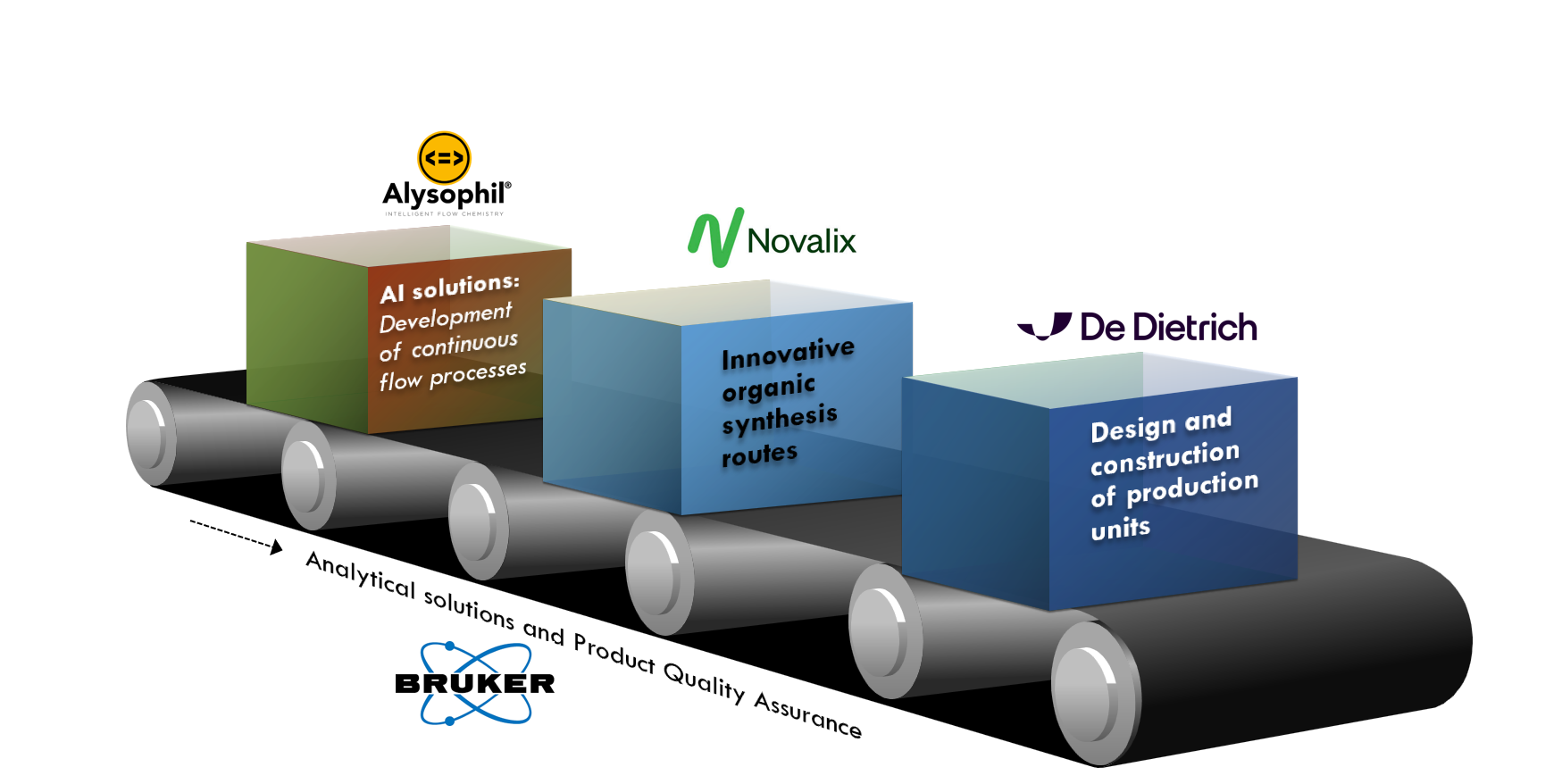
European consortium Novalix, Alysophil, Bruker, and De Dietrich describe the PIPAc project integrating continuous-flow chemistry, AI, and in-line NMR to produce APIs such as fentanyl and propofol. The demonstrator uses 3D-printed stainless-steel reactors (50-minute residence time at 80°C, 6 bar), synTQ and OPC UA orchestration, and deep reinforcement learning agents trained on digital twins for autonomous process control. This enables real-time, traceable Pharma 4.0 production workflows.
Key Points
- 1Demonstrates continuous-flow synthesis of APIs using 3D-printed reactors, 50-minute residence at 80°C, 6 bar
- 2Uses deep reinforcement learning with digital twins to adapt process parameters and predict deviations
- 3Enables real-time NMR-driven control via synTQ and OPC UA for autonomous, traceable Pharma 4.0 production
Scoring Rationale
Demonstrates practical industrial integration and autonomous control; limited by focused demonstrator scale and early-stage, single-project results.
Practice interview problems based on real data
1,625 SQL & Python problems across 15 industry datasets — the exact type of data you work with.
Try 250 free problems