Computing Embraces Specialization After Moore's Law
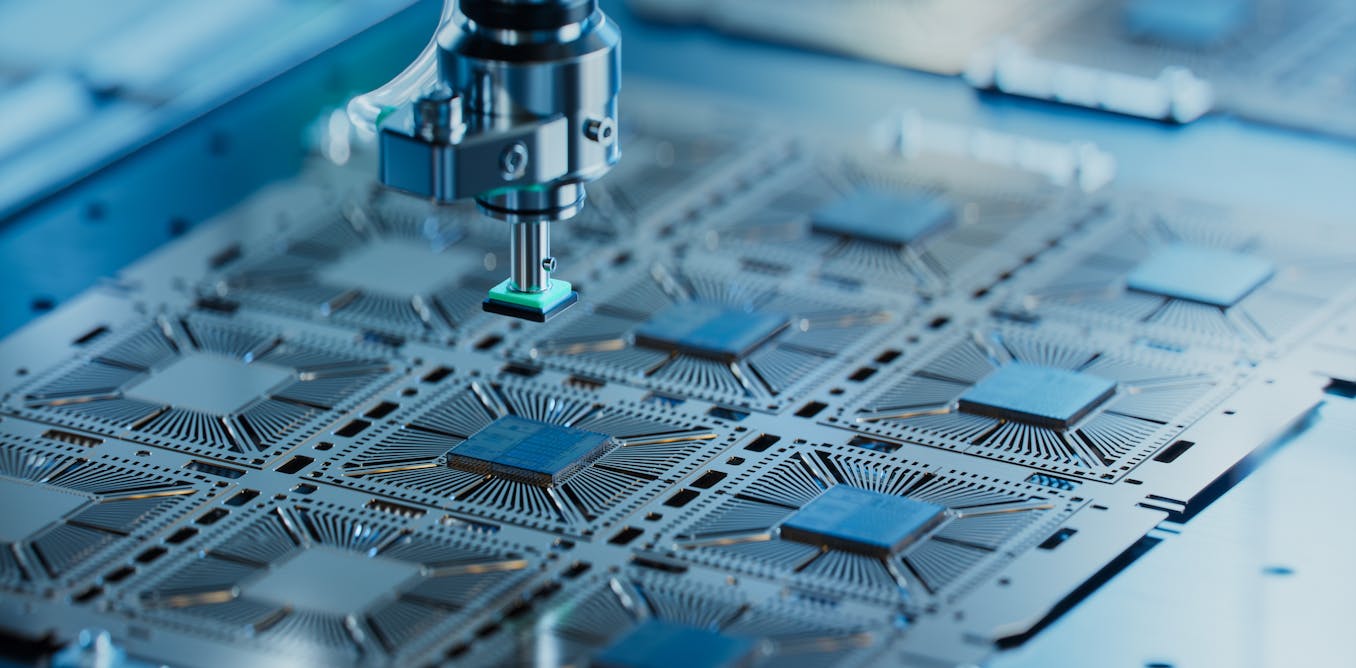
Technology commentary argues that Moore's Law's predictable transistor scaling has ended and computing now advances through specialization, new materials, stacking, and energy-focused designs. Presented at the Supercomputing SC25 conference in St Louis, speakers highlighted heterogeneous systems combining CPUs, GPUs, AI accelerators, and emerging quantum or photonic co-processors for domain-specific workloads. Practically, software and architecture must be co-designed to manage energy, latency, and trade-offs.
Key Points
- 1Identify end of Moore's Law; hardware progress now relies on specialization, stacking, and new transistor designs.
- 2Explain significance: specialized co-processors like GPUs, AI accelerators, quantum, photonic devices solve domain-specific workloads.
- 3Advise practitioners to optimize software for heterogeneous hardware and manage energy, latency, and trade-offs.
Scoring Rationale
Industry-wide trend analysis with practical guidance, but lacks robust new empirical data or peer-reviewed validation.
Practice interview problems based on real data
1,625 SQL & Python problems across 15 industry datasets — the exact type of data you work with.
Try 250 free problems