Clinicians Build AI Prototypes in Two-Hour Hackathon
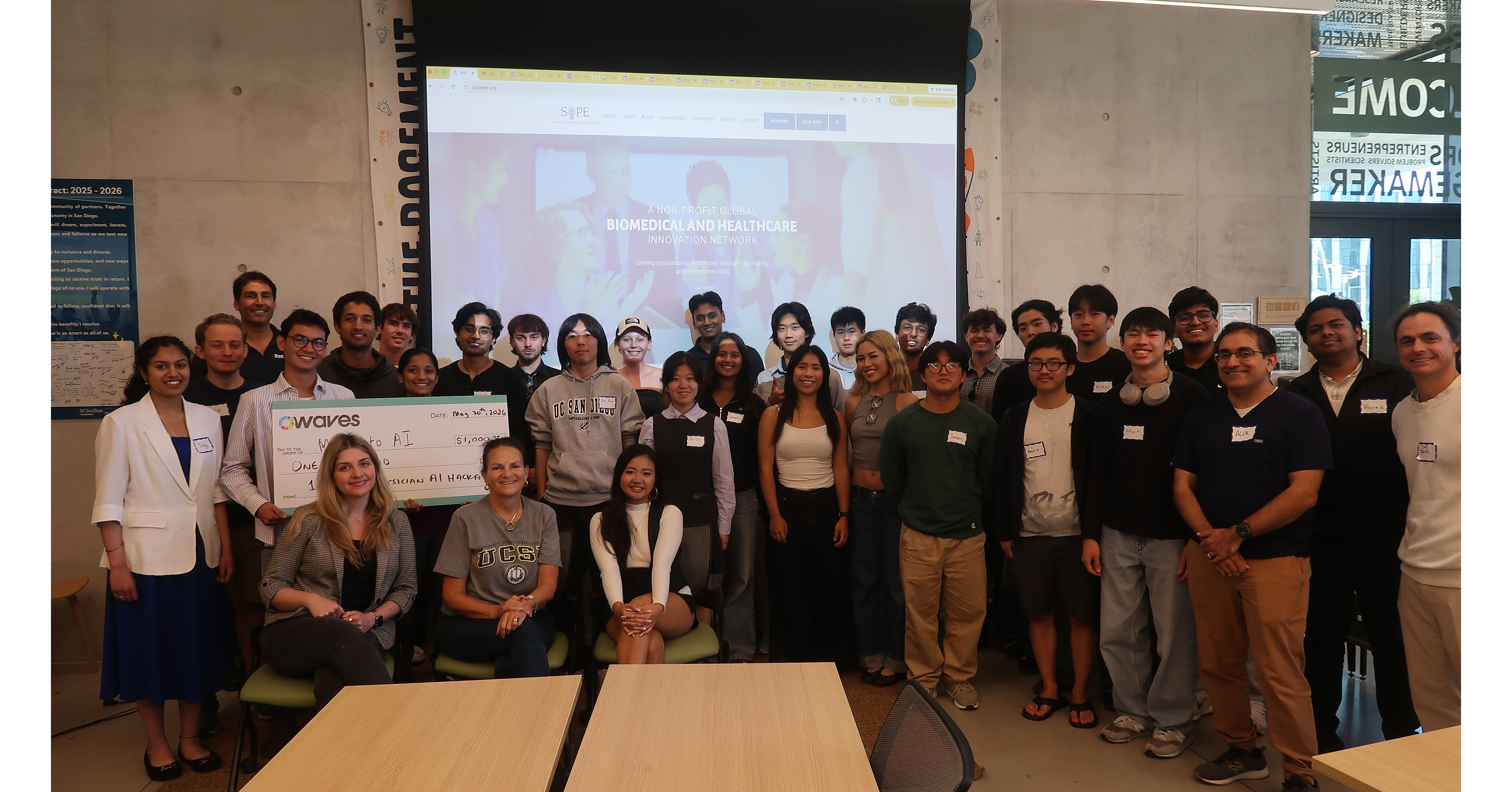
The San Diego chapter of the Society of Physician Entrepreneurs (SoPE) held its inaugural Physician AI Hackathon on May 30, 2026, at the University of California, San Diego, per a PRWeb release. According to the release, seven teams, each pairing at least one practicing clinician with engineers and students, built working clinical software prototypes in under two hours. The event was hosted by Royan Kamyar, M.D., MBA, who leads the chapter and is founder and CEO of sponsor Owaves, and was presented with UC San Diego's Engineering Innovators and Entrepreneurs Club in partnership with AIMed and UCSD's Office of Innovation and Commercialization. The release names Manifesto AI, a perioperative coordination tool built as a read-only layer on top of Epic, as the first-place winner, and GutGuide, a patient-education app, as second place. Event listings corroborate the half-day, in-person 'Idea to App in Two Hours' format.
What happened
PRWeb reports that the San Diego chapter of the Society of Physician Entrepreneurs (SoPE) held its first annual Physician AI Hackathon on May 30 at the University of California, San Diego. PRWeb says seven teams, each pairing at least one practicing clinician with engineers and students, developed working clinical software prototypes in under two hours. PRWeb identifies Royan Kamyar, M.D., MBA, as host and Owaves as event sponsor. PRWeb lists Manifesto AI, a perioperative coordination platform built as a read-only layer on top of Epic, as the first-place winner, and GutGuide, a patient-education app, as second place. San Diego Tech Scene and CompeteHub event pages confirm the half-day, in-person format and the "Idea to App in Two Hours" agenda.
Editorial analysis - technical context
Events that pair clinicians with engineers and AI-fluent students accelerate problem framing and prototype iteration because modern tooling reduces glue code and UX scaffolding time. Industry-pattern observations note that low-code platforms, model APIs, and read-only EHR integration layers often let teams validate interaction concepts without full production integrations. For practitioners, this lowers the cost of early user testing but leaves integration, security, and validation work for later stages.
Context and significance
Industry context: Hackathons like this surface which clinical workflows are amenable to rapid prototyping, for example coordination and patient education. Observers following the sector often treat clinician-led rapid prototypes as useful signals for user need and usability, not as finished products. The Manifesto AI entry, per PRWeb, demonstrates a common approach of building a read-only overlay on Epic to surface context without creating new mandatory documentation, a pattern seen in recent healthcare tooling to limit EHR disruption.
What to watch
Watch for follow-up activity from the winning teams, including whether prototypes advance to pilot studies, secure formal EHR integrations, or publish design/security assessments. Observers will also track how sponsors, local health systems, and investors respond to recurring clinician-driven hackathons as a source of feature ideas or early-stage teams. Finally, practitioners should monitor whether similar events produce repeatable templates for safe, compliant prototyping in clinical environments.
Key Points
- 1At SoPE San Diego's inaugural Physician AI Hackathon (May 30, 2026, at UC San Diego), seven clinician-engineer teams built working clinical prototypes in under two hours, per a PRWeb release.
- 2First place went to Manifesto AI, a perioperative coordination tool built as a read-only layer on Epic; GutGuide, a patient-education app, took second.
- 3Editorial analysis: read-only EHR overlays and low-code tooling let clinician-led teams validate interaction concepts quickly, but integration, security, and clinical validation remain later-stage work.
Scoring Rationale
A local, single-chapter clinician hackathon producing early-stage prototypes is a genuine but small applied-AI story, sourced primarily to a press release and event listings. It is useful as a signal of clinician-driven prototyping patterns but is localized and early-stage, placing it in the minor band.
Sources
Public references used for this report.
Practice with real Health & Insurance data
90 SQL & Python problems · 15 industry datasets
250 free problems · No credit card
See all Health & Insurance problems