Claude Code Plugins Extend Workflow and Control
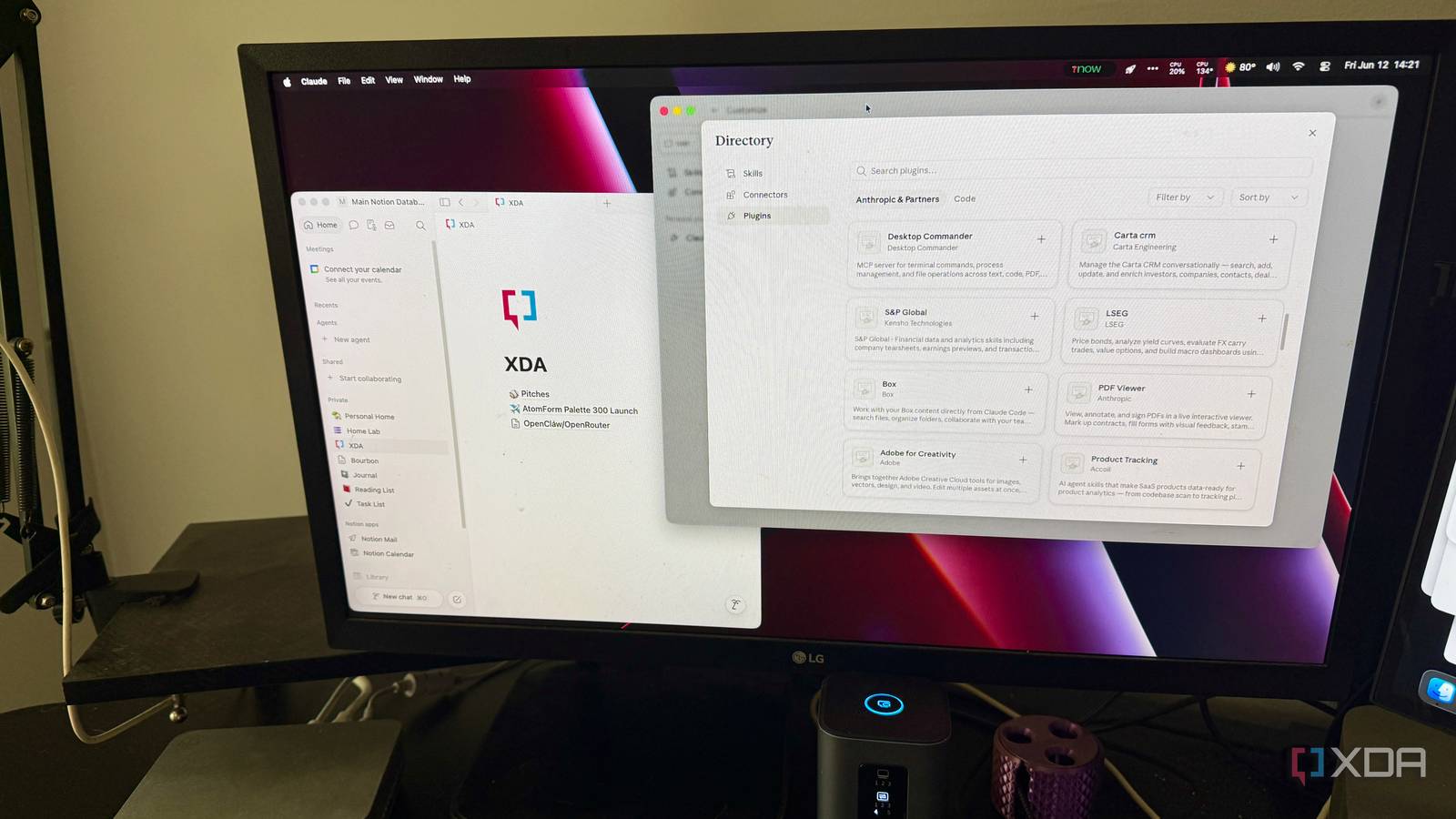
Claude Code now supports a plugin system that connects the terminal UI to external tools and project-level workflows. The project's GitHub plugins README documents plugins that provide custom slash commands, specialized agents, hooks, and MCP servers (GitHub README). The official Commands reference on code.claude.com lists built-in and plugin-provided slash commands such as /init, /code-review, /agents, /batch, and /remote-control (code.claude.com Commands). Figma's help centre documents a Figma MCP server plugin that can read design context and write directly to the Figma canvas after authentication (Figma help). Hands-on coverage from XDA Developers and a Towards AI piece report that installing official plugins such as claude-code-setup noticeably changed the author experience, making Claude Code feel more like an integrated command center than a simple chatbot (XDA Developers; Towards AI).
What happened
Claude Code now supports a plugin ecosystem that lets the terminal-based assistant reach into project files, external services, and orchestrated agent workflows. The project's GitHub plugins README documents that plugins can add custom slash commands, specialized agents, hooks, and MCP servers that are shareable across projects and teams (GitHub README). The official Commands reference on code.claude.com enumerates built-in and plugin-provided commands and describes workflows using commands such as /init, /memory, /mcp, /agents, /plan, /model, /context, /batch, /code-review, /remote-control, and /teleport (code.claude.com Commands). Figma's help documentation describes a Figma MCP server that gives Claude Code structured access to Figma files and the ability to write native Figma content back to the canvas after user authorization (Figma help). Independent coverage and hands-on writeups from XDA Developers and Towards AI describe a materially different user experience after installing official plugins, with authors reporting that plugins made Claude Code feel more connected to their repositories and workflows (XDA Developers; Towards AI).
Technical details
Editorial analysis - technical context
Plugin systems that expose slash commands, agent runtimes, and MCP servers typically enable three technical capabilities relevant to practitioners: richer context ingestion, deeper tool invocation, and orchestrated background work. The Commands reference shows how claude-code exposes session-level controls (/context, /compact), developer workflows (/init, /feature-dev, /batch), multi-agent orchestration (/agents, /tasks, /code-review ultra), and remote session management (/remote-control, /teleport) (code.claude.com Commands). The GitHub README demonstrates that plugins can bundle reusable agent definitions, which is a common pattern for extending a local assistant without modifying the core model (GitHub README). The Figma MCP server example is an instance of a plugin-backed connector that uses OAuth-style authorization and a local or remote MCP server to provide structured read and write access to a third-party design system (Figma help).
Context and significance
Platforms that combine a capable language model with an extensible plugin layer tend to shift usage from ad hoc prompts to repeatable workflows. Reporting across these sources shows a practical outcome: when an assistant can read repository structure, open files, and call integrations directly, users carry less state manually between their editor, terminal, and the model (XDA Developers; Towards AI). For practitioners, that means a different tradeoff: higher upfront integration and permission management in exchange for reduced context-switching and more automated repo-level tasks.
What to watch
- •Growth and curation of a plugin marketplace and official versus community plugin governance (GitHub README; code.claude.com plugins reference).
- •Permission and security surfaces introduced by MCP servers and remote connectors such as the Figma integration, including OAuth flows and token scoping (Figma help).
- •Tooling for multi-agent reviews and confidence-based filtering in automated code-review workflows shown in the plugin examples (GitHub README).
Editorial analysis
observers and practitioners should monitor how the ecosystem balances convenience with auditability and least-privilege access, and how official documentation and tooling evolve to help teams adopt reusable plugin-driven workflows (code.claude.com Commands; GitHub README).
Key Points
- 1Plugins let claude-code access project files and external services, reducing manual context assembly during developer tasks.
- 2Plugin-enabled commands and MCP servers convert single-session prompts into repeatable workflows, which raises integration and permission engineering needs.
- 3Community and official plugins shift value from one-off prompts to composable automations, so observability and security controls become central operational concerns.
Scoring Rationale
The story covers Claude Code's plugin ecosystem - a useful developer tool extension relevant to practitioners building agentic workflows. The underlying feature is established (doc dates suggest Nov 2025 onward), making this a feature-documentation roundup rather than a fresh announcement; score reflects solid practitioner relevance without breaking-news weight.
Sources
Public references used for this report.
Practice interview problems based on real data
1,625 SQL & Python problems across 15 industry datasets — the exact type of data you work with.
Try 250 free problems