Beijing's 2026 World Robot Conference Puts Humanoids on Display
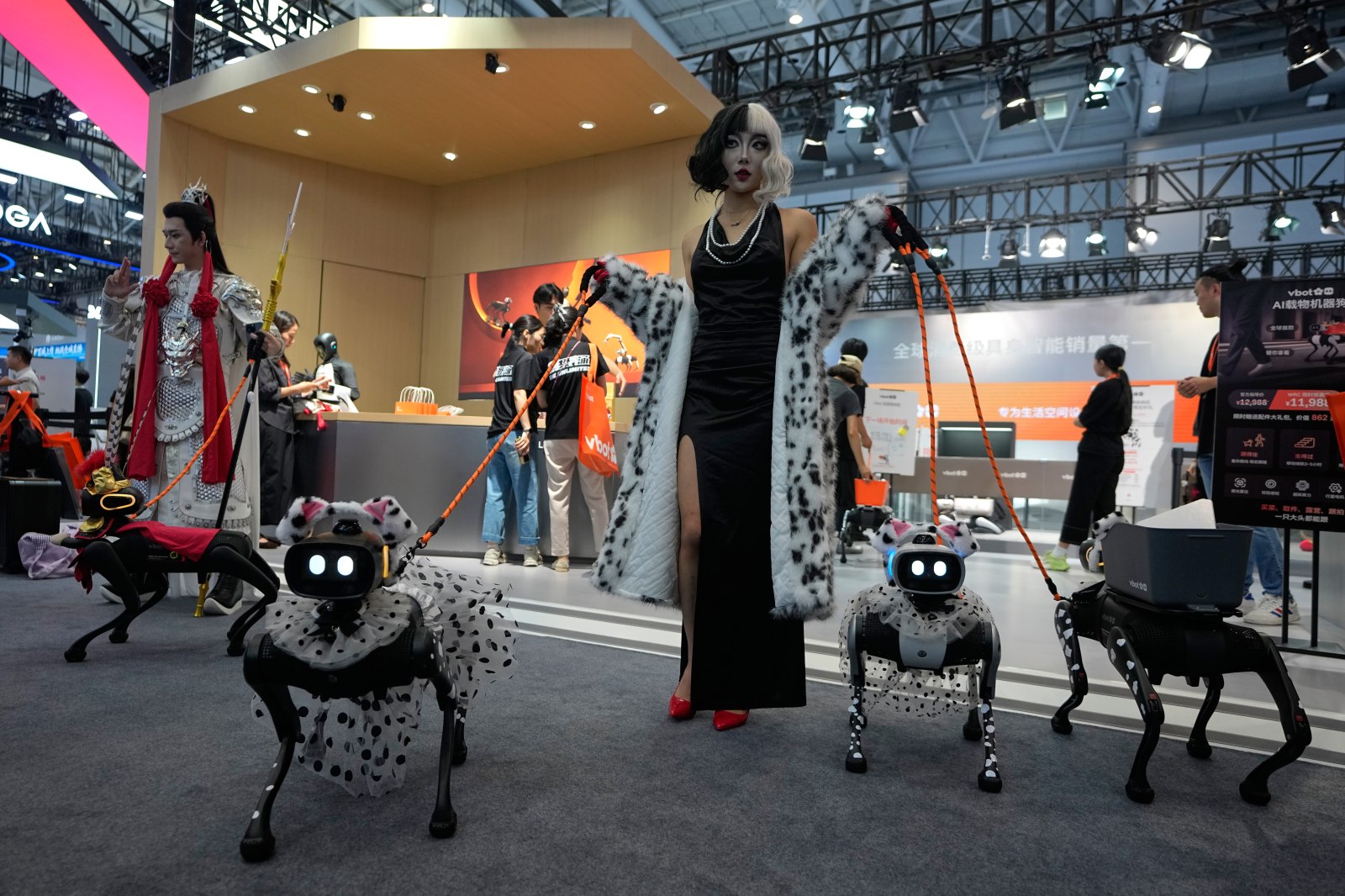
The 2026 World Robot Conference opened in Beijing on August 19 with humanoid robots, quadruped machines, and industrial demonstrations from more than 300 exhibitors. Associated Press reporting showed Unitree robots boxing, dancing, and playing table tennis, while UBTECH demonstrated factory-oriented tasks—underscoring both China's expanding vendor base and the gap between exhibition performance and proven deployment reliability.
The 2026 World Robot Conference opened in Beijing on August 19 with humanoid robots, quadruped machines, and industrial systems on display. Beijing's official event preview says the conference, expo, and contest run through August 23 and expected more than 300 exhibitors and over 2,000 exhibits.
Associated Press reporting from the opening day showed how broad the demonstrations have become. At Unitree's booth, humanoid robots boxed, danced, and played table tennis with a person. UBTECH brought industrial models that moved components in a factory-style demonstration, while other exhibitors presented robot dogs, mechanical hands, and machines marketed for assistance or emotional care.
Performance and practical work share the floor
The official program spans manufacturing, warehousing, logistics, retail, healthcare, eldercare, workplace safety, and emergency response. It also includes a program intended to match mass-produced humanoid robots, quadrupeds, and dexterous hands with outside teams for real-world trials.
The opening-day evidence also showed the limits of exhibition performance. AP reported that one helper robot spent several minutes trying and failing to fold a shirt. That contrast matters: a choreographed dance or boxing routine demonstrates motion control, but it does not establish whether a robot can complete variable tasks safely and repeatedly in a factory, warehouse, or home.
UBTECH also displayed a humanoid marketed for emotional care that can speak, make facial expressions, and move its neck and hands. AP reported a price of 168,000 yuan, or more than $24,000. Availability and a public price make the product more concrete than a concept demonstration, but they do not provide evidence of long-duration reliability or user outcomes.
What practitioners still need to evaluate
For robotics and embodied-AI teams, the conference is useful as a map of suppliers, form factors, and intended applications. Production evaluation still requires repeatable measures that the event reporting does not provide: task-success rates, recovery from failure, teleoperation requirements, uptime, safety behavior, integration effort, and total operating cost.
The 2026 conference therefore documents a fast-growing Chinese robotics ecosystem without proving that every displayed system is ready for unsupervised real-world deployment. The most consequential next evidence will come from sustained trials and customer operations rather than stage demonstrations.
Key Points
- 1Beijing's five-day World Robot Conference brought more than 300 exhibitors across humanoid, quadruped, industrial, and assistance-oriented robotics.
- 2Unitree emphasized performance demonstrations, while UBTECH and other vendors showed factory-style, care, and helper use cases.
- 3Opening-day reporting also documented task failures, reinforcing that exhibition demos are not substitutes for reliability, safety, and operating-cost evidence.
Scoring Rationale
The conference provides a timely view of China's humanoid and embodied-robotics supplier ecosystem and intended application areas. Its practical value is limited by the absence of standardized benchmarks, customer deployments, and independently measured reliability.
Sources
Primary source and supporting public references used for this report.
Practice interview problems based on real data
1,625 SQL & Python problems across 15 industry datasets — the exact type of data you work with.
Try 250 free problems