China launches offshore wind-powered underwater data center
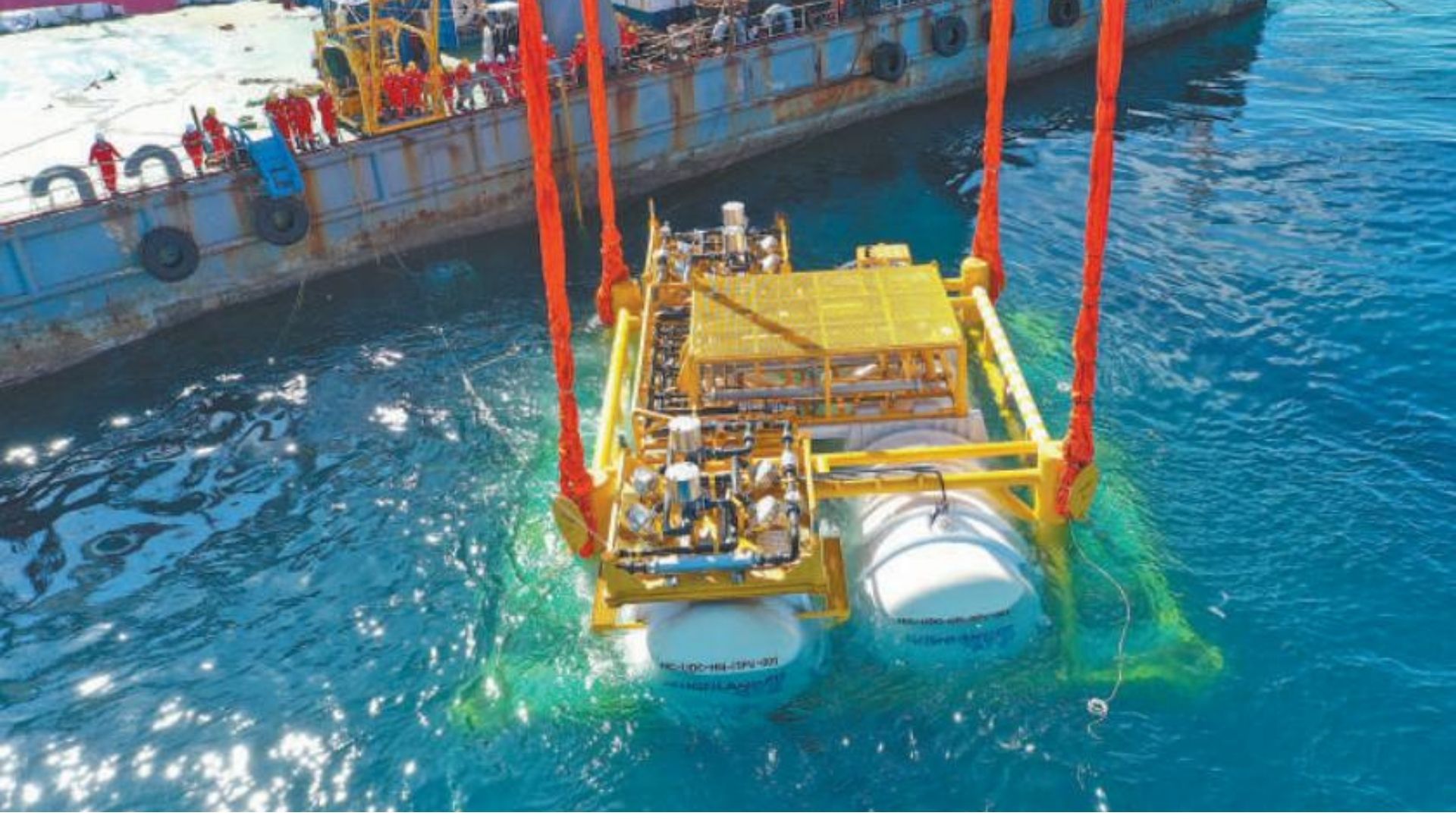
China has entered full commercial operation of an offshore, wind-powered underwater data center off Shanghai's Lingang Special Area, according to Interesting Engineering. The project, reported to have cost $226 million, completed construction in October 2025 and began full-scale operations last week following trials earlier in 2026, per Interesting Engineering. The facility houses nearly 2,000 servers, reportedly achieves a power usage effectiveness (PUE) of 1.15, and deploys GPU clusters from China Telecom to support AI, 5G, and large language model development, per Interesting Engineering. Combining offshore wind with passive seawater cooling can materially lower PUE for coastal compute, but practitioners should expect new engineering and operations tradeoffs compared with land-based facilities.
What happened
China has entered full commercial operation of an offshore, wind-powered underwater data center located off the coast of Shanghai's Lingang Special Area, according to Interesting Engineering. The project was launched in June 2025 under a cooperation agreement between the Lingang Special Area administrative committee, Shanghai Lingang Special Area Investment Holding Group, and HiCloud Technology, and reportedly carries a $226 million price tag, per Interesting Engineering. Construction reportedly completed in October 2025 and the facility began full-scale operations last week after earlier trials in 2026, per Interesting Engineering. Partners named in reporting include Shenergy Group, Shanghai Telecom, CCCC Third Harbor Engineering, and others, and China Telecom has deployed GPU clusters inside the subsea modules, per Interesting Engineering.
Technical details
The underwater data center uses pressure-resistant subsea modules positioned between the first and second phases of Lingang's offshore wind farm, allowing the site to draw electricity directly from nearby turbines, per Interesting Engineering. The facility reportedly houses nearly 2,000 servers and achieves a reported PUE of 1.15 while relying on local seawater as a passive cooling mechanism rather than conventional industrial chillers, according to Interesting Engineering. Developers say the project began with a 2.3 MW demonstration before scaling; reporting describes the use cases as AI workloads, big data annotation, 5G infrastructure support, and domestic large language model development, per Interesting Engineering.
Editorial analysis - technical context
Coastal sites that combine local renewable generation and seawater cooling can reduce operational energy intensity, which matters for AI-heavy workloads where power and cooling dominate costs. At the same time, subsea modules change the engineering envelope: pressure resistance, long-distance fiber and power routing, and maintenance logistics typically increase capital and operational complexity compared with onshore racks. Operators and practitioners evaluating similar designs should weigh lower steady-state PUE against harder-to-service hardware and different failure modes.
Industry context
The deployment fits a broader pattern of experimenting with modular and location-diverse compute to address grid constraints, sustainability goals, and regional capacity needs. For coastal and island jurisdictions with strong offshore wind potential, the combination is a logical testbed for lower-carbon compute, but scaling depends on permitting, subsea cabling capacity, and demonstrated lifecycle reliability.
What to watch
Observers should look for independent audits of the reported 1.15 PUE, published uptime and maintenance records for the subsea modules, third-party measurements of network latency to major population centers, and whether other operators publish comparable deployments or replication plans. Reporting to date does not include an independent technical whitepaper or full performance dataset; Interesting Engineering is the primary published account of the project.
Key Points
- 1Offshore wind plus seawater cooling can lower PUE materially, changing operational cost models for coastal AI workloads.
- 2Subsea module designs reduce cooling complexity but increase engineering, cabling, and maintenance tradeoffs versus land facilities.
- 3Scaling offshore UDCs depends on permitting, subsea power and fiber capacity, and independent verification of reported metrics.
Scoring Rationale
This is a notable infrastructure milestone combining offshore wind and subsea data center technology with reported low PUE and GPU deployments for AI workloads. It is important for practitioners tracking sustainable, location-diverse compute, but it is a single project without independent performance audits.
Sources
Public references used for this report.
Practice interview problems based on real data
1,625 SQL & Python problems across 15 industry datasets — the exact type of data you work with.
Try 250 free problems