
Children Interpret Human Gaze but Ignore Robot Gaze
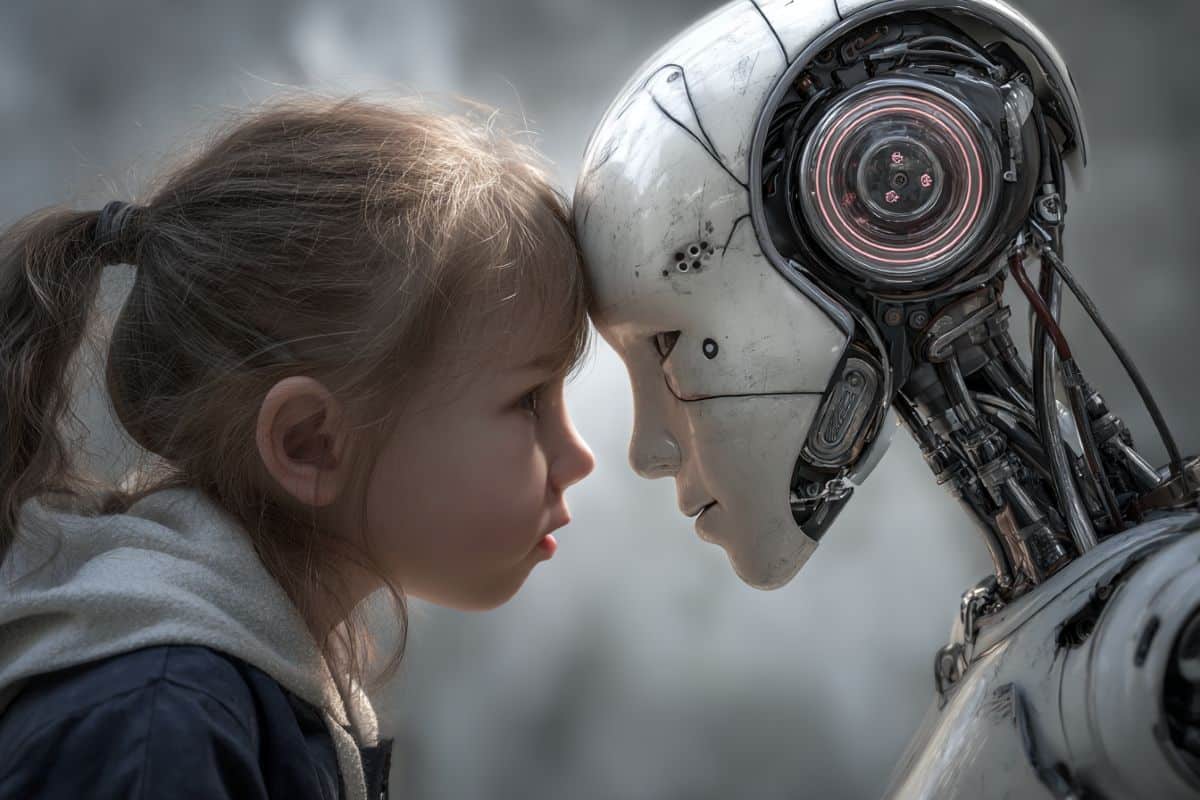
Researchers coordinated by Antonella Marchetti at Universita Cattolica tested Italian children aged 3 to 5 on whether they inferred preferences from gaze, using videos of either a human or a humanoid robot named Robovie looking at one of two objects; 58 preschool children participated, per Phys.org and ScienceBlog. Across reports (Phys.org, NeuroscienceNews, ScienceBlog), children reliably treated a human gazer's look as expressing a preference but did not attribute the same preference to the robot's gaze, and neither human nor robot gaze changed the children's own object choices. The study, coauthored with colleagues including Davide Massaro, Cinzia Di Dio, and Federico Manzi, is published in the International Journal of Child-Computer Interaction (DOI: 10.1016/j.ijcci.2026.100822).
This study puts an empirical floor under a common design assumption in child-facing robotics: giving a robot human-like eyes and a human-like gaze is not, by itself, enough to make preschoolers read intention into that gaze the way they do for a person, which matters directly for anyone building social robots or embodied AI aimed at young children.
What happened
The study, coordinated by Antonella Marchetti of Universita Cattolica with colleagues including Davide Massaro, Cinzia Di Dio, and Federico Manzi, tested how young children interpret gaze from humans versus a humanoid robot. Per Phys.org, the experiment involved Italian children aged 3 to 5 who watched short videos in which either a person or a humanoid robot called Robovie looked at one of two objects. ScienceBlog reports the sample size was 58 preschool children. Across the reports (Phys.org, NeuroscienceNews, ScienceBlog), children consistently inferred a target object as the human gazer's preferred item, but they did not make the same preference attribution when the gazer was the humanoid robot; gaze from either agent did not change the children's own object choices. The paper appears in the International Journal of Child-Computer Interaction (DOI: 10.1016/j.ijcci.2026.100822).
Technical context
The findings document a boundary condition for basic social-cognitive inference: preschoolers deploy referential gaze to attribute preference reliably for human agents but not for a mid-range humanoid robot. Prior human-robot interaction literature emphasizes contingency, reciprocal interaction, and contextual cues as stronger drivers of social attribution than appearance or an isolated signal like gaze alone, which this study's results are consistent with.
For practitioners
For teams designing embodied AI for children, the result suggests that single-signal mimicry, such as reproducing eye movement alone, is unlikely to substitute for richer, multimodal interaction if the goal is to evoke humanlike social inferences. The study's sample is modest (58 children) and used video stimuli rather than live interaction, so its external validity to deployed robots in naturalistic, contingent settings remains an open empirical question rather than a settled conclusion.
What to watch
Watch for replication with live, contingent robot behavior and larger, more diverse samples; experiments that vary reciprocity (turn-taking), verbal labeling, and multimodal cues; and human-robot interaction work that measures not just attribution but downstream learning or trust. The published article (DOI: 10.1016/j.ijcci.2026.100822) contains the methodological details and the authors' own framing, which is not fully captured in the press coverage.
Key Points
- 1Young children aged 3 to 5 reliably infer preferences from human gaze but not from a humanoid robot's gaze, per the study's findings.
- 2Single-signal mimicry, such as isolated eye movement, appears insufficient to trigger mental-state attribution in preschoolers, calling for richer interaction design.
- 3For embodied-AI design, testing contingency, reciprocity, and live interaction is the logical next step to evaluate social attribution in robots.
Scoring Rationale
The study offers actionable empirical constraints for designers of social robots and contributes usefully to human-robot interaction literature, but it is a single, moderate-sized lab study rather than a field-changing result, keeping it in the notable tier without any recency discount.
Sources
Public references used for this report.
Practice interview problems based on real data
1,625 SQL & Python problems across 15 industry datasets — the exact type of data you work with.
Try 250 free problems
