Cambridge tests AI-designed universal coronavirus vaccine
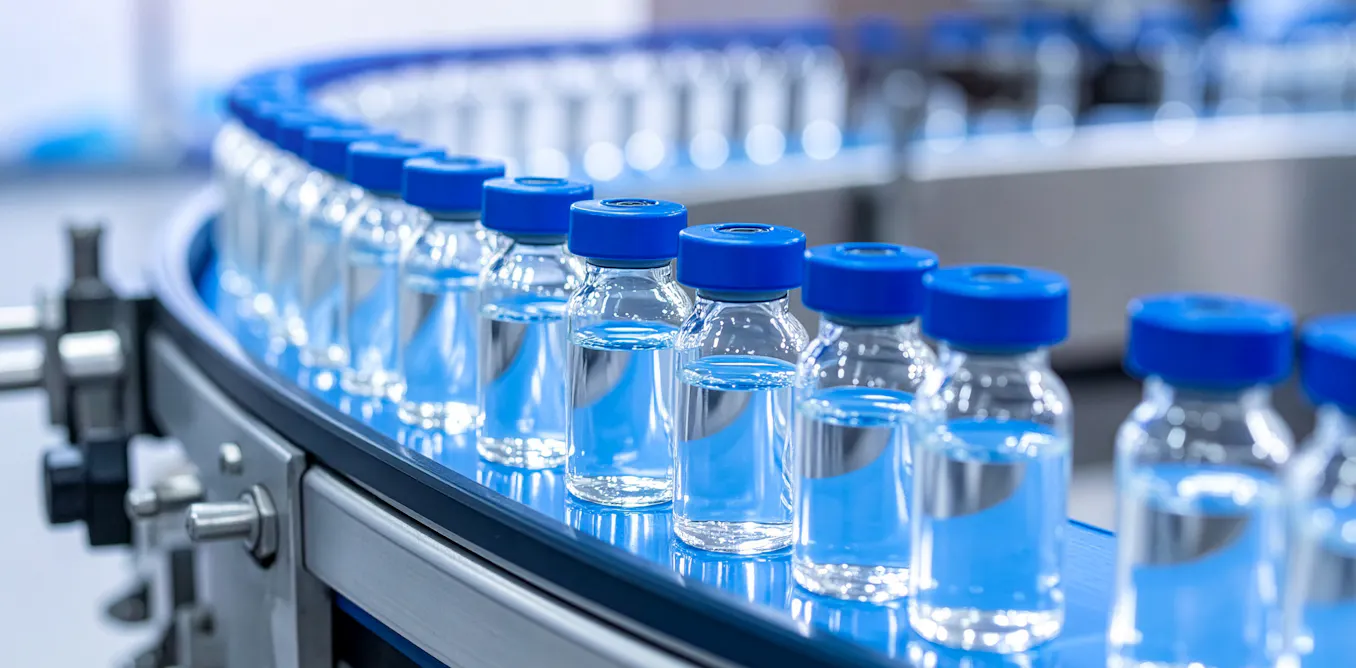
Researchers at the University of Cambridge and spinout DIOSynVax have completed the first human trial of a coronavirus vaccine whose active antigen was designed entirely by AI, according to a University of Cambridge release, the NIHR, and the peer-reviewed report in the Journal of Infection. The Phase 1, dose-escalation study of the candidate pEVAC-PS enrolled 39 healthy volunteers aged 18 to 50 at NIHR facilities in Southampton and Cambridge and found the shot safe and well tolerated. Delivered as a DNA vaccine through a needle-free micro fluid jet, the AI-designed "super-antigen" targets features conserved across the Sarbeco family and produced cross-reactive immune responses to SARS-CoV-2, SARS, and related bat coronaviruses. Trial reports note the responses were modest and did not yet show broad or robust neutralising activity, per AFP coverage and the paper. Lead researcher Professor Jonathan Heeney called the approach a move from "reactive" to "future proof" vaccine development; a Phase 2 study is planned.
What happened
Researchers at the University of Cambridge and its spinout DIOSynVax (DVX) Ltd have completed the first human trial of a vaccine whose active antigen was designed entirely by computer, according to a University of Cambridge press release, the NIHR, and a peer-reviewed report in the Journal of Infection. The Phase 1, dose-escalation trial of the candidate pan-Sarbecovirus vaccine pEVAC-PS enrolled 39 healthy volunteers aged 18 to 50 at NIHR Clinical Research Facilities in Southampton and Cambridge, and was sponsored by University Hospital Southampton NHS Foundation Trust. The sponsors reported the vaccine was safe and caused no significant side effects.
How the vaccine was designed
According to the Cambridge release and ScienceDaily, the team used machine learning to analyse genetic sequences of Sarbeco coronaviruses gathered through global surveillance, then combined the broadly conserved features into a single compact immunogen they call a "super-antigen." In this trial the antigen was delivered as a DNA vaccine through a needle-free micro fluid jet. The work is described as the first time an antigen created entirely through computer simulations has been tested in people.
Trial results and the key caveat
The trial team reported cross-reactive immune responses not only to SARS-CoV-2 and SARS but also to related bat sarbecoviruses that have not infected humans, per the Cambridge release and ScienceDaily. Independent coverage is more measured: AFP reporting (via Medical Xpress) and the paper itself indicate the responses were modest and did not yet demonstrate broad or robust neutralising activity, with the authors framing the cross-reactive binding as support for the design concept rather than proof of protection. This is a safety and proof-of-concept result, not evidence of efficacy.
Why it matters for AI practitioners
For machine-learning teams, the milestone is that a sequence-based generative design progressed end-to-end into a human candidate, not merely into hypothesis generation or epitope mapping. Industry observers have seen comparable computational-first workflows compress candidate discovery; the open question, as here, is whether in silico breadth survives contact with immunogenicity, delivery, and manufacturing constraints.
What to watch
Look for published immune-phenotyping and neutralisation data in the Journal of Infection report (DOI 10.1016/j.jinf.2026.106759), the planned Phase 2 study in a larger and more diverse cohort, and independent replication of cross-reactive responses against diverse sarbecoviruses. Chief investigator Professor Saul Faust of the University of Southampton described the class as "future-proofed," while lead researcher Professor Jonathan Heeney said, "We've converted vaccine development from being reactive to being future proof."
The bottom line
The result validates the feasibility of pushing AI-designed immunogens into human trials, but broader impact will hinge on robust immunogenicity endpoints, scalable manufacture, and replication in larger controlled studies. The project was funded primarily by Innovate UK.
Key Points
- 1An antigen designed entirely by AI reached first-in-human testing, showing generative sequence models can yield real vaccine candidates, not just hypotheses.
- 2The Phase 1 shot was safe but immune responses were modest, without broad neutralising activity, so efficacy remains unproven pending larger trials.
- 3For ML-to-wet pipelines, the milestone validates computational antigen design while underscoring that delivery, immunogenicity, and manufacturing still gate real translation.
Scoring Rationale
First-in-human testing of an antigen designed entirely by AI is a genuine world-first for ML-driven vaccine design and a useful proof point for generative biology. The score is tempered because this is a small Phase 1 safety trial whose immune responses were modest and not broadly neutralising, so clinical efficacy is unproven; it is an application of AI to biology rather than a core AI/ML advance.
Sources
Public references used for this report.
View 11 more sources
- 'World-first' vaccine designed by artificial intelligencebbc.com
- AI-designed universal coronavirus vaccine passes first human trialsciencedaily.com
- First human trial backs AI-designed 'universal' vaccinepharmaphorum.com
- First AI-designed 'universal vaccine' tested in humans: UK researchersmedicalxpress.com
- New AI-designed vaccine could prevent pandemics and save millions of lives, scientists saynews.sky.com
- First AI-designed 'universal vaccine' tested in humansscmp.com
- The University of Cambridge says it successfully tested a vaccine with an AI-designed antigenengadget.com
- 'World first' computer-designed vaccine shows immune response in early human testinginterestingengineering.com
- Researchers Are Using AI to Create Vaccines - and It's Workinggizmodo.com
- 'World-first' vaccine designed by artificial intelligencebbc.co.uk
- AI-designed vaccine clears first human trial, but questions remainfreemalaysiatoday.com
Practice interview problems based on real data
1,625 SQL & Python problems across 15 industry datasets — the exact type of data you work with.
Try 250 free problems