British Army Confirms Investment in Uncrewed Ground Vehicles
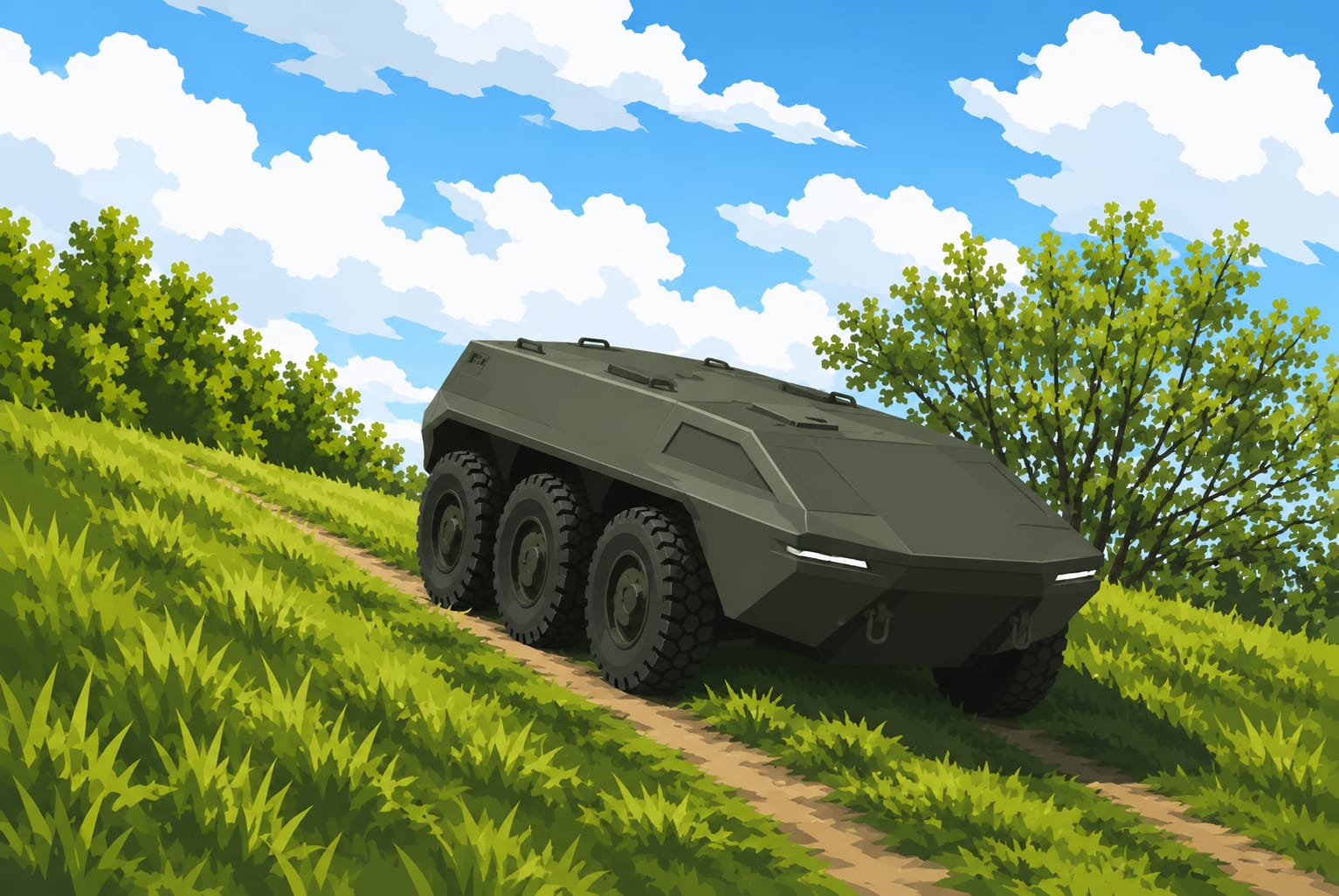
Defence Secretary Dan Jarvis confirmed at the Royal United Services Institute Land Warfare Conference on 23 June that the forthcoming Defence Investment Plan will invest in uncrewed ground vehicles, coverage and a transcript of his speech indicate; UK Defence Journal quotes Jarvis saying, "The DIP will make real those ambitions, and that includes investing in the uncrewed ground vehicles the Army requires to build the next generation of land forces." Reporting by Forces News and Forces.net records that General Sir Roly Walker, the Chief of the General Staff, argued at the same conference that future crewed deployments should be accompanied by uncrewed ground vehicles and outlined the Army's recce-strike integration of autonomy, AI and precision fires. This publicly stated procurement intent moves uncrewed ground systems toward formal programme status rather than niche experimentation, according to public coverage.
What happened
According to coverage in UK Defence Journal, Defence Secretary Dan Jarvis told the Royal United Services Institute Land Warfare Conference on 23 June 2026 that the forthcoming Defence Investment Plan (DIP) will allocate resources to modernisation priorities, including investment in uncrewed ground vehicles. UK Defence Journal quotes Jarvis: "The DIP will make real those ambitions, and that includes investing in the uncrewed ground vehicles the Army requires to build the next generation of land forces." The gov.uk transcript of Jarvis' speech confirms his appearance at the RUSI conference on that date. Reporting by Forces News and Forces.net records that General Sir Roly Walker, the Chief of the General Staff, said at the same conference, "I have been clear to industry: in the future, no crewed platform should ever deploy in future without uncrewed ground vehicles."
UK Defence Journal also notes recent Army activity such as trials under the Robotic Platoon Vehicle programme and situates the investment within the Army's recce-strike concept, which integrates uncrewed aerial, ground and undersea systems with longer-range fires and electronic warfare. Per Forces News, Walker framed the Army's direction around the 20-40-40 fighting system: roughly one-fifth of combat power from crewed heavy platforms, 40% from attritable autonomous systems (drones, UGVs), and 40% from high-volume fires.
Editorial analysis
Declaring formal investment lines for uncrewed ground vehicles (UGVs) typically marks a shift from ad hoc experimentation to procurement, testing, and doctrine integration. Such transitions usually increase emphasis on interoperability, sensor fusion, communications resilience, and human-machine teaming across command layers. The 20-40-40 framing elevates requirements in three technical areas: perception and targeting sensors to enable distributed reconnaissance; low-latency secure datalinks for coordinated effects; and autonomy layers that support supervised autonomy rather than fully unconstrained decision-making. Observers following NATO and Ukrainian battlefield lessons have highlighted those same technical priorities in recent reporting.
Industry context
Public reporting frames the announcements as part of a broader modernisation agenda led by Army senior leadership. For defence contractors and systems integrators, an explicit DIP line for UGVs commonly opens opportunities for scaled trials, follow-on development contracts, and tighter alignment with munitions, artillery, and EW systems. Calibre Defence reports Jarvis committed to publishing the DIP before the NATO Ankara summit on 7 July 2026, giving industry a near-term signal date. For the supply chain, a DIP line typically triggers formal RFI and RFT processes, interoperability testing requirements, and specifications for safe operation alongside crewed platforms.
What to watch
- •Procurement signals: watch for formal Requests for Information or Requests for Tender tied to the Defence Investment Plan and any published capability requirements.
- •Programme milestones: follow public announcements on trials under the Robotic Platoon Vehicle programme and any Ministry of Defence testing reports.
- •Policy and safety frameworks: monitor updates on doctrine governing autonomy, rules of engagement for remotely operated or autonomous effects, and engineering standards for cyber resilience and human-in-the-loop safeguards.
Bottom line
Reporting from UK Defence Journal, the gov.uk speech transcript, Forces News, and Calibre Defence together document a public senior-level commitment to invest in uncrewed ground vehicles through the forthcoming Defence Investment Plan, within the Army's broader recce-strike emphasis integrating autonomy and AI. For practitioners in autonomy, robotics, and defence integration, the announcement signals increased formal procurement activity, interoperability requirements, and trialing opportunities over the medium term.
Key Points
- 1Senior UK officials publicly link the Defence Investment Plan to funding for uncrewed ground vehicles, moving UGVs toward formal procurement.
- 2Public coverage frames UGV investment within a recce-strike modernisation, increasing emphasis on sensor fusion, secure comms, and human-machine teaming.
- 3Observers should track RFI/RFT releases, Robotic Platoon Vehicle programme milestones, and doctrine on autonomy and rules of engagement.
Scoring Rationale
A government-level commitment to fund uncrewed ground vehicles is a notable procurement signal for defence-technology practitioners, likely to increase contracting, testing, and interoperability requirements. The story is significant but not paradigm-shifting.
Sources
Public references used for this report.
Practice with real FinTech & Trading data
90 SQL & Python problems · 15 industry datasets
250 free problems · No credit card
See all FinTech & Trading problems