Britain Woos Anthropic Expansion After US Defence Clash
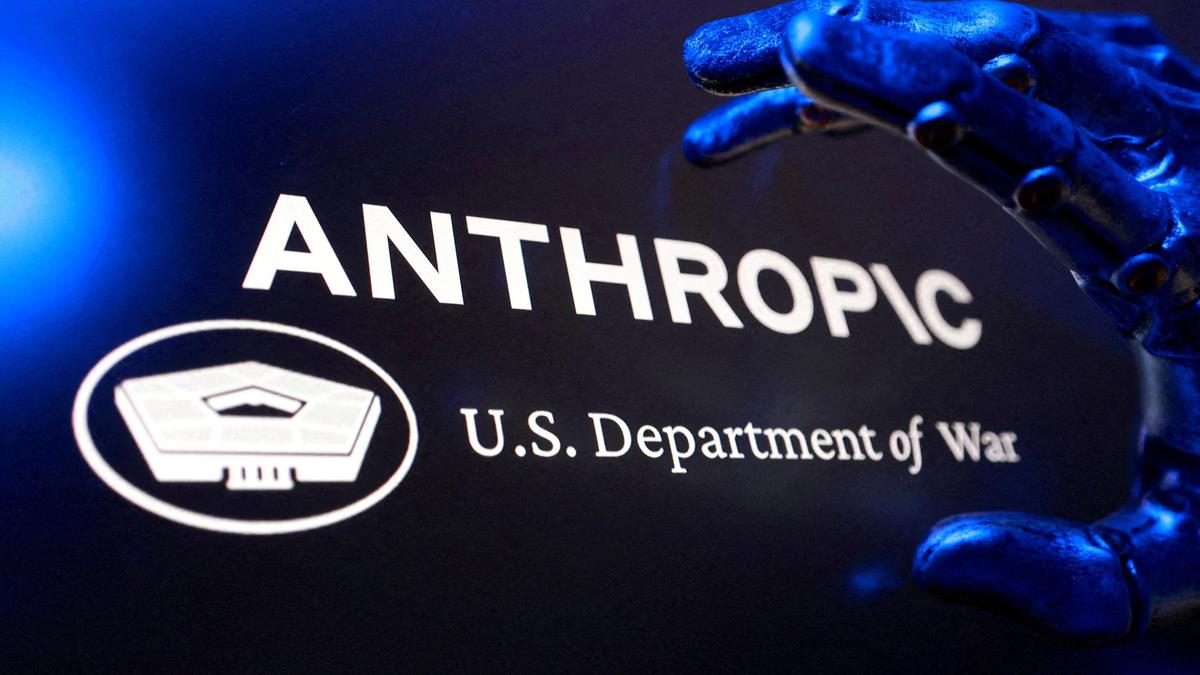
Britain is actively courting Anthropic to expand in the UK following a dispute between the AI developer and the U.S. Defense Department. Government proposals range from a larger London office to a potential dual stock listing; Prime Minister Keir Starmer's office backs outreach. Anthropic CEO Dario Amodei is scheduled to visit the UK in late May. The outreach follows a U.S. national-security supply-chain risk designation tied to Anthropic's refusal to let the military use its Claude chatbot for surveillance or autonomous-weapons purposes — a designation a U.S. judge has temporarily blocked while litigation proceeds. The UK move signals competition among governments to attract AI talent and infrastructure amid geopolitical friction over military uses of advanced models.
What happened
Britain is attempting to recruit Anthropic to expand its UK presence after tensions between the AI startup and the U.S. Defense Department created a perceived opening. Proposals under consideration include a larger London office and even a dual stock listing, and Prime Minister Keir Starmer's office has signalled support for the effort. Anthropic CEO Dario Amodei will meet UK officials on a visit scheduled for late May.
Technical and regulatory context
The dispute stems from Anthropic's refusal to permit the U.S. military to use its Claude chatbot for surveillance or autonomous weapons, prompting the U.S. Department of Defense to designate the company a "national-security supply-chain risk." A U.S. judge has temporarily stayed that blacklisting, and Anthropic has filed a second lawsuit challenging the designation. Those legal and regulatory actions directly affect the firm's commercial relationships with government and defense customers and raise questions about cross-border deployment and procurement policies for foundational models.
Key details
Reuters relayed the Financial Times reporting that UK Department of Science, Innovation and Technology officials have prepared a menu of incentives and structural options to present to Anthropic. The timing is deliberate: officials will put these proposals to Amodei during his late-May visit. The UK outreach explicitly seeks to capitalise on the strain between Anthropic and the U.S. government and to position the UK as an attractive jurisdiction for AI talent, corporate listings, and operations.
Why practitioners should care
This episode highlights growing geopolitical fragmentation in the governance and commercialisation of advanced AI. Supply-chain risk designations and related litigation can rapidly change a vendor's ability to serve public-sector and defense customers, affecting procurement, compliance, and deployment strategies. For ML engineers, architects, and procurement leads, the case underlines the importance of tracking legal/regulatory status of model providers, multi-jurisdictional risk, and corporate structuring moves (e.g., regional offices or listings) that affect data residency, model access, and contractual terms.
What to watch
outcomes of Anthropic's ongoing litigation and the U.S. judge's stay; concrete incentives the UK offers (office commitments, listing pathways); any shift in Anthropic's commercial policy toward government or defense contracts. Dario Amodei's late-May UK meetings will be a focal point for near-term developments.
Key Points
- 1UK courting Anthropic leverages US-DoD friction to attract AI talent and listings, increasing regional competition for foundational-model firms.
- 2US supply-chain risk designation and accompanying litigation illustrate how national-security labels can rapidly alter vendor access to government and defense customers.
- 3Anthropic's corporate decisions (office, listing) will affect data residency, procurement contracts, and model availability for European and global customers.
Scoring Rationale
The story is highly relevant to AI practitioners because it concerns a major foundational-model vendor and geopolitically driven access restrictions (relevance 2.0). Novelty and scope are moderate: significant but not unprecedented (novelty 1.0, scope 1.5). Actionability is limited for day-to-day engineering but important for procurement and policy teams (1.0). Credibility is strong due to Reuters/FT sourcing (1.5). A recent-news freshness penalty (-1.0) reduces the total to 6.0.
Sources
Public references used for this report.
View 5 more sources
- Britain woos Anthropic expansion after US defence clash, FT saysinvesting.com
- Britain woos expansion effort by Anthropic after US defence clash ...uk.finance.yahoo.com
- UK courts Anthropic with London expansion amid Pentagon clashmsn.com
- Britain woos Anthropic expansion after US defence clash: FTtbsnews.net
- Britain woos Anthropic after US defence clashthenews.com.pk
Practice interview problems based on real data
1,625 SQL & Python problems across 15 industry datasets — the exact type of data you work with.
Try 250 free problems