Brain Organoids Learn To Balance Virtual Pole
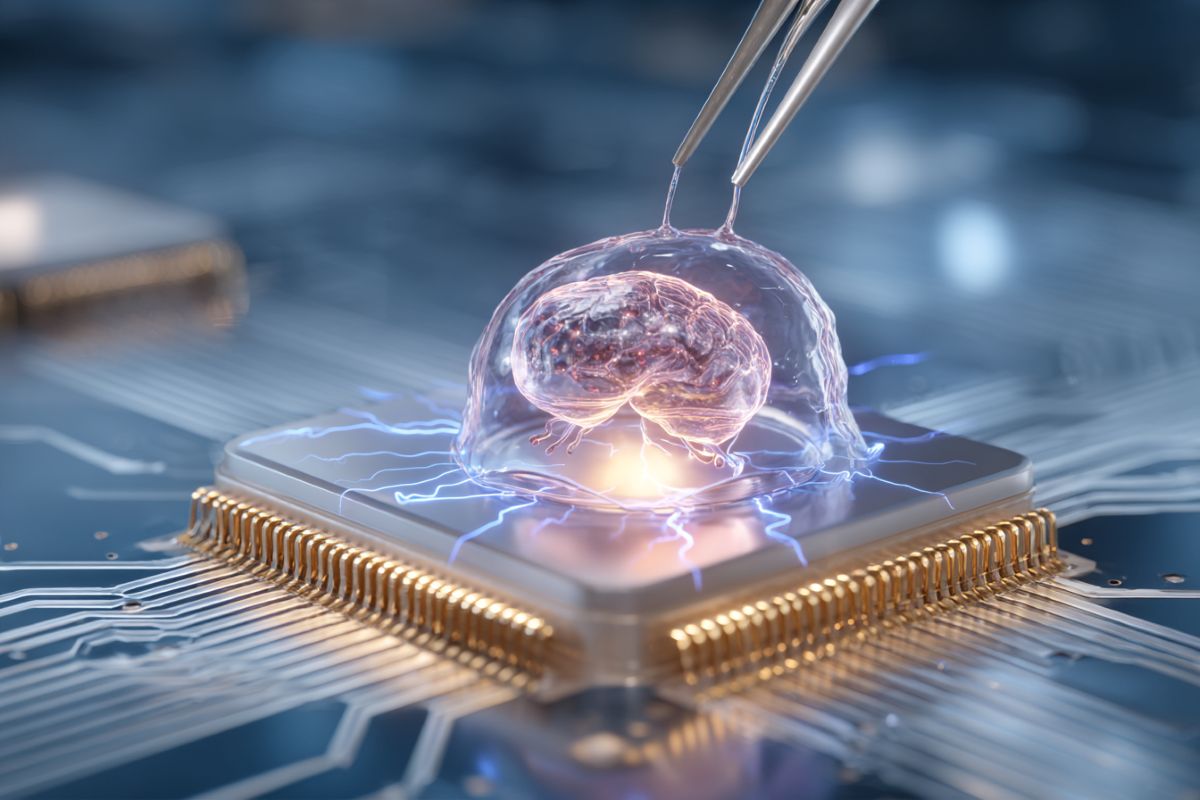
Researchers at the University of California, Santa Cruz published in Cell Reports demonstrate that lab-grown brain organoids can learn to solve the cart-pole benchmark using a closed-loop bioelectrical interface and reinforcement-learning coach. Organoids' success rate rose from 4.5% to 46% under adaptive coaching, showing goal-directed learning despite lacking bodies or dopamine. This method offers a platform to study neural computation and model neurological learning impairments.
Key Points
- 1Demonstrate goal-directed learning: organoids trained via closed-loop bioelectrical interface to solve cart-pole.
- 2Show adaptive computation is intrinsic: learning occurs without body, dopamine, or sensory experience.
- 3Enable new disease models: method provides platform to study neurological learning impairments and interventions.
Scoring Rationale
Peer-reviewed, novel demonstration of goal-directed organoid learning, limited by mouse-derived tissue and specialized experimental setup.
Practice interview problems based on real data
1,625 SQL & Python problems across 15 industry datasets — the exact type of data you work with.
Try 250 free problems