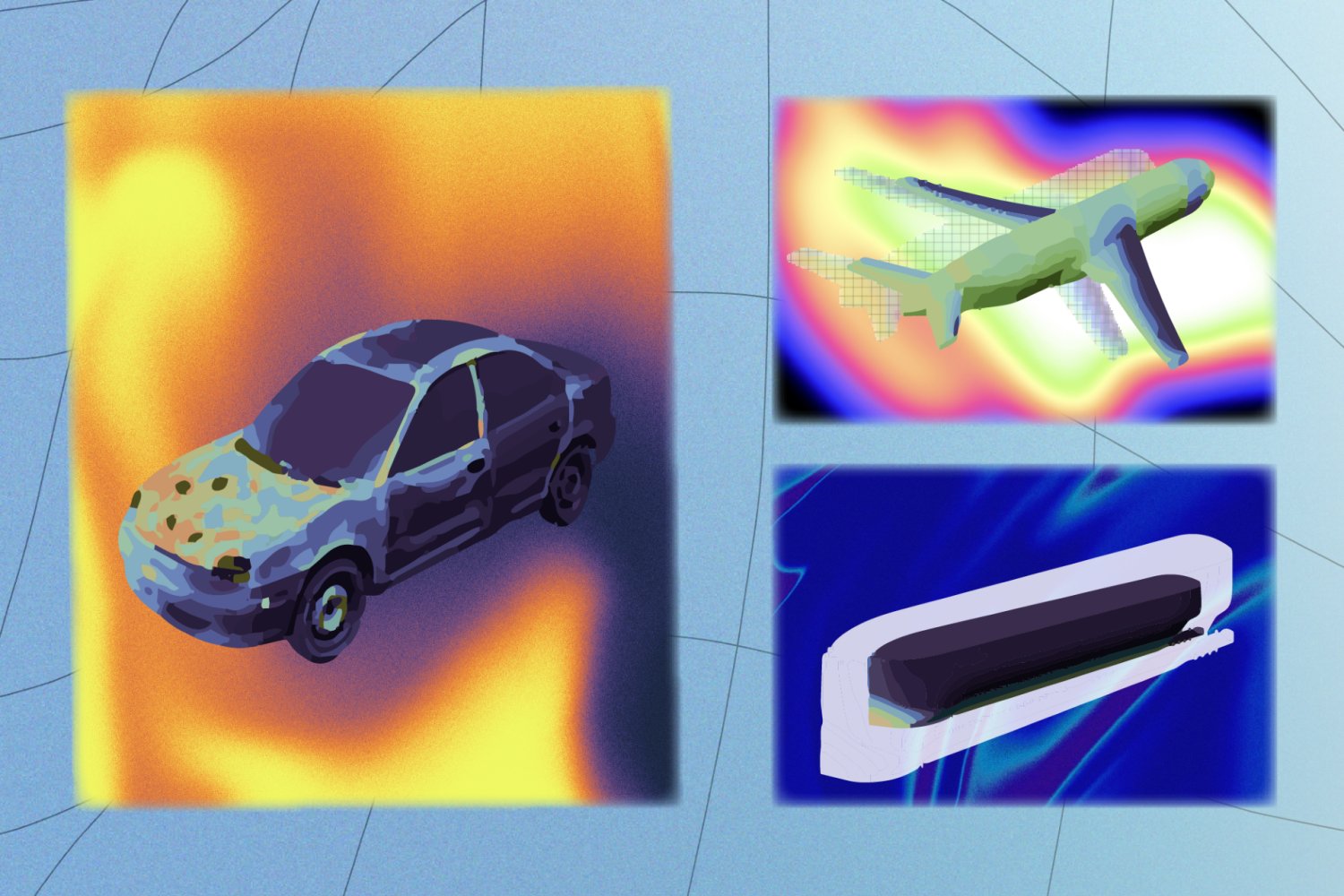
Backflip AI Launches Mesh-to-CAD Foundation Model
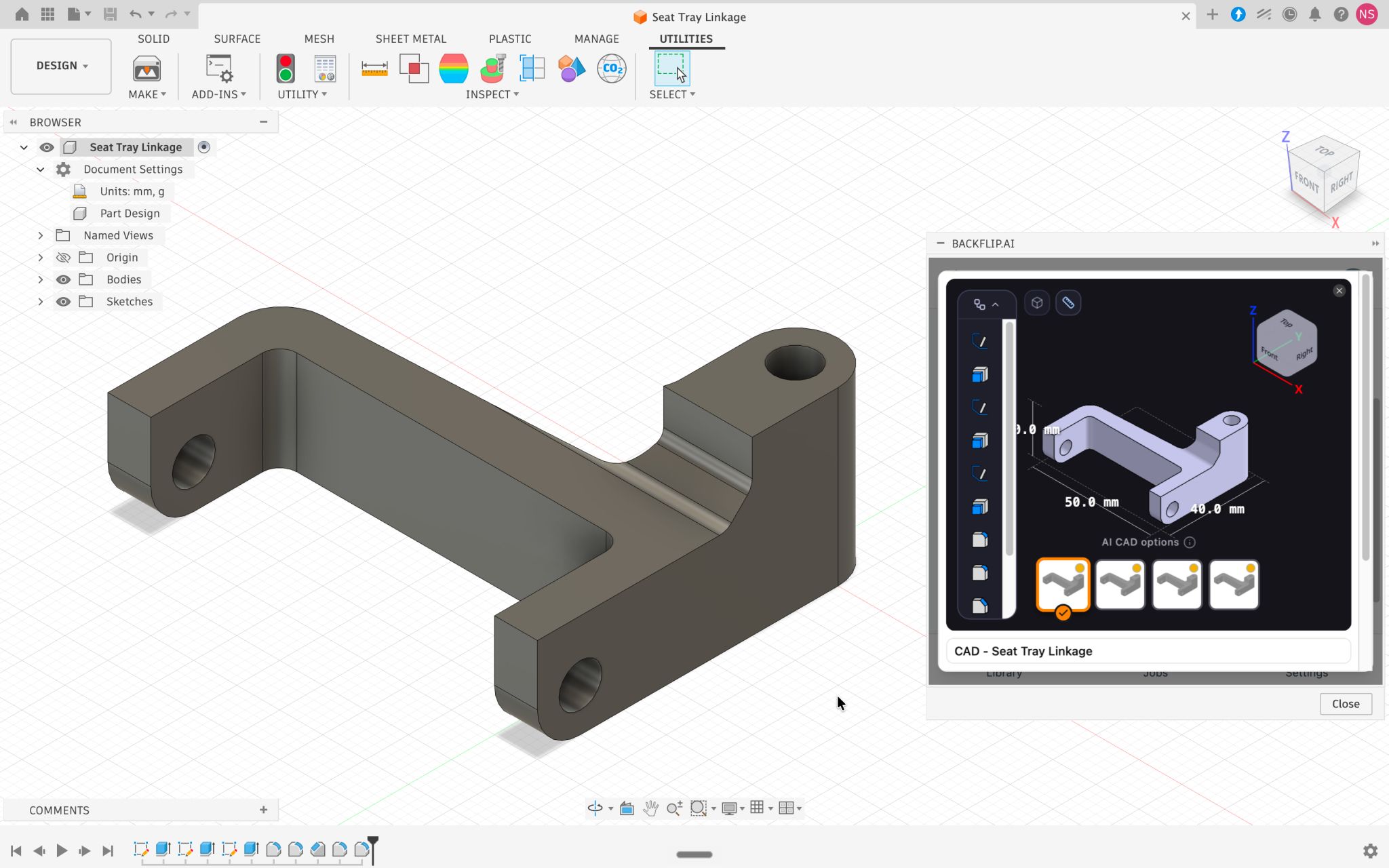
Backflip AI made its CAD copilot generally available on August 4 as an Autodesk Fusion add-in and standalone web app. Engineering.com reports that the second-generation model converts 3D scans and mesh files into editable parametric CAD feature trees, replacing an earlier model that CEO Greg Mark said the company did not ship. Backflip estimates digitization costs can fall from roughly $1,500 per part to about $10.
Backflip AI made its CAD copilot generally available on August 4 as an add-in for Autodesk Fusion and as a standalone web application. The product uses a second-generation foundation model to convert 3D scans, STL files, and other mesh data into editable parametric CAD models with feature trees, according to Engineering.com, Develop3D, and 3D Printing Industry.
The release follows a lengthy delay from an earlier demonstration. Backflip CEO Greg Mark told Engineering.com that the company did not ship its first model because "The first model wasn't good." Mark said the prior system could generate parametric CAD but produced models that were difficult to edit, leading Backflip to rearchitect the system.
Feature-tree reconstruction rather than mesh wrapping
Backflip's model constructs geometry through CAD operations such as extrude, revolve, pattern, chamfer, and fillet, producing a feature tree intended to resemble a human engineer's modeling sequence, according to 3D Printing Industry. That distinction matters because a mesh, surface model, or unstructured solid often requires substantial cleanup before it can be modified in a conventional mechanical-CAD workflow.
Founding engineer Kairo Morton told Develop3D that Backflip trained its model with 3D CAD operations as a first-class primitive. "We built ours with 3D CAD operations as a first-class primitive and trained it to design the way engineers actually do - breaking down a bulk geometry, then rebuilding it feature by feature, operation by operation," Morton said.
The product's Scan to CAD workflow includes agent loops that reconstruct a mesh, evaluate the output, and iterate to improve fidelity and dimensional accuracy, 3D Printing Industry reports. A Fast mode handles typical geometry in a couple of minutes, while a Thinking mode allocates more time to complex geometry. The tool is optimized for moderate-complexity 3-axis CNC-milled and turned components, according to that report.
Cost and workflow claims require validation
Backflip estimates that turning a physical part into usable CAD has typically cost roughly $1,500 or more and says its tool can reduce that figure to about $10 per part. 3D Printing Industry reports a claimed turnaround of one to five minutes, compared with hours or days of skilled reverse-engineering work. Those are company performance and cost claims, rather than independently benchmarked results in the coverage reviewed.
The web application exports STEP files for use in mechanical CAD packages, and paid access starts at $20 per month after four free reconstructions, according to 3D Printing Industry. Develop3D reports that plugins for other CAD packages are in development for later this year. Backflip has also reported production deployment at an unnamed major automotive manufacturer, according to VoxelMatters and 3D Printing Industry.
Backflip also includes Multimodal AI Search, which searches a parts library from text prompts or photographs, Develop3D reports. In comparable manufacturing-data workflows, the practical value of scan-to-CAD systems depends on whether reconstructed dimensions, tolerances, material assumptions, and feature relationships survive downstream engineering review. Teams evaluating such tools generally need validation against metrology data and existing design-control processes before using generated models in production changes.
For CAD and manufacturing-data practitioners, the release is notable less for mesh generation itself than for Backflip's reported attempt to generate editable, operation-level model histories. If that output proves reliable across varied parts and scan quality, it could reduce a recurring bottleneck in legacy-equipment maintenance, spare-parts digitization, and design-archive recovery.
Key Points
- 1Backflip's generally available copilot converts scan and mesh inputs into editable parametric CAD models, targeting reverse-engineering workflows rather than static 3D reconstruction.
- 2The company claims a reduction from roughly $1,500 to $10 per digitized part, though independent accuracy and cost validation was not reported.
- 3In comparable CAD automation deployments, editable feature trees matter because engineers need to inspect, modify, validate, and govern downstream geometry.
Scoring Rationale
This is a notable product release for mechanical-CAD, manufacturing, and reverse-engineering teams because it targets editable feature-tree generation from physical-part scans. The reported cost and turnaround improvements could be meaningful, but the available coverage does not provide independent accuracy benchmarks or broad production-validation results.
Sources
Public references used for this report.
Practice interview problems based on real data
1,625 SQL & Python problems across 15 industry datasets — the exact type of data you work with.
Try 250 free problems