AWS Expands Bedrock with Frontier Models and Agents
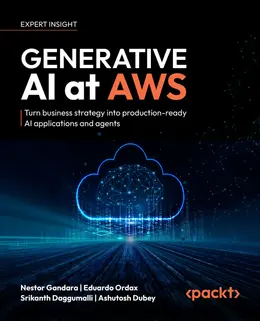
Per an AWS blog post, Anthropic's Claude Opus 4.8 is now available on Amazon Bedrock, with improvements aimed at agentic coding and long-running workflows. According to an Amazon announcement, the latest OpenAI models are available in limited preview on Amazon Bedrock, and the OpenAI coding agent Codex plus Amazon Bedrock Managed Agents are offered in limited preview as well. An Amazon press release describes CRED codelens running on Bedrock, reporting 4x AI acceleration and orchestration of 400+ specialized agents. The Bedrock product page states Bedrock powers generative AI for more than 100,000 organizations worldwide, and AWS Skill Builder lists a Bedrock course for developers. Cloud platforms combining frontier models, managed agents, and governance tooling lower integration friction for enterprises while raising expectations for production readiness.
What happened
Per an AWS blog post, Anthropic's Claude Opus 4.8 is now available on Amazon Bedrock, with stated improvements for coding, multi-stage agentic tasks, and sustained context across long sessions. According to an Amazon corporate announcement, the latest OpenAI models are available in limited preview on Amazon Bedrock, and the OpenAI coding agent Codex plus Amazon Bedrock Managed Agents are offered in limited preview to help customers build production-ready agents on AWS. An Amazon press release describes CRED codelens running on Bedrock and reports 4x AI acceleration and orchestration of 400+ specialized agents across engineering and business workflows. The Amazon Bedrock product page states the platform powers generative AI for more than 100,000 organizations worldwide. AWS Skill Builder lists a four-hour hands-on course, "Building Generative AI Applications Using Amazon Bedrock," covering RAG, Bedrock Knowledge Bases, and Bedrock Agents. Business Insider reports AWS is in talks to add SpaceX's Grok models to Bedrock.
Editorial analysis - technical context
The combination of multi-vendor foundation models, agent frameworks, and managed orchestration on a single cloud service reflects a broader industry pattern where cloud providers bundle model access, policy controls, and operational primitives to shorten time-to-production. For practitioners, this trend shifts developer effort from low-level model hosting and integration to orchestration, observability, and guardrail implementation. Companies that adopt managed agents across hundreds of specialized tasks, as reported in the CRED case, must still address vector indexing, latency budgets, and cost routing across different model families.
Industry context
Cloud-level model choice, exemplified by Anthropic, OpenAI, Meta, Mistral, and others being reachable through a unified Bedrock API, per Amazon's announcement, reduces vendor lock-in at the API layer while centralizing governance. Observed patterns in comparable platform rollouts show enterprises often prioritize unified IAM, audit trails, and data residency features when adding frontier models to existing production workloads. The CRED example reported by Amazon highlights one path enterprises take: pair a knowledge and observability layer with an agent orchestration layer to scale internal developer productivity and automated operations.
What to watch
Industry observers should track availability and regional coverage for the OpenAI limited preview on Bedrock and Codex support, since preview scope will determine enterprise adoption timelines. Monitor technical signals such as supported model arbitration policies, latency and cost routing controls in Bedrock, and the degree to which Bedrock exposes tooling for agent debugging, provenance, and guardrails. Also watch whether AWS finalizes any agreements to surface SpaceX Grok models on Bedrock, as reported by Business Insider, and how that expands model diversity and pricing/latency tradeoffs.
For practitioners
Practitioners evaluating Bedrock can use the AWS Skill Builder course to prototype RAG and agent patterns described on the Bedrock documentation, and should instrument experiments for cost per request, vector store throughput, and agent step-level observability. Industry context: tools that automate commit-triggered indexing and per-commit documentation, like the CRED example, show the practical overhead of keeping knowledge bases synchronized with fast-moving code and content repositories.
Key Points
- 1Cloud providers bundling frontier models and managed agents shortens integration effort but shifts work to orchestration and observability.
- 2Managed agent patterns scale internal automation, yet scaling hundreds of specialized agents increases demands on vector stores and provenance tracking.
- 3Unified model access with governance allows enterprises to evaluate tradeoffs across models without separate hosting, accelerating experimentation.
Scoring Rationale
AWS adding Anthropic's Claude Opus 4.8, previewing OpenAI models and Codex on Bedrock, plus managed agents and a high-profile CRED case, materially reduces integration friction for enterprise genAI projects and signals wider production adoption pathways.
Sources
Public references used for this report.


Practice with real Retail & eCommerce data
90 SQL & Python problems · 15 industry datasets
250 free problems · No credit card
See all Retail & eCommerce problems