LlamaIndex Book Releases Second Edition Guide
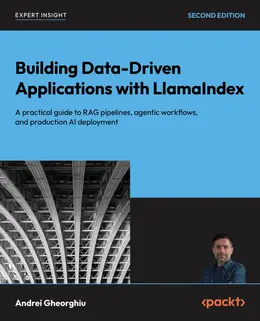
Packt Publishing and retailer listings show a second edition of "Building Data-Driven Applications with LlamaIndex" by Andrei Gheorghiu has been published. The book's product descriptions on Packt and Target state it is a practical guide to RAG pipelines, agentic workflows, prompt engineering, evaluation, and production deployment with Python and Streamlit (Packt product page; Target product listing). The Target listing and the Packt GitHub companion repository indicate hands-on examples and sample code are included (Target; Packt GitHub). Retail pages list commercial availability: Amazon shows a second-edition product page with a $44.99 price (Amazon), while Target lists a discounted price of $36.99 (Target). Third-party listings differ on metadata: wowebook lists a paperback of 640 pages and ISBN-13 978-1806021857, while Target lists 368 pages (wowebook; Target).
What happened
Packt and multiple retail listings document a second edition of "Building Data-Driven Applications with LlamaIndex" authored by Andrei Gheorghiu. The Packt product information and Target listing describe the book as a practical guide covering retrieval-augmented generation (RAG) pipelines, agentic workflows, chatbots and multi-agent systems, prompt engineering, evaluation, and deploying data-grounded LLM applications with Python and Streamlit (Packt product page; Target product listing). The Packt GitHub repository linked to the book shows companion code and activity with commits in May 2026 (Packt GitHub). Retail metadata varies: Amazon's product page lists the second edition offering and a $44.99 price (Amazon), Target shows a sale price of $36.99 (Target), and wowebook lists a paperback of 640 pages with ISBN-13 978-1806021857, while Target's product details reference 368 pages (wowebook; Target).
Technical details
The book's published descriptions on Packt and retailer pages present a hands-on, code-first approach aimed at Python developers who have baseline NLP and LLM knowledge (Packt product page; Target product listing). Reported chapter themes include techniques for text chunking and indexing, connector patterns for ingesting documents, building RAG retrieval layers, composing agentic workflows and multi-agent setups, prompt engineering and evaluation, and deployment examples using Streamlit and sample codebases (Target product listing; Packt product page). The Packt GitHub repository associated with the title contains example notebooks and project files that mirror the book's practical exercises (Packt GitHub).
Editorial analysis
Industry context: Books that combine conceptual treatment with companion code often function as onboarding artifacts for framework adoption in practitioner teams. Observed patterns in similar technical guides show that accessible, example-driven content plus a maintained GitHub repo reduces friction for engineers experimenting with new tooling and speeds prototyping cycles in RAG-style applications.
Practitioner implications: For practitioners, a second edition focused on RAG, agents, and production deployment can serve as a bridge between prototype-level experiments and production patterns for data-grounded LLM apps. Industry-pattern observations indicate teams adopting such frameworks typically reuse example connectors and evaluation scaffolding from published repos, which shortens the time to a first working prototype.
What to watch
Monitor the Packt product page and the associated GitHub repository for updated sample code, bug fixes, or additional reader resources (Packt GitHub; Packt product page). Reader reviews and issue activity on the repo will be useful signals of whether the book's patterns map cleanly to current LLM toolchains and hosting environments. Also watch for clarified bibliographic metadata from the publisher to resolve the differing page counts and ISBNs listed across third-party retailers (wowebook; Target).
Key Points
- 1A Packt second edition targets practical RAG and agentic workflows, pairing conceptual chapters with a companion GitHub repo for hands-on learning.
- 2Retail listings differ on bibliographic metadata, so practitioners should confirm publisher metadata before citing page counts or ISBNs.
- 3Example-driven books with maintained codebases typically accelerate prototype-to-proof-of-concept timelines for data-grounded LLM applications.
Scoring Rationale
A second-edition, hands-on guide for LlamaIndex is useful for engineers building RAG and agentic systems and includes companion code, but it is a developer resource rather than a frontier-model or infrastructure milestone.
Sources
Public references used for this report.

Practice with real Social Media data
90 SQL & Python problems · 15 industry datasets
250 free problems · No credit card
See all Social Media problems