Avida Study Shows Near-Perfect Life Classifier Can Be Spoofed Out of Distribution
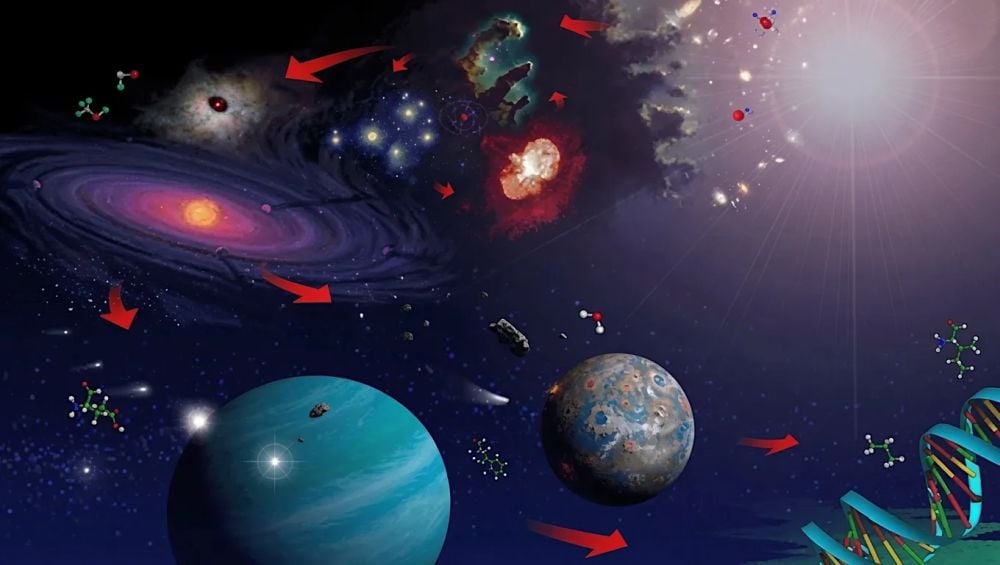
A study accepted for an artificial-life conference shows how a classifier with 99.97% held-out accuracy can still assign extreme confidence to adversarial examples outside its training distribution. The experiment used short programs in the Avida digital-life environment, not extraterrestrial chemistry, rover instruments, or an operational space-mission model. Across 1,560 targeted search runs, the authors report that model confidence could reach 100% within 150 queries. That is an attack result, not a real-world false-positive rate or proof that every astrobiology model fails. LDS examines the engineering lesson: scientific classifiers need out-of-distribution detection, calibrated abstention, adversarial testing, independent physical confirmation, and human review before high-confidence outputs can trigger extraordinary claims.
What happened
A study accepted for an artificial-life conference shows how a classifier with 99.97% held-out accuracy can still assign extreme confidence to adversarial examples outside its training distribution. The researchers trained a neural classifier on short programs in the Avida digital-life environment and then searched for inputs that were classified as life despite lacking the intended properties.
Across 1,560 targeted search runs, the authors report that model confidence could reach 100% within 150 queries. Those figures describe an adversarial optimization experiment. They are not a natural-world false-positive rate, a test of extraterrestrial chemistry, evidence about rover instruments, or proof that every astrobiology model fails.
Technical context
The result illustrates a familiar gap between in-distribution accuracy and open-world reliability. A balanced test set can measure how well a model separates known classes drawn from the same process as training. It does not show how the model behaves when search, evolution, noise, or an adversary produces unfamiliar inputs.
| Evaluation layer | Question the headline metric does not answer |
|---|---|
| Held-out accuracy | Are test examples truly different from training families? |
| Calibration | Does reported confidence match observed error frequency? |
| Distribution shift | Can the system recognize inputs unlike its training data? |
| Adversarial search | How quickly can optimization discover confident failures? |
| Abstention | Can the model decline a decision when evidence is weak? |
| Physical confirmation | Which independent measurement must agree before a claim is accepted? |
For practitioners
Scientific pipelines should define an abstention region before deployment. Distance in representation space, ensemble disagreement, conformal scores, or density estimates can help flag unfamiliar inputs, but every method needs testing against realistic shifts rather than only synthetic noise.
Calibration should also be measured by subgroup and shift type. A single reliability curve on the original test distribution can hide confident failures in rare regions. Teams should report confidence histograms for ordinary negatives, hard negatives, adversarially discovered inputs, and data from new instruments or environments.
An extraordinary positive should require an independent assay or sensor path that does not share the same model, training data, or preprocessing failure. Human review is useful only when reviewers see uncertainty, provenance, and counter-evidence rather than a confidence score alone.
Editorial analysis
LDS interprets the study as a demonstration of open-set risk, not a verdict on AI for astrobiology. Near-perfect test accuracy and catastrophic out-of-distribution confidence can coexist because they measure different questions. The practical mistake is treating a closed benchmark as evidence that a model understands every future input.
The conference paper and university release say the authors plan to test the approach with real data. Until that work exists, conclusions should remain limited to the Avida setup and the tested attack procedure.
What to watch
Useful follow-up evidence would include public code, exact data splits, multiple model families, transfer attacks, realistic sensor noise, real scientific datasets, preregistered abstention thresholds, and independent teams reproducing both the baseline accuracy and the spoofing result.
Key Points
- 1The Avida classifier achieved 99.97% held-out accuracy yet produced extreme confidence on adversarial out-of-distribution programs.
- 2The reported attack result is not a real-world false-positive rate or evidence about operational extraterrestrial-life detection systems.
- 3LDS recommends calibrated abstention, shift-specific tests, adversarial search, independent physical confirmation, and uncertainty-aware human review.
Scoring Rationale
An impact score of 6.6 reflects a clear scientific demonstration of open-set model risk, limited by a simulated environment and no real-data result.
Sources
Primary source and supporting public references used for this report.
View 1 more source
Practice with real Ad Tech data
90 SQL & Python problems · 15 industry datasets
250 free problems · No credit card
See all Ad Tech problems