Author Advocates Local Models for Typo Recovery
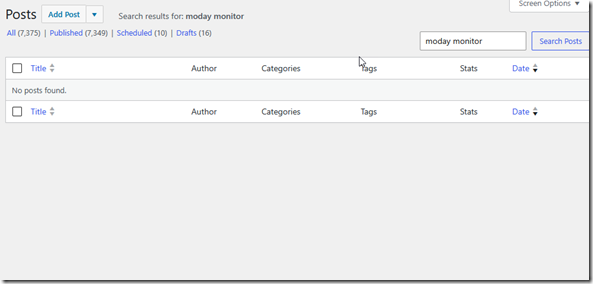
Small local models that tolerate typos could reduce microinterruptions and improve search and command-line workflows for practitioners who move fast between tools. According to a July 1 blog post on Voice of the DBA, the author says they type fast, frequently wear out backspace and spacebar keys, and encountered a failed site search due to a typo. The author reports alt-tabbing to Claude and getting a better query result, and argues for a small local model (an "SLM") that would interpret sloppy typing across software. The post includes a quoted, typo-filled remark attributed to Cambridge research and concludes with the line, "That's what Copilot should do," attributed to the author. The author also notes that current search and command-line tooling sometimes offer corrections but do not execute the corrected command automatically.
Small, local typo-tolerant models can materially reduce context-switching and wasted cognitive time for practitioners who move between editing, searching, and command-line tasks, though deploying them raises real design tradeoffs around model size, update cadence, and input permissions.
What happened
According to a July 1 blog post on Voice of the DBA, the author says they type quickly and often wear out backspace and spacebar keys. The post recounts a failed site search caused by a typo; the author reports alt-tabbing to Claude, which produced a more useful query result. The author writes a quoted anecdote: "According to a researche [sic] at Cambridge University, it doesn't matter in what order the letters in a word are, the only importent [sic] thing is that the first and last letter be at the right place." The post ends with the author writing, "That's what Copilot should do." These are the reported observations and opinions from the blog post, not independently verified claims.
Technical context
Building a persistent, lightweight typing assistant involves engineering choices that recur across product teams. Local models can be optimized for fast token-level corrections and fuzzy matching rather than large-context generative tasks, typically balancing model footprint, inference latency, and the ability to learn user-specific error patterns. For command-line tools the UX choice is whether to auto-apply corrections or surface suggestions; both approaches change error recovery dynamics.
For practitioners
Privacy and permission models matter here. Any system that inspects live keystrokes or aggregates typo patterns must address explicit consent, local data retention, and the risk surface introduced by broad input access. Teams building such tools will need to weigh on-device models against cloud services for continual improvement and telemetry.
What to watch
Adoption signals include product teams adding typo-tolerant search, developer-tooling plugins that auto-correct common CLI mistakes, and lightweight on-device inference engines targeted at text normalization. This post is a single-user anecdote, but it highlights a user-experience gap product teams are actively exploring.
Key Points
- 1A developer blog post argues small local models (SLMs) that tolerate typos could cut microinterruptions in search and command-line workflows.
- 2On-device typo-tolerant models trade latency and privacy advantages against model size and update complexity, shaping where correction runs.
- 3Tools that monitor typing for corrections face privacy and consent tradeoffs; deployment typically requires clear governance.
Scoring Rationale
A single personal blog post highlighting a genuine UX gap, typo-tolerant local models, but with no new research, deployment data, or vendor announcement. Kept at the visibility floor (4.0) rather than pushed below it, since the topic is plausibly on-topic AI/DS content and the score also functions as a hub/feed visibility gate; not raised further given the thin single-source anecdotal evidence.
Sources
Public references used for this report.
Practice interview problems based on real data
1,625 SQL & Python problems across 15 industry datasets — the exact type of data you work with.
Try 250 free problems