Australia's GDP Growth Slows as AI Investment Rises
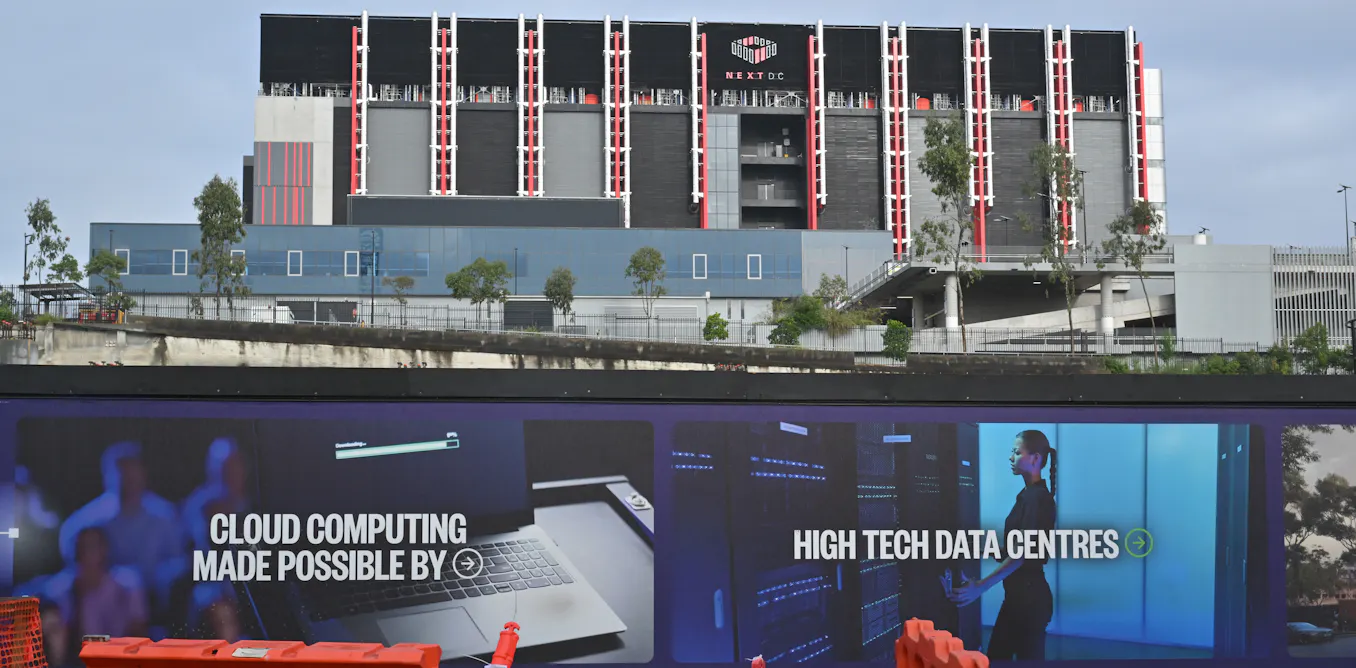
According to the Australian Bureau of Statistics (ABS), Australia's GDP grew 0.3% in the March quarter 2026, down from 0.9% in the December quarter, and 2.5% over the year. The ABS attributed the slowdown to modest household and public-sector spending plus cyclone disruptions to mining and exports. Household spending still rose 0.5%, but discretionary spending was nearly flat (up 0.1%) as higher fuel costs and the end of government energy rebates squeezed budgets; the household saving ratio fell to 6.2% from 7.0%. Notably, private business investment jumped 6.0%, led by a 16.3% rise in machinery and equipment, the largest in 30 years, driven by data-centre expansion in New South Wales and Victoria. The Conversation framed this as an AI-investment surge occurring even as consumer demand softened.
What happened
According to the Australian Bureau of Statistics (ABS), Australia's gross domestic product grew 0.3% in the March quarter 2026, down from 0.9% in the December quarter, and 2.5% over the year (seasonally adjusted, chain volume measures). The ABS said growth slowed on modest household and public-sector expenditure and cyclone disruptions to mining and export activity. The Conversation reported these results alongside a surge in AI-related investment.
The detail
Per the ABS, household spending rose 0.5%, but discretionary spending was nearly flat at 0.1% as rising interest costs, higher March fuel prices, and the end of government electricity rebates raised out-of-pocket costs. The household saving-to-income ratio fell to 6.2% from 7.0%. Net trade detracted 0.8 percentage points from growth as exports fell 1.1%. Private business investment rose 6.0%, led by a 16.3% jump in machinery and equipment, which the ABS called the largest rise in 30 years, attributing it to the expansion of data centres in New South Wales and Victoria.
Why it matters
Class B analysis: the data-centre-driven investment surge is the concrete mechanism behind the AI-investment framing, and it shows corporate technology capital expenditure can remain strong even when consumer demand softens. Because much of the equipment was imported, the ABS noted its net contribution to GDP growth was moderated, a reminder that AI-infrastructure buildouts can register more in import and investment data than in headline output.
What to watch
- •ABS June-quarter national accounts for whether the data-centre investment trend persists.
- •Reserve Bank of Australia guidance, since softer growth and cautious consumers feed rate-path expectations.
- •Business-investment releases that break out technology and data-centre capex to gauge the scale and concentration of AI spending.
Key Points
- 1GDP grew 0.3% in Q1 2026 (down from 0.9% in Q4 2025, up 2.5% year-on-year), with the ABS citing soft household and public spending and cyclone-hit exports.
- 2Machinery and equipment investment rose 16.3%, its largest gain in 30 years, driven by data-centre expansion in NSW and Victoria, the concrete form of the reported AI-investment surge.
- 3Discretionary spending was nearly flat and the household saving ratio fell to 6.2%, showing corporate tech capex can stay strong even as consumer demand weakens.
Scoring Rationale
National-accounts data matter to practitioners who use macro demand signals, and this release is notable because the quarter's standout was a 30-year-high jump in machinery-and-equipment investment driven by data-centre construction, the concrete form of the AI-investment story. It is solid, verified economic news rather than a technical or frontier development.
Sources
Public references used for this report.
Practice with real FinTech & Trading data
90 SQL & Python problems · 15 industry datasets
250 free problems · No credit card
See all FinTech & Trading problems