Apple Advances M7 AI Chips, Skips High-End M6
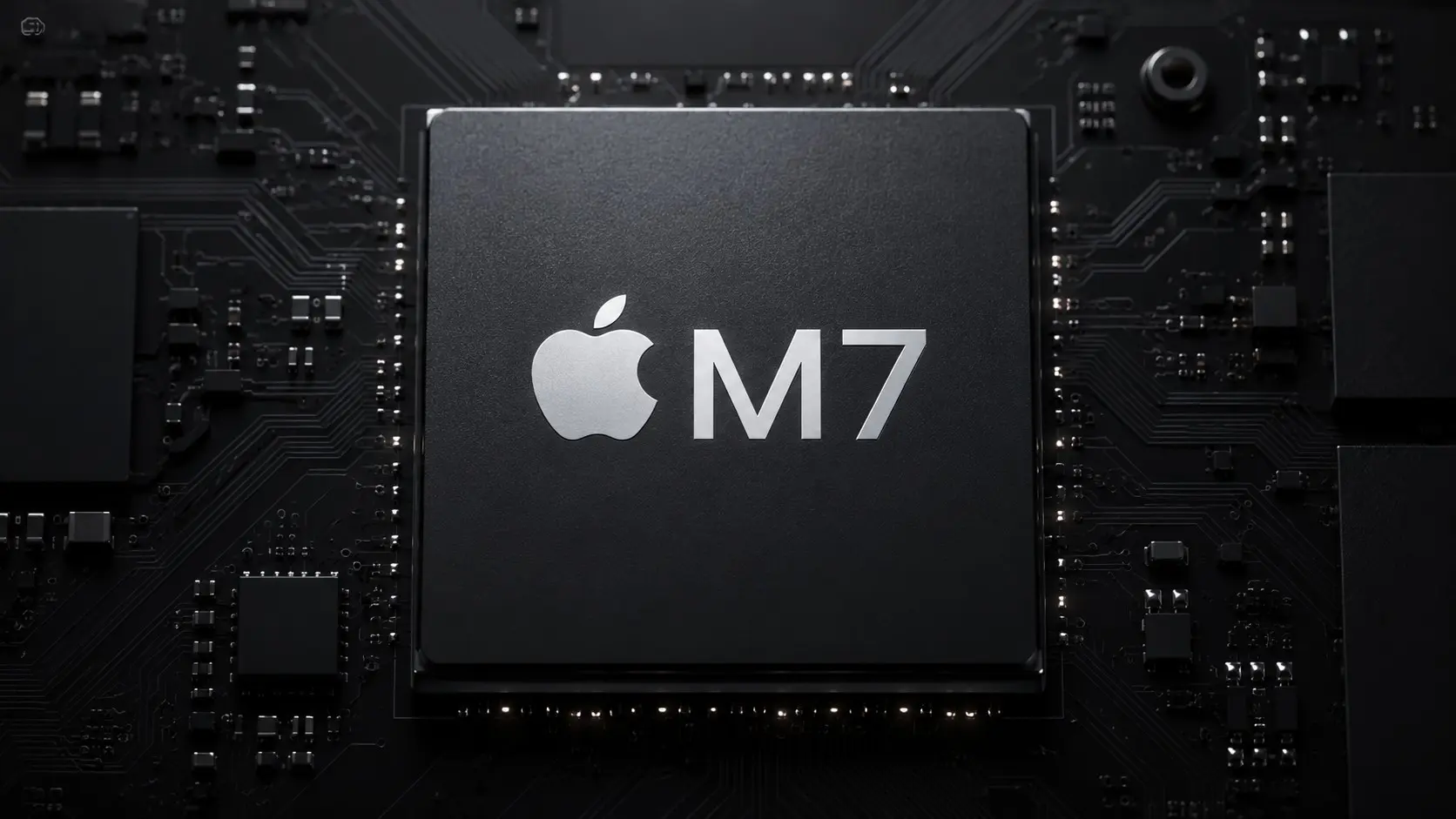
Bloomberg reports that Apple is accelerating its Apple silicon roadmap and will skip higher-end M6 Pro and M6 Max variants, moving the Pro/Max performance tiers into an M7 family focused on on-device AI and heavier GPU workloads, according to MacRumors reporting Bloomberg. MacRumors, citing Bloomberg, says Apple will still ship a base M6 and an M5 Ultra as soon as late 2026, with an M7 debut in the first half of 2027, M7 Pro and M7 Max toward the end of 2027, and an M7 Ultra in 2028. Reporting links the timing shift to M7 technologies that better support on-device AI, per Bloomberg. Apple has not issued a public statement on the rationale in the coverage available.
What happened
Bloomberg reports that Apple is rearranging its Apple silicon release timeline, foregoing higher-end M6 Pro and M6 Max chips in favor of bringing Pro and Max performance to an M7 generation optimized for AI workloads. MacRumors and Engadget, both citing Bloomberg, report the following schedule: an M5 Ultra and a base M6 could arrive in late 2026, the M7 family is expected in 2027 with the M7 debuting in the first half of 2027, M7 Pro and M7 Max toward the end of 2027, and an M7 Ultra targeted for 2028. Reporting attributes the change to M7 having technologies intended to support on-device AI and heavier GPU workloads. Apple has not issued a public statement on the rationale in the cited coverage.
Editorial analysis - technical context
Companies designing AI-first client silicon typically add or expand matrix-multiply engines, dedicated neural accelerators, and memory subsystem bandwidth to improve inference throughput and latency. Industry-pattern observations show vendors trade off raw single-thread CPU uplift for larger neural processing units and GPU compute when the priority is on-device model execution and large-context inference.
Industry context
For practitioners, a shift in a major client-silicon roadmap toward AI-oriented features generally affects where inference runs and how models are optimized. Developers will likely watch for changes in macOS frameworks, compiler support, and runtime acceleration (for example, updated Metal neural APIs or Core ML optimizations) because those toolchain updates determine how easily on-device models can use new silicon capabilities.
Context and significance
Industry observers note that accelerating a next-generation AI-focused chip can shorten the lag between model capability and practical on-device deployment. If Apple's reported timeline holds, device-bound inference for larger models and multimodal workloads could become more practical on Macs sooner, shifting some workloads away from cloud-first strategies. This is consistent with a broader trend where client hardware vendors prioritize local model acceleration to improve latency, privacy, and offline capabilities.
What to watch
Observable indicators include supply-chain reporting and benchmarks that confirm new matrix-acceleration throughput and memory bandwidth; developer previews or WWDC sessions that add or revise neural APIs; product launch dates for Macs using M6 and M7 silicon; and independent performance tests that show real-world on-device model throughput and GPU performance. Also watch for official Apple statements or silicon briefings that specify architectural changes and supported model sizes.
Bottom line
Reporting from Bloomberg and MacRumors presents a concrete timeline change and a shift of higher-performance tiers into an M7 generation aimed at AI and GPU workloads. For machine learning practitioners and engineers, the move is material because it affects where inference is practical and which toolchain updates will be needed to exploit new on-device acceleration.
Key Points
- 1Apple's reported timeline shift prioritizes AI-capable silicon, mirroring industry moves toward stronger on-device inference acceleration.
- 2Faster M7 arrival raises importance of native runtime and compiler support, since on-device performance depends on software toolchains.
- 3Observable indicators for practitioners: supply-chain dates, macOS framework updates, independent benchmarks showing neural throughput improvements.
Scoring Rationale
A notable Apple silicon roadmap shift from a major platform owner, with meaningful implications for on-device inference and developer toolchains. Bloomberg is the primary reporter; multiple corroborating outlets confirm. Not a paradigm-changing technical release, but materially affects where ML workloads run on Mac hardware.
Sources
Public references used for this report.
View 7 more sources
- Apple plans to skip M6 Pro and Max chips, jump to M7 in 2027investing.com
- Apple will reportedly skip the M6 Pro and Max and jump straight to M7engadget.com
- Report: Apple to skip M6 Pro/Max chips, fast-track M7 for local AImacworld.com
- 9to5Mac - Apple News & Mac Rumors Breaking All Day9to5mac.com
- Apple will skip M6 Pro and Max chips, fast-track M7 — here’s whycultofmac.com
- The MacBook Ultra just lost its chip as Apple skips M6 Pro and M6 ...tweaktown.com
- Major blow for MacBook Ultra: Apple said to cancel M6 Pro and M6 ...notebookcheck.net
Practice interview problems based on real data
1,625 SQL & Python problems across 15 industry datasets — the exact type of data you work with.
Try 250 free problems