
Apple Adopts Google Gemini for Foundation Models
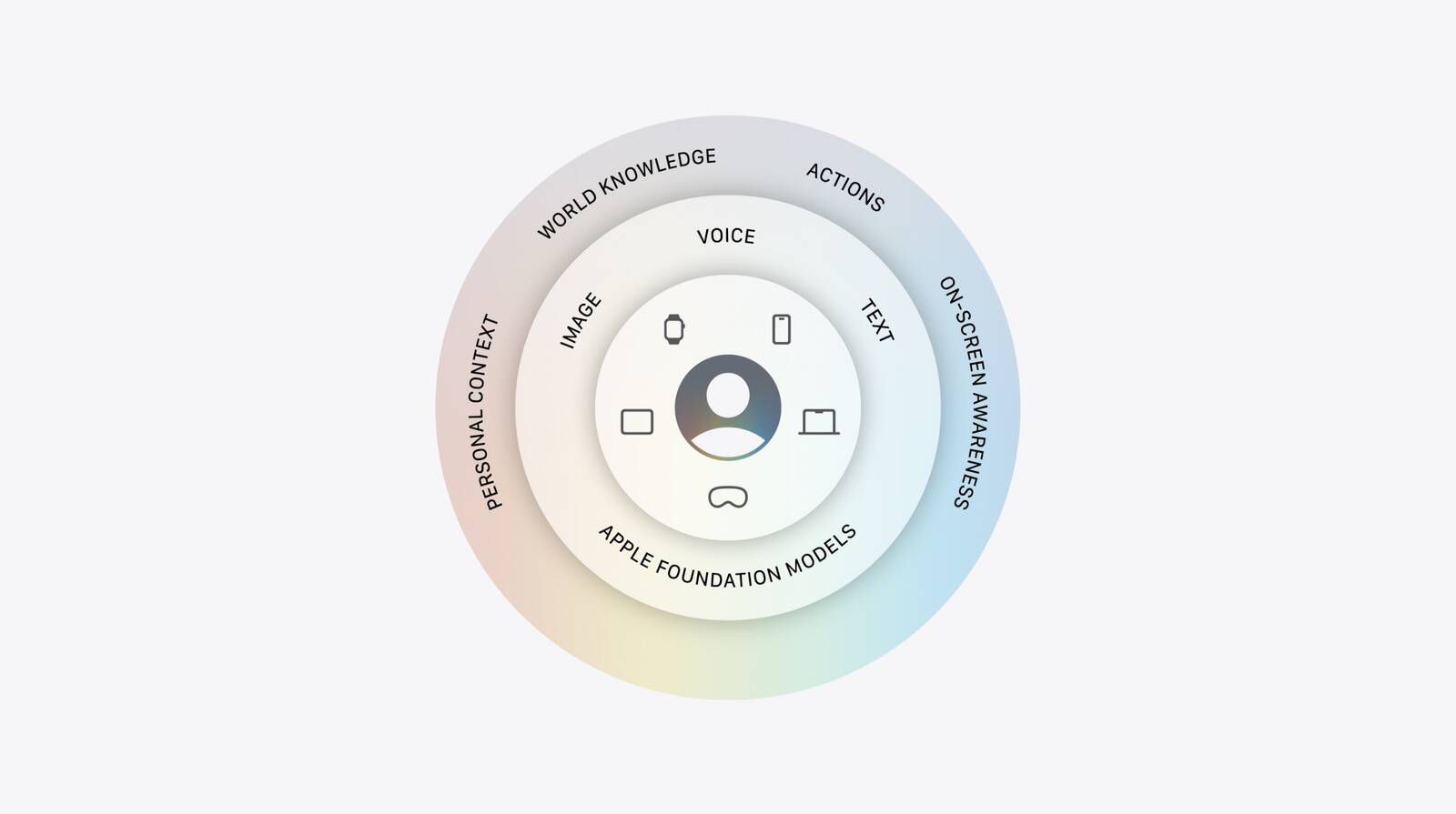
At its WWDC 2026 keynote, Apple unveiled a rebuilt Apple Intelligence architecture and a new assistant, Siri AI, with more conversational, multimodal interactions across iPhone, iPad, and Mac. The redesigned core models extend a collaboration with Google first disclosed on Jan 12, 2026, when a joint statement said the next-generation Apple Foundation Models would be "based on Google's Gemini models and cloud technology." June 8 coverage differs on how deep the dependency runs - some outlets describe Apple's models as distilled from Gemini rather than running Gemini directly, while Apple emphasizes its own architecture (Apple, MacRumors). Apple says Siri AI runs across on-device models and its Private Cloud Compute infrastructure and that data is used only to execute a request. Business Insider quoted Apple's Mike Rockwell introducing "an entirely new version of Siri, Siri unlocked by Apple Intelligence." MacRumors reports the features will not launch in the EU and China this year.
What happened
Apple used its WWDC 2026 keynote to unveil a redesigned Apple Intelligence architecture and a new assistant, Siri AI, demonstrating more conversational, multimodal interactions across iPhone, iPad, and Mac (Apple, MacRumors, CNN). The redesigned Apple Foundation Models extend a collaboration with Google first disclosed on Jan 12, 2026, when a joint Google-Apple statement said "the next generation of Apple Foundation Models will be based on Google's Gemini models and cloud technology" (Google blog, Jan 12, 2026). June 8 reporting differs on how deep the dependency runs: some outlets describe Apple's models as distilled from Gemini rather than running Gemini directly, while Apple's own materials emphasize its in-house architecture - so the relationship is best attributed, not asserted. Business Insider quoted Apple's VP of engineering Mike Rockwell introducing "an entirely new version of Siri, Siri unlocked by Apple Intelligence" (Business Insider). Apple says the system runs across on-device models and its Private Cloud Compute environment, reiterating that user data is used only to execute the immediate request (Apple, MacRumors, CNN).
Technical details
MacRumors and Apple describe the core models as Apple Foundation Models, rebuilt to run on devices and in Private Cloud Compute; reporting says a top cloud tier Apple calls AFM Cloud Pro, for the most demanding tasks, is comparable in quality to Gemini frontier models (Apple, MacRumors). Apple demonstrated multimodal features including image understanding, on-screen awareness, and taking actions inside apps. Reporting from 9to5Mac, citing The Information, says Apple plans to use Nvidia accelerators to help power the new Siri (9to5Mac/The Information). MacRumors reports the new Siri AI features will not be available in the EU and China at launch.
Why it matters
For practitioners
What to watch
Editorial analysis
A flagship consumer platform leaning on a competitor's frontier models - whatever the exact technical depth - is an unusual, high-stakes vendor relationship. It underscores a broader pattern of large platforms integrating or adapting external foundation models rather than building everything in-house, which can accelerate feature delivery but raises questions about interoperability, inference-hardware supply, dependence on a rival, and independent verification of privacy claims.
Apple's architecture centers a system orchestrator that coordinates intelligence across apps and devices. Hybrid deployments like this must handle context propagation, multimodal input fusion, token budgeting across models, request routing between local and cloud runtimes, and privacy-preserving telemetry - the practical engineering areas teams will weigh when adopting similar designs.
Track which devices receive higher-power model variants, benchmarks for on-device versus Private Cloud Compute paths, any audits of Apple's stated privacy guarantees, the EU and China availability timeline, the precise nature of the Gemini dependency as more details emerge, and developer-facing APIs that would let third-party apps invoke models through Apple's orchestrator.
Key Points
- 1Apple's next-gen Apple Foundation Models extend a Google collaboration disclosed Jan 12, 2026 ('based on Gemini'); June 8 reporting differs on depth - distilled-from versus running-Gemini - so attribute rather than assert.
- 2Siri AI runs across on-device models and Private Cloud Compute, with a top cloud tier (AFM Cloud Pro) reported comparable to Gemini frontier models; Apple stresses request-only data use.
- 3The hybrid orchestrator must handle context routing, multimodal fusion, token budgeting, and model switching, while EU and China launch exclusions flag regulatory friction.
Scoring Rationale
Apple rebuilding Apple Intelligence and Siri AI around a deep Google collaboration - with its next-gen foundation models tied to Gemini (exact technical depth disputed in early reporting) - is an industry-shaking strategic shift for a platform with a vast install base, with major implications for model deployment, privacy engineering, inference hardware, and competitive dynamics. The score reflects that significance and broad practitioner relevance.
Sources
Public references used for this report.
Practice interview problems based on real data
1,625 SQL & Python problems across 15 industry datasets — the exact type of data you work with.
Try 250 free problems