
Anthropic Tests Removing Claude Code From Pro Plan
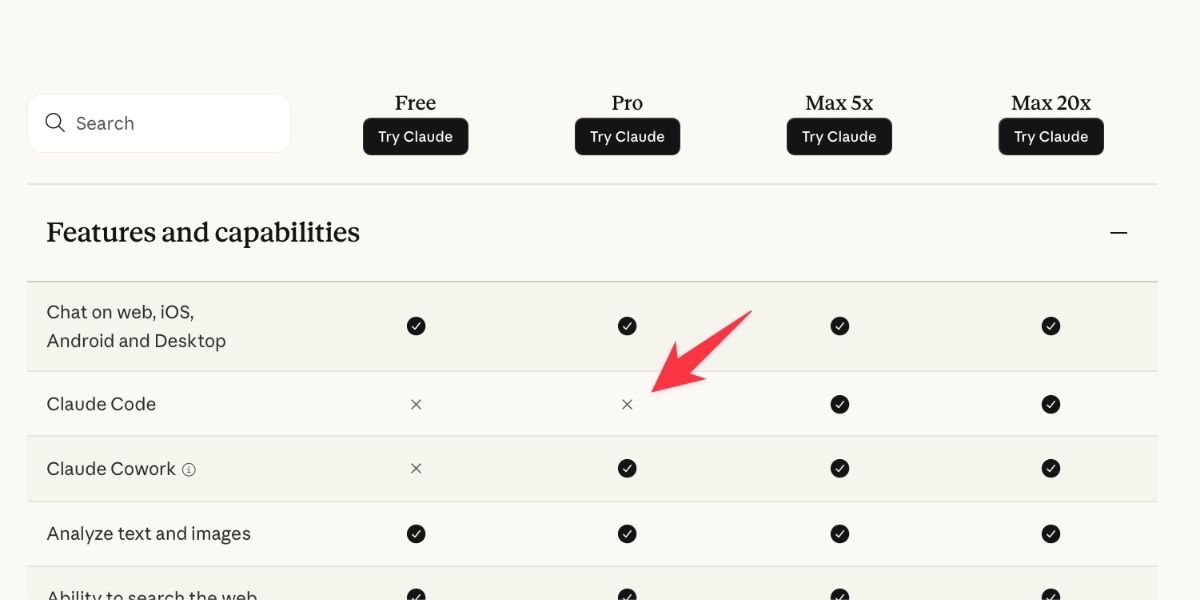
Anthropic quietly altered public pages to remove access to Claude Code from the $20/month Pro plan, triggering developer confusion. The company says the change is a limited experiment affecting roughly 2 percent of new prosumer signups and that existing Pro and Max subscribers are not impacted. Documentation and pricing pages were inconsistent during the change: some pages removed the feature, others still list it, and CLI output continued to show Claude Pro. The episode highlights rising operational costs for code-generation features and signals that Anthropic may be experimenting with tighter entitlements, caps, or tiering to manage heavier usage patterns introduced by long-running agents and new features like Cowork.
What happened
Anthropic updated public-facing pricing and support pages in a way that temporarily removed explicit access to Claude Code from the Pro plan, then said the change was a small experiment affecting about 2 percent of new prosumer signups. Existing Pro and Max subscribers are, according to the company, not affected. The site and support documentation were inconsistent during the event, and the CLI still displayed Claude Pro, which amplified confusion among developers and integrators.
Technical details
The discrepancy manifested across multiple touchpoints: some pricing pages removed the phrase "includes Claude Code" and replaced a check mark with an X; other pages and the CLI still showed code-generation access. Anthropic staffer Amol Avasare framed the action as an experiment and explained operational pressure: Max was launched before Claude Code and Cowork, usage patterns changed after Opus 4, and long-running async agents increased engagement per subscriber. Anthropic has already applied measures like weekly caps and tighter peak limits.
Observable consequences for engineers
- •Documentation and UI drift created uncertainty about entitlement checks and blocked assumptions in CI, feature flags, and subscription-based gating.
- •Developers relying on Pro plan guarantees may see intermittent access changes during testing windows, affecting reproducibility of automated workflows.
- •The inconsistency between site content, support docs, and CLI output increases friction for debugging billing and access issues.
Context and significance
This is not an isolated UX glitch. It sits within a pattern of providers re-evaluating how they expose expensive features to different tiers. Anthropic previously adjusted enterprise billing toward per-million-token rates for high-usage customers, and the company now attributes changes to materially higher engagement driven by new capabilities. The decision to limit Claude Code in a test group signals two related pressures: infrastructure cost for code generation and product design tension between broad access and protecting platform stability.
Why it matters to practitioners
Engineers, platform teams, and product managers should treat paid-tier feature availability as fluid, not contractual, unless explicitly documented in SLA or enterprise agreements. If you build internal tooling or automation that depends on Claude Code under a Pro subscription, you should verify entitlements programmatically, add fallbacks to Max or enterprise plans, and monitor for silent policy or UI changes.
What to watch
Monitor official Anthropic communication for permanent plan changes, updated rate limits, or new caps. Watch for follow-up fixes to documentation consistency and for signals that other providers may similarly re-tier or gate code-generation features to control costs.
Bottom line
This episode is a practical reminder that cost dynamics for large-context, generative code models affect product packaging. Expect continued experimentation around entitlements, caps, and pricing for developer-facing features, and design integrations defensively.
Key Points
- 1Anthropic temporarily removed Claude Code from Pro pages, then called it a limited experiment affecting about 2 percent of new prosumer signups.
- 2Inconsistent site, support docs, and CLI output created avoidable developer confusion and highlighted weak documentation/rollout controls.
- 3The change signals cost pressure from heavy usage patterns and may presage tighter caps or re-tiering of expensive code-generation features.
Scoring Rationale
Notable product change affecting developers and platform integrations, but not a paradigm shift. The story matters to engineers who rely on paid entitlements and signals possible wider pricing or cap changes. Freshness is current, so no recency penalty.
Sources
Public references used for this report.
Practice interview problems based on real data
1,625 SQL & Python problems across 15 industry datasets — the exact type of data you work with.
Try 250 free problems

