AI Promises Gains for Agriculture, Risks Excluding Smallholders
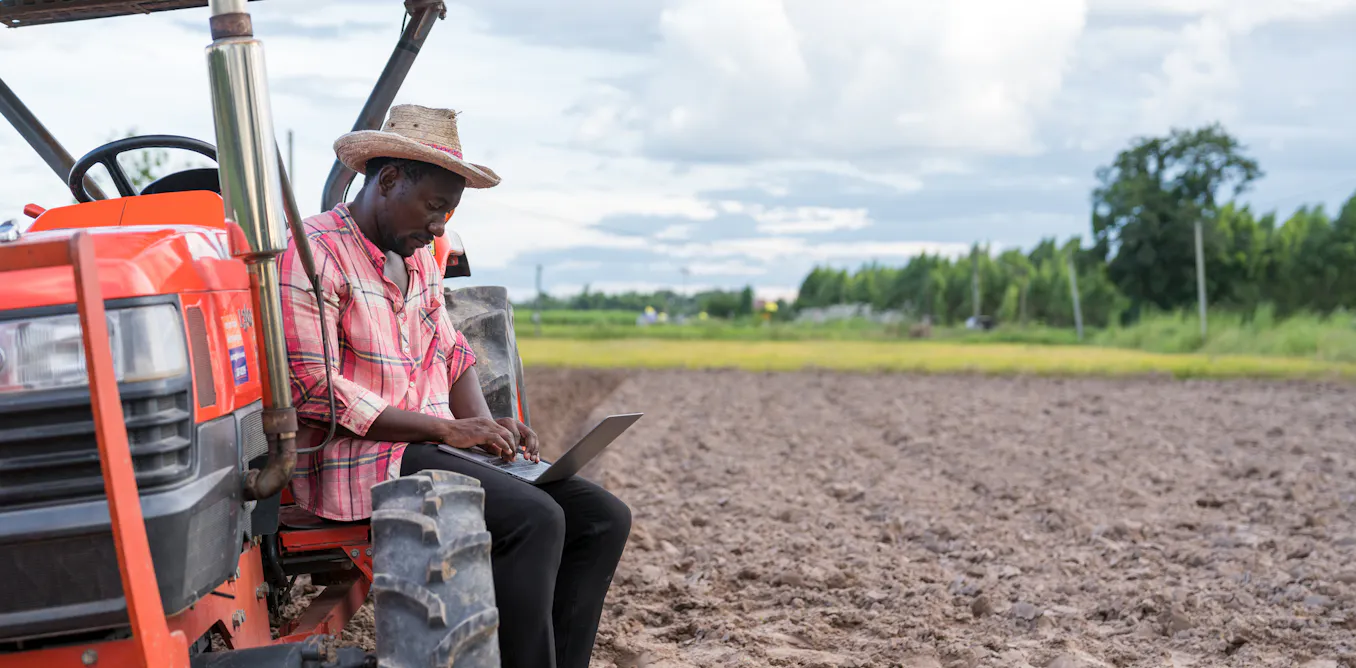
In an analysis published by The Conversation (and syndicated by Phys.org, AllAfrica, and Down To Earth), researchers argue that AI could raise agricultural productivity but risks leaving smallholder farmers behind without deliberate policy. The piece notes smallholders make up around 80% of farmers in developing countries and contrasts maize yields exceeding 10 tons per hectare in the US with about 2-3 tons per hectare in parts of sub-Saharan Africa. It identifies the digital divide - patchy connectivity, unaffordable devices, limited digital literacy - as the central barrier, and warns that models trained on industrialized-farming data often transfer poorly to small, heterogeneous plots. The authors call for access to finance, training, locally relevant datasets, and a gradual rollout starting with simple mobile advisory tools before scaling to more complex AI.
What happened
An analysis published by The Conversation - and syndicated by Phys.org, AllAfrica, and Down To Earth - argues that AI tools could raise agricultural productivity but risk excluding smallholder farmers unless adoption is deliberately made inclusive. The authors note that smallholders account for around 80% of farmers in developing countries and highlight a stark yield gap: US maize often exceeds 10 tons per hectare, while parts of sub-Saharan Africa remain near 2-3 tons per hectare. They tie the gap to limited access to improved seeds, fertilizer, irrigation, and mechanization, compounded by weaker rural infrastructure.
Technical details
Editorial analysis - technical context
The piece frames the digital divide - unstable connectivity, unaffordable devices, and limited digital literacy - as the primary barrier, and observes that models trained on data from industrialized farming systems often perform poorly in local smallholder contexts. Deploying AI for smallholders therefore tends to require localized data, affordable sensors and inputs, reliable connectivity, and integration with agricultural extension services.
Context and significance
When AI tools assume subscriptions, constant connectivity, or calibrated sensors, larger and wealthier farms capture disproportionate benefits, amplifying existing divides. The authors' recommendations - access to finance and training, locally relevant data systems, and a phased rollout that starts with simple mobile advisory services before scaling - mirror recurring findings in the equitable-AI-for-development literature.
What to watch
Track field trials that report results disaggregated by farm size, the release of open and locally labeled datasets from African and other Global South research institutions, low-cost sensor-plus-offline-model designs, and partnerships between AI developers and extension networks. Policy moves on data governance and input subsidies will also shape whether these tools reach smallholders.
Key Points
- 1Smallholders are roughly 80% of farmers in developing countries, so their inclusion is decisive for whether AI broadens or widens agricultural inequality.
- 2Models trained on industrialized-farming data often underperform on small, heterogeneous plots; locally relevant data and offline-capable, low-cost tools are recurring prerequisites.
- 3Editorial analysis: Equitable impact typically depends on enabling infrastructure - connectivity, affordable inputs, finance, and extension partnerships - more than on raw model capability.
Scoring Rationale
A well-argued analysis on AI equity for smallholder farmers is on-topic and useful for practitioners building agricultural AI in the Global South, but it is commentary that synthesizes known barriers rather than presenting new research, funding, or a product. That places it in the solid-but-not-notable band.
Sources
Public references used for this report.
Practice interview problems based on real data
1,625 SQL & Python problems across 15 industry datasets — the exact type of data you work with.
Try 250 free problems