
Anthropic Releases Guardrailed Claude Fable 5 and Mythos 5
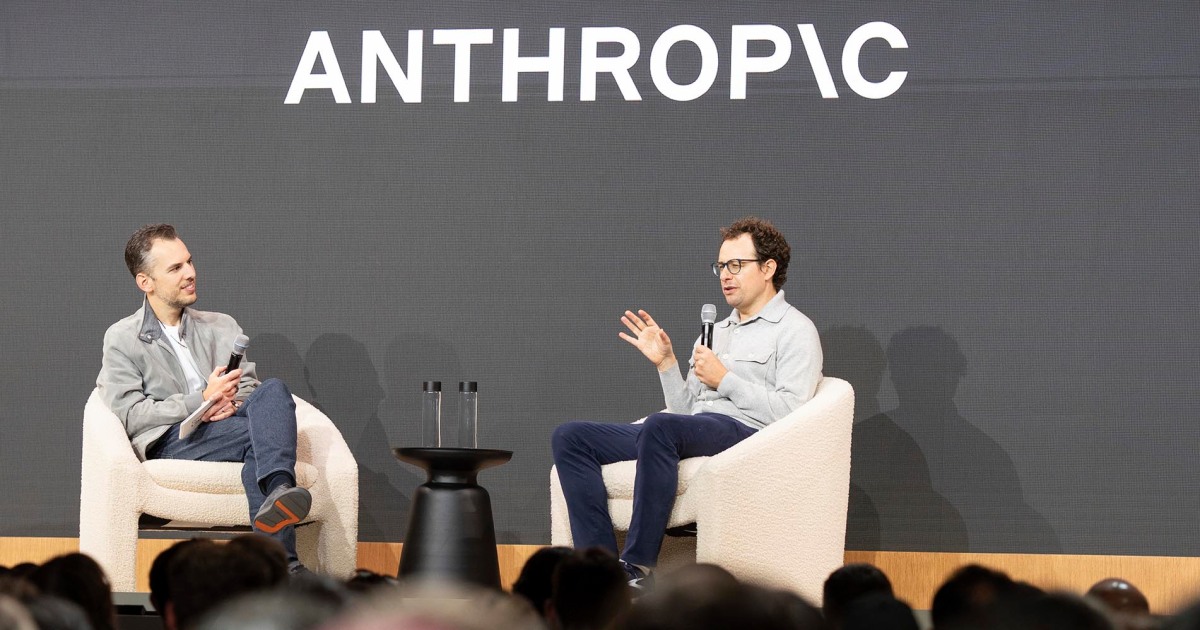
Per Anthropic's blog post on Jun 9, 2026, the company announced two Mythos-class models: Claude Fable 5, a guardrailed version made broadly available, and Claude Mythos 5, which is deployed through Project Glasswing to a limited set of vetted cyberdefenders in collaboration with the US government. Anthropic's announcement states that Fable 5 blocks high-risk queries on topics such as cybersecurity, biology, and chemistry and falls back to Claude Opus 4.8; Mythos 5 lifts some of those guardrails for approved partners. Fable 5 is priced at $10 per million input tokens and $50 per million output tokens and is available on Pro, Max, Team, and Enterprise plans at no extra cost through June 22, 2026.
What happened
Per Anthropic's blog post dated Jun 9, 2026, the company announced two new Mythos-class models, Claude Fable 5 and Claude Mythos 5. The blog post describes Mythos-class models as a capability tier above the Opus class and states that Mythos 5 will remain available only to a small group of "cyberdefenders and infrastructure providers," with a note about plans for a "broader trusted access program" to extend access over time. The announcement says Fable 5 is being launched for broader use but with built-in safeguards that block or reroute risky queries on topics such as cybersecurity, biology, and chemistry; Anthropic's public documentation and reporting indicate those routed requests will go to Claude Opus 4.8 (Anthropic blog; WIRED; Newser).
Technical details
Editorial analysis - technical context
Anthropic frames Fable 5 as the same underlying Mythos-class architecture but with classifiers and guardrails that reduce the model's ability to produce exploitative or dangerous outputs. The company's engineering post on containment discusses two containment strategies: human-in-the-loop supervision and environmental containment via sandboxes, egress controls, and access boundaries; Anthropic engineers emphasize containment as a primary mitigation approach while noting the tradeoffs between capability and "blast radius" of deployed agents (Anthropic engineering post). Reported telemetry from prior products informed their approach: Anthropic's engineering writeup cites approval-fatigue issues when human prompts are used as safety gates, motivating more automated containment mechanisms.
Context and significance
Public and trade reporting frames this rollout as an attempt to reconcile high capability with mitigations for misuse. WIRED and CNBC report that Anthropic is collaborating with US government stakeholders and that the earlier Mythos preview prompted debate in security circles because of its ability to find software vulnerabilities. Benchmarking firm Vals AI is cited in press coverage as finding Fable 5 outperforms other publicly available models on many capability benchmarks, with particular strength in coding and math while showing relative weakness in some domains such as healthcare or tax advice; Vals AI's results were reported by Newser and CNBC. Anthropic's blog also highlights expansions to Project Glasswing and states plans to extend the trusted-access program to more organizations, noting roughly "approximately 150" additional organizations in more than fifteen countries in related efforts (Anthropic blog).
What to watch
For observers: monitor classifier precision and routing behavior logs, because press coverage (WIRED; CNBC) notes the current approach errs on the side of caution and may route benign queries away from Fable 5. Watch for independent benchmark reproducibility from firms such as Vals AI and third-party security researchers reproducing or bypassing the reported mitigations. Also track Project Glasswing expansion updates and any formal guidance or partnerships announced with government cybersecurity entities, since reporting indicates Anthropic is coordinating with those stakeholders (WIRED; Anthropic blog).
Editorial analysis
For practitioners, the technical tradeoff Anthropic is pursuing-deploying a high-capability model to broader users while filtering high-risk functionality-is a model of risk management gaining traction across the industry. Comparable containment strategies rely on conservative classifiers and routing to older, lower-capability models for sensitive queries. These patterns reduce misuse surface area but also create friction for legitimate defensive or research workflows that require full capability access.
From an operational perspective, defenders and tool-builders should expect a bifurcated access model to become more common-high-capability, tightly governed access for vetted partners versus guardrailed public variants. This pattern affects how security teams plan threat modeling, red-team exercises, and dependency choices when they rely on vendor-provided models for automation or vulnerability discovery.
Primary source notes
Direct technical and rollout claims above are drawn from Anthropic's Jun 9 blog post and engineering writeup; commentary and interviews are from reporting by WIRED and CNBC; benchmarking references are from Vals AI as cited in press coverage (Anthropic blog; Anthropic engineering post; WIRED; CNBC; Newser).
Key Points
- 1Anthropic released Claude Fable 5 publicly while keeping Mythos 5 restricted, balancing capability with access controls and containment.
- 2Guardrails route high-risk queries to Claude Opus 4.8, a lower-capability model, reducing misuse but limiting some defensive workflows.
- 3Industry trend: vendors increasingly ship high-capability models with conservative classifiers and segmented access to manage misuse risk.
Scoring Rationale
The first publicly available Mythos-class model is a significant milestone - Anthropic's most capable model tier is now accessible to all developers and subscribers, with safety guardrails limiting the highest-risk uses. The dual-track release (public Fable 5 with fallback + restricted Mythos 5 via Project Glasswing) sets a notable industry precedent for tiered access to frontier models and has immediate pricing and integration implications for practitioners.
Sources
Public references used for this report.
View 4 more sources
- Anthropic Offers Mythos Upgrade for Cyber Partners and a 'Safe' Version for the Publicwired.com
- Claude Fable 5 from Anthropic now available on Amazon Bedrockaboutamazon.com
- Anthropic's Guarded Mythos Model Is Headed For Wider Releaseforbes.com
- Anthropic confirms Claude Mythos-class models will roll out to the publicbleepingcomputer.com
Practice interview problems based on real data
1,625 SQL & Python problems across 15 industry datasets — the exact type of data you work with.
Try 250 free problems