Alberta May See Gigawatt-Scale AI Data Centres This Year
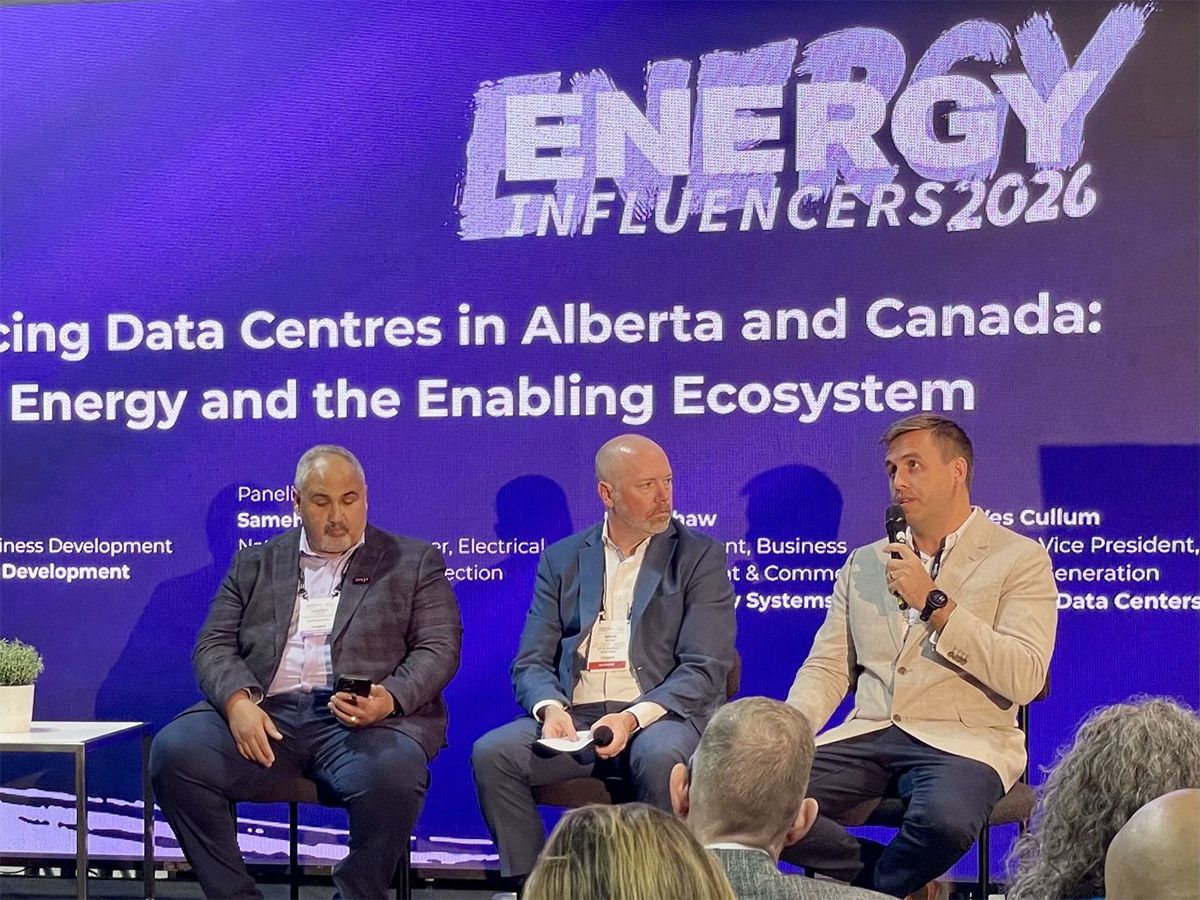
The Calgary Herald reports the Alberta government's frontman on AI said the province could see shovels in the ground for large-scale AI data centres by the end of the summer. Alberta Major Projects lists the Wonder Valley AI Data Centre Park (Phase 1) as proposing a 1.4-gigawatt off-grid power system, an estimated $12.0B Phase 1 cost and a $70 billion full buildout (Alberta Major Projects). Multiple outlets, including CBC and New York Magazine, report investor Kevin O'Leary has proposed projects in Alberta and Utah that would reach roughly 7.5 gigawatts and draw significant local concern over water, energy and environmental impacts (CBC; NYMag). Reporting from The Logic documents a national data-centre buildout trend and regional clustering of facilities across Canada.
What happened
The Calgary Herald reports the Alberta government's frontman on AI said the province could see shovels in the ground for large-scale AI data centres by the end of the summer (Calgary Herald). Alberta Major Projects lists the Wonder Valley AI Data Centre Park (Phase 1) as proposing a 1.4-gigawatt off-grid power system, an estimated $12.0B Phase 1 cost and a $70 billion full buildout (Alberta Major Projects). Media coverage, including CBC and New York Magazine, links investor Kevin O'Leary to proposals for a 7.5-gigawatt campus in northern Alberta and a similar-size plan in Utah, and reports active local opposition over resource and environmental impacts (CBC; NYMag).
Technical details
Alberta Major Projects describes Phase 1 as leveraging natural gas and geothermal resources to deliver off-grid power for hyperscale operations (Alberta Major Projects). Reporting compiled by The Logic maps a broader Canadian data-centre expansion and notes that recent proposals are orders of magnitude larger than existing facilities in the country (The Logic). External commentary cited in The Energy Mix and other outlets highlights the thermal load and water-use implications of facilities at gigawatt scale (The Energy Mix; ucalgary.ca).
Industry context
Hyperscale AI data centres reaching the gigawatt band typically pair high-density compute racks with large, dedicated power plants or long-term power purchase arrangements and substantial cooling systems. Companies and developers propose on-site generation or dedicated pipelines to meet continuous, high-load demand while trying to manage grid impact and resiliency. Community pushback over water, land use and emissions has been a recurring theme in recent large-scale proposals across jurisdictions (CBC; NYMag; The Walrus).
Context and significance
For practitioners and infrastructure planners, the proposals in Alberta illustrate the scale shift driven by frontier AI compute demand. A proposed 1.4-gigawatt first phase or projects noted at 7.5 gigawatts represent multi-fold increases in local electricity and cooling requirements compared with most existing Canadian data centres, and would require new procurement, permitting and grid-integration work (Alberta Major Projects; The Logic). Local opposition and environmental review timelines can become gating factors, and the technical choices developers make for on-site power and water will determine project feasibility and operating cost profiles (NYMag; CBC).
What to watch
follow provincial and municipal permitting records for formal construction starts, environmental assessment filings and power-connection applications. Monitor developer disclosures and Alberta Major Projects updates for firm timelines and phased capacity targets, and watch community consultation outcomes and regulatory responses that could alter project scale or timeline (Alberta Major Projects; Calgary Herald; CBC).
Editorial analysis
The scale and concentration of these proposals elevate questions about grid planning, industrial heat reuse, and specialist civil engineering capacity. If multiple gigawatt-scale sites proceed, planners and practitioners will face accelerated demand for high-voltage interconnection, medium-term fuel strategies for on-site generation, and larger procurement exercises for chillers, transformers and substation work. These are industry-level patterns observed in other jurisdictions that have hosted hyperscale builds (Industry experience; The Logic).
Key Points
- 1Industry demand is driving proposals for gigawatt-scale facilities, forcing new local planning for power, cooling and long-term fuels.
- 2Community and environmental concerns over water, land use, and heat output are recurring friction points that can delay or reshape projects.
- 3Developers are proposing on-site generation and off-grid architectures to meet continuous load, raising procurement and grid-integration complexity.
Scoring Rationale
Gigawatt-scale data centres represent a material shift in infrastructure needs for AI compute, creating urgent procurement, grid integration and cooling engineering challenges relevant to practitioners. The regional focus and unresolved local opposition moderate the story's immediate industry-wide impact.
Sources
Public references used for this report.
View 7 more sources
- We found every data centre in Canada - The Logicthelogic.co
- Won't Somebody Let Kevin O'Leary Build an AI Data Center?nymag.com
- 1GW data center campus proposed in Alberta, Canada - DCDdatacenterdynamics.com
- Kevin O'Leary's Two Data Centres Are So Big They (Almost) Defy Comprehensionthewalrus.ca
- O'Leary's Data Centre Will Be One of Earth's Largest Heat Sources, Physicist Warnstheenergymix.com
- Will AI Data Centres Raise Water and Power Use in Alberta?ucalgary.ca
- Canada's largest AI data centre proposed in rural Albertathenarwhal.ca
Practice interview problems based on real data
1,625 SQL & Python problems across 15 industry datasets — the exact type of data you work with.
Try 250 free problems