AIVA launches AI-native vehicle brand with Volcano Engine tie-up
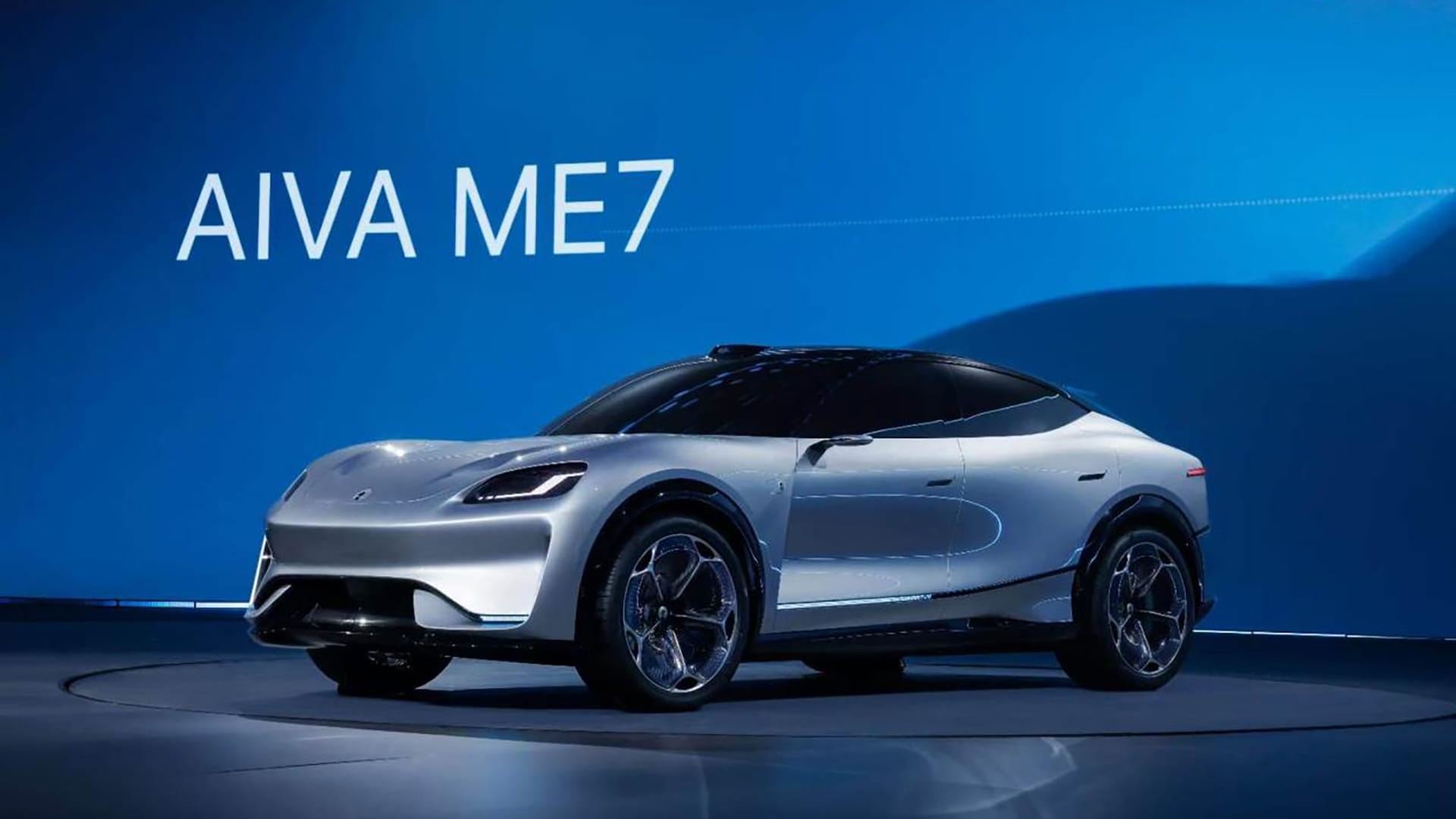
AIVA, an AI-native mobility brand backed by Seres Group and launched by Saidou Technology, debuted in Beijing on June 9, 2026, according to KR-Asia and company press material distributed via DagangNews and ET Net. Per those sources, AIVA has partnered with ByteDance's cloud and AI platform Volcano Engine to co-develop in-vehicle intelligence, with Volcano Engine supplying the Doubao foundation model and intelligent cockpit capabilities. AIVA unveiled the Origin Concept and said its first production model, the ME7, is scheduled to debut in 2026, with the lineup targeting the mainstream segment above RMB 200,000, per the press release. Strategic shareholders named in company materials include SERES Group and CATL.
What happened
According to reporting by KR-Asia and press materials distributed via DagangNews and ET Net, Saidou Technology launched a new mobility brand, AIVA, in Beijing on June 9, 2026. Per those sources, AIVA has established a technical partnership with Volcano Engine, ByteDance's cloud and AI platform, to jointly define and build an AI-native vehicle experience. Volcano Engine is cited as providing the Doubao foundation model and intelligent cockpit capabilities to support in-vehicle interaction. The launch featured the AIVA Origin Concept, and company materials state the brand's first production model, the ME7, is scheduled to debut in 2026. The press materials also list SERES Group and CATL among strategic shareholders and place the planned product lineup at price points above RMB 200,000, per the press release.
Editorial analysis - technical context
Industry-pattern observations: Automakers and new mobility brands increasingly combine proprietary vehicle hardware with externally developed large models and cockpit stacks rather than building end-to-end stacks internally. The sources name Doubao as the foundation model partner, and Volcano Engine as the supplier of cockpit intelligence. For practitioners, integrating a cloud-hosted foundation model and an in-vehicle intelligent cockpit raises familiar engineering tradeoffs: latency and connectivity constraints, on-device model footprint, safety and isolation of driving-critical systems, and data governance across cloud and vehicle domains.
Context and significance
The AIVA announcement follows a broader trend of Chinese OEMs and mobility startups forming partnerships with local cloud and model providers to accelerate feature development. ByteDance's Volcano Engine has been visible in other automotive collaborations, and the press materials place AIVA in the same pattern of 'AI-first' vehicle propositions. For data scientists and ML engineers, these deals typically mean more opportunities to work on multimodal in-cabin systems, personalization pipelines, and lifecycle model management spanning cloud and edge.
What to watch
Editorial analysis
Observers should track three measurable indicators in coming quarters: the technical scope of Doubao deployment (inference on-device versus cloud), safety validation artifacts or third-party verification for driving-adjacent features, and the integration approach for OTA updates and data collection consent. Public specs for the ME7 and any developer or partner SDKs from Volcano Engine will clarify how much of the AI stack is proprietary to AIVA versus delegated to partners. Also watch whether AIVA publishes developer-facing APIs, model cards, or safety documentation that would aid reproducibility and auditing.
Practical implications for practitioners
For ML teams building in-cabin experiences, the AIVA announcement underscores the need for robust telemetry pipelines, real-time intent understanding, and multimodal alignment strategies that combine speech, vision, and vehicle state. Industry-pattern observations: projects that span cloud and car commonly invest early in simulation-based testing, human factors research for voice and emotional assistant behavior, and modular model deployment frameworks that permit fallback to safe behaviors when connectivity drops.
The reporting to date is primarily company-originated and press-distributed; the launch materials provide the core facts about the partnership, the Doubao model, the Origin Concept, the ME7 timing, and the named strategic shareholders, per KR-Asia and the press releases cited above.
Key Points
- 1AIVA launches as an 'AI-native' car brand, partnering with ByteDance's Volcano Engine to supply the Doubao foundation model and cockpit tech.
- 2The ME7 production model is scheduled for 2026, and press materials position the lineup above RMB 200,000, showing a mainstream premium market target.
- 3Industry pattern: automakers increasingly pair vehicle hardware with external foundation models, raising engineering tradeoffs around latency, safety, and on-device inference.
Scoring Rationale
AIVA represents a real trend of AI-native automotive brands partnering with foundation model providers, but the coverage is largely syndicated press material. KR-Asia and Gasgoo provide independent trade reporting. Score reflects an interesting but company-driven launch without verified delivery timelines or independent benchmarks.
Sources
Public references used for this report.
View 8 more sources
- AIVA Launches a Pioneering, New Model for AI Vehicle Industrydagangnews.com
- AIVA Launches a Pioneering, New Model for AI Vehicle Industryetnet.com.hk
- AIVA Launches a Pioneering, New Model for AI Vehicle Industrysantamariatimes.com
- SERES Partners with ByteDance to Launch AIVA Brand ...finance.biggo.com
- 火山引擎 你的 AI 云volcengine.com
- Roewe Jia Yue 07 Production Car Teaser Released, Debuting in Q3english.news18a.com
- OOm Institute Calls for AI Fluency to Close Human Critical Thinking ...bastillepost.com
- Tech News Archives - TechDailyPost.co.za | Trends | Tech Eventstechdailypost.co.za
Practice interview problems based on real data
1,625 SQL & Python problems across 15 industry datasets — the exact type of data you work with.
Try 250 free problems