AI Reshapes Scientific Research Through Automation
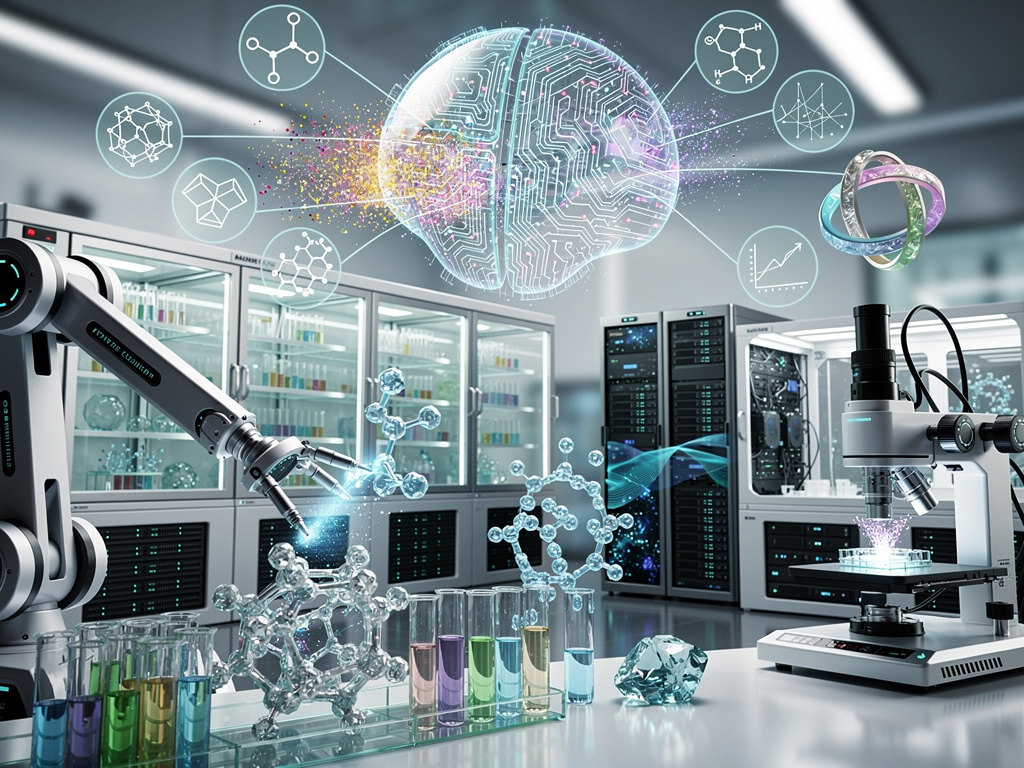
Recent reports and a Nature study show AI tools—particularly self-supervised and geometric deep learning—are transforming scientific research by automating hypothesis generation, data interpretation, and experiment execution. Partnerships such as DeepMind's UK automated lab and government strategy documents highlight accelerated discovery in drug design, protein engineering, and materials science while stressing the need for validation, interpretability, and governance.
Key Points
- 1Showcases self-supervised and geometric deep learning enabling efficient handling of massive scientific datasets.
- 2Accelerates discovery cycles, enabling rapid hypothesis generation and autonomous experiment validation across disciplines.
- 3Requires robust validation, interpretability, and governance to ensure ethical, reproducible scientific outcomes.
Scoring Rationale
Industry-spanning, well-sourced developments; limited novelty as trends build on existing research and need operational validation.
Sources
Public references used for this report.
Practice interview problems based on real data
1,625 SQL & Python problems across 15 industry datasets — the exact type of data you work with.
Try 250 free problems