AI reshapes concussion detection in sport, study finds
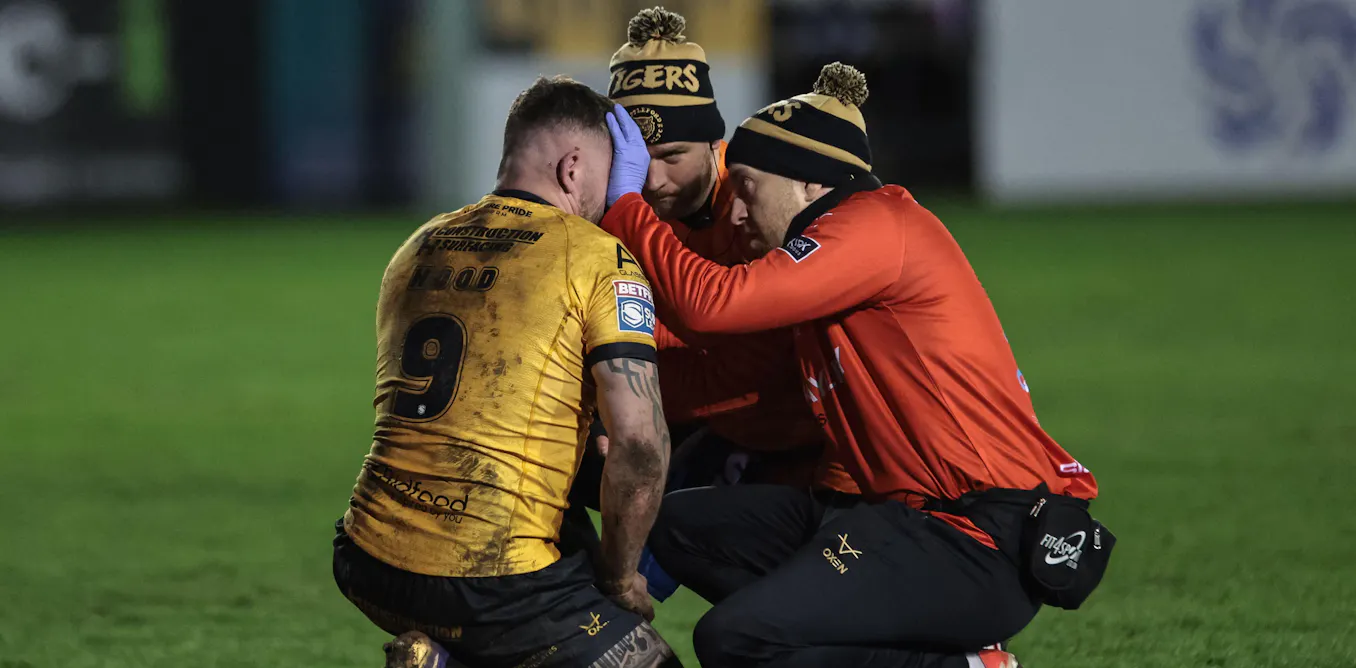
A feature in The Conversation by physiologists Damian Bailey and Danny Walmsley examines how AI could change the detection, monitoring, and management of concussion in sport. The authors survey emerging tools - from instrumented gumshields and helmet sensors to blood and saliva biomarkers and athlete mood surveys - that could give medical staff more objective evidence before return-to-play decisions, easing pressure to clear players too soon. They caution that concussion is hard to diagnose because symptoms vary widely, and that AI approaches face real limits around data quality, validation gaps, and privacy and governance risks. The piece draws on the authors' related peer-reviewed work in Experimental Physiology. It is an expert explainer rather than a new study, framing AI in sports concussion care as promising but unproven at clinical scale.
What happened
In a feature for The Conversation, physiologists Damian Bailey and Danny Walmsley examine how artificial intelligence could change the detection, monitoring, and management of concussion in sport. They argue AI could give clinicians a stronger base of objective evidence to counter the pressure - from clubs, coaches, and athletes themselves - to return players to play too soon.
The technology
The authors survey several emerging data streams: instrumented gumshields and helmet sensors that capture head-impact forces, blood and saliva biomarkers, brain-scan data, and athlete mood or symptom surveys. An AI model integrating these signals could, in principle, turn noisy multi-source data into a clearer objective picture of injury and recovery. The analysis builds on the authors' peer-reviewed work in Experimental Physiology.
The caveats
Concussion is clinically difficult to diagnose because symptoms vary widely between individuals and over time. The authors flag practical and ethical limits to AI approaches: data quality and labeling, validation gaps relative to clinical ground truth, and privacy and governance challenges around sensitive athlete health data.
Why it matters
For practitioners, this is a concrete vertical application of multimodal AI in sports and biomedicine, where the value depends less on raw model capability than on data quality, rigorous clinical validation, and trustworthy governance. It illustrates a broader pattern in applied AI: promising sensing and modeling pipelines still require evidence before they can safely inform high-stakes decisions.
Bottom line
The piece is an expert explainer, not a new clinical result. It frames AI-assisted concussion care as genuinely promising for objective monitoring while remaining unproven at clinical scale.
Key Points
- 1Physiologists writing in The Conversation argue AI - via instrumented gumshields, sensors, and blood/saliva biomarkers - could add objective evidence to concussion detection and return-to-play decisions.
- 2They stress major caveats: concussion symptoms vary widely, and AI tools face data-quality, validation, privacy, and governance limits.
- 3It is an expert explainer tied to the authors' peer-reviewed work, not a new clinical trial, so the technology remains promising but unproven at scale.
Scoring Rationale
A credible expert explainer in The Conversation, tied to the authors' peer-reviewed work, on applying AI to concussion detection and management in sport - an interesting vertical AI and biomedical application rather than a new model or trial. Held at the Solid tier and trimmed slightly because it is an explainer without new benchmarked results.
Sources
Public references used for this report.
Practice with real Health & Insurance data
90 SQL & Python problems · 15 industry datasets
250 free problems · No credit card
See all Health & Insurance problems