AI demand drives new data-center power solutions
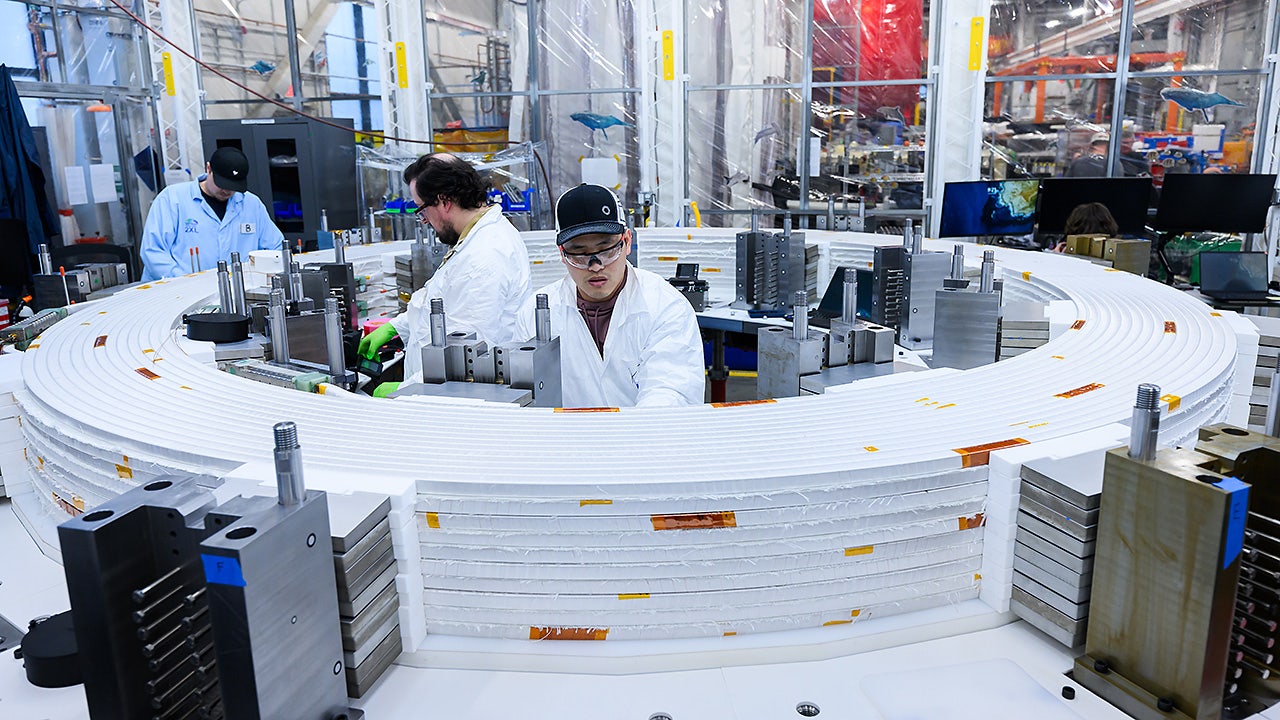
A Fox News Special Report describes how rising AI workloads are pushing energy and technology firms toward new power sources and sites for data centers. The segment quotes Exelon CEO Calvin Butler saying, "As an industry, we are investing approximately $1.1 trillion in our infrastructure over the next five years to ensure that we're meeting that need and that demand" - a figure consistent with Exelon's broader public warnings about data-center load reported in the trade press. The segment states data centers consumed about 1.5% of global electricity in 2024 and are on track this year to become the world's fifth-largest energy consumer. Butler is quoted saying PJM supply costs "have increased 645% since 2024." The report also profiles Commonwealth Fusion Systems, whose co-founder Brandon Sorbom explains the fusion process; the company estimates its ARC design could produce about 50 times the power it consumes.
What happened
A Fox News Special Report says energy and technology companies are responding to rising AI-driven demand by pursuing new power sources and locations for data centers. The program quotes Exelon CEO Calvin Butler saying, "As an industry, we are investing approximately $1.1 trillion in our infrastructure over the next five years to ensure that we're meeting that need and that demand." The segment states data centers consumed about 1.5% of global electricity in 2024 and are expected this year to become the world's fifth-largest energy consumer. Butler is quoted saying that across the PJM footprint, "supply costs have increased 645% since 2024." The story also profiles Commonwealth Fusion Systems, quoting co-founder Brandon Sorbom on fusion basics and noting the company's estimate that its ARC plant could deliver roughly 50 times the power it consumes.
Verification
Exelon's leadership has made comparable public statements about AI data-center load and rising regional supply costs in independent trade reporting, which is consistent with the $1.1 trillion industry-investment framing and the PJM cost pressure cited in the segment. The fusion figures are presented as the company's own estimate and remain forward-looking rather than demonstrated commercial performance.
Editorial analysis - technical context
Firms provisioning large-scale AI compute generally pull three levers: adding grid capacity, deploying on-site generation or storage, and siting facilities near underused energy. Coverage like this emphasizes advanced generation, including next-generation nuclear and fusion prototypes, alongside conventional grid upgrades and long-duration storage. These reflect the heavy, continuous load of hyperscale AI clusters, which changes the cost and reliability math versus bursty cloud workloads.
What to watch
Track large-scale hyperscaler procurement, power-purchase agreements that specify 24/7 matching, concrete timelines for demonstration fusion or advanced nuclear, and grid-upgrade approvals. Regional wholesale prices and transmission availability in major data-center hubs are the most immediate stress signals. For now the segment documents investment and prototype work, not commercial fusion rollouts or firm deployment schedules.
Key Points
- 1A Fox News segment frames AI-driven electricity demand as straining grids; data centers consumed about 1.5% of global electricity in 2024.
- 2Exelon's CEO cites a $1.1 trillion five-year industry investment and a 645% jump in PJM supply costs since 2024, signaling acute grid pressure.
- 3Watch procurement, 24/7 clean-energy matching, fusion or advanced-nuclear timelines, and regional wholesale prices as the clearest indicators of infrastructure stress.
Scoring Rationale
The underlying facts - Exelon's $1.1 trillion five-year industry investment, a 645% rise in PJM supply costs, and data centers approaching top-five global electricity consumption - are verifiable and matter to teams planning AI deployments. But the item is a single broadcast segment restating a well-worn AI-power-demand theme rather than a discrete breakthrough or new commercial commitment, which caps it at solid-notable.
Sources
Public references used for this report.
Practice interview problems based on real data
1,625 SQL & Python problems across 15 industry datasets — the exact type of data you work with.
Try 250 free problems