AI Chipmakers Dominate Emerging-Market Indices, Raising Risk
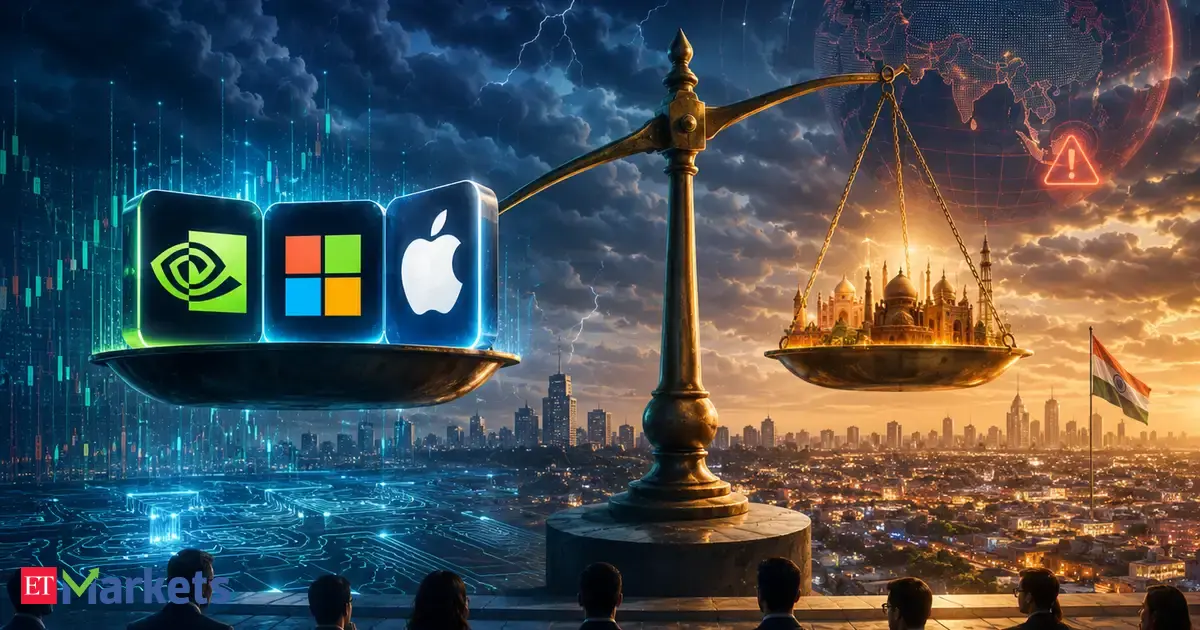
According to The Economic Times, three AI-focused chipmakers, TSMC, Samsung, and SK Hynix, account for a weight in some emerging-market indices that the paper frames as larger than the entire market-cap of India within those indices. The Economic Times reports that two Asian markets are especially reliant on these chipmakers, creating concentration risk for passive EM investors. The article contrasts that concentration with India's market, which it describes as more diversified across BFSI, consumption, infrastructure and an expanding AI infrastructure play including data centers and power. Concentration of index weight in a few semiconductor names increases vulnerability to semiconductor-cycle volatility and supply-chain shocks, which is relevant for portfolio construction and risk monitoring for practitioners tracking the AI hardware supply chain.
What happened
According to The Economic Times, three semiconductor firms, TSMC, Samsung, and SK Hynix, carry outsized weight in certain emerging-market indices, a concentration the outlet frames as effectively 'outweighing all of India' within those indices. The Economic Times reports that this dynamic is concentrated in two Asian markets, which the article says are heavily reliant on AI chipmakers. The article also states that India's equity market shows broader sectoral representation, including BFSI, consumption and infrastructure, and that experts quoted by the paper point to a growing AI infrastructure theme in India, specifically data centers and power.
Technical details / Editorial analysis - technical context
Industry-pattern observations: Market-cap concentration in a small number of semiconductor manufacturers is a structural feature of the global AI hardware supply chain, where a few foundries and memory firms supply high-value components. For portfolio and risk teams, this means equity exposures to 'AI' can be proxy exposures to semiconductor production and memory cycles, not just to software or model demand. For practitioners tracking supply risk, the linkage between chipmaker market moves and hardware availability remains a useful early-warning signal.
Context and significance
Editorial analysis: From a cross-market perspective, when passive indices embed very large weights in a handful of firms, index returns and volatility become heavily correlated with sector-specific shocks. For data-science and ML infrastructure teams, that matters because vendor financial stress or supply disruptions at dominant suppliers can translate to procurement delays or cost swings for GPUs and memory. The Economic Times frames India as offering diversification benefits across sectors and as building out AI-adjacent infrastructure, which the article presents as a counterpoint to the chip-concentration risk in the other Asian markets.
What to watch
For practitioners: monitor three indicators that will signal how concentrated market risk maps to technical risk:
- •changes in index weightings for TSMC, Samsung, and SK Hynix;
- •semiconductor revenue and capex announcements from those firms, as reported in financial filings and major outlets;
- •supply-chain signals such as wafer lead times, memory-price movements, and data-center buildout headlines in India.
The Economic Times article serves as a market-risk note highlighting index concentration and contrasting it with India's sectoral mix; it does not provide company-level forecasts or internal strategy statements from the firms named.
Key Points
- 1Three chipmakers, TSMC, Samsung, SK Hynix, are reported to dominate emerging-market index weight, raising index concentration risk.
- 2The Economic Times contrasts that concentration with India's broader sector diversification and growing AI infrastructure theme.
- 3Industry-pattern observation: concentrated index weights convert sector shocks (semiconductors) into outsized EM volatility, relevant for procurement and risk teams.
Scoring Rationale
The story flags a well-documented and growing structural risk at the intersection of AI hardware and capital markets: TSMC, Samsung, and SK Hynix collectively hold roughly 30% of the MSCI EM index (verified by Business Standard, June 2026), raising index concentration risk directly relevant to practitioners monitoring the AI hardware supply chain. Multiple authoritative corroborating sources confirm the trend. Impact is solid but not top-tier, as this is a market-structure observation rather than a technical or product breakthrough.
Sources
Primary source and supporting public references used for this report.
Practice interview problems based on real data
1,625 SQL & Python problems across 15 industry datasets — the exact type of data you work with.
Try 250 free problems