AI Backlash Spurs Data-Center Protests and Violence
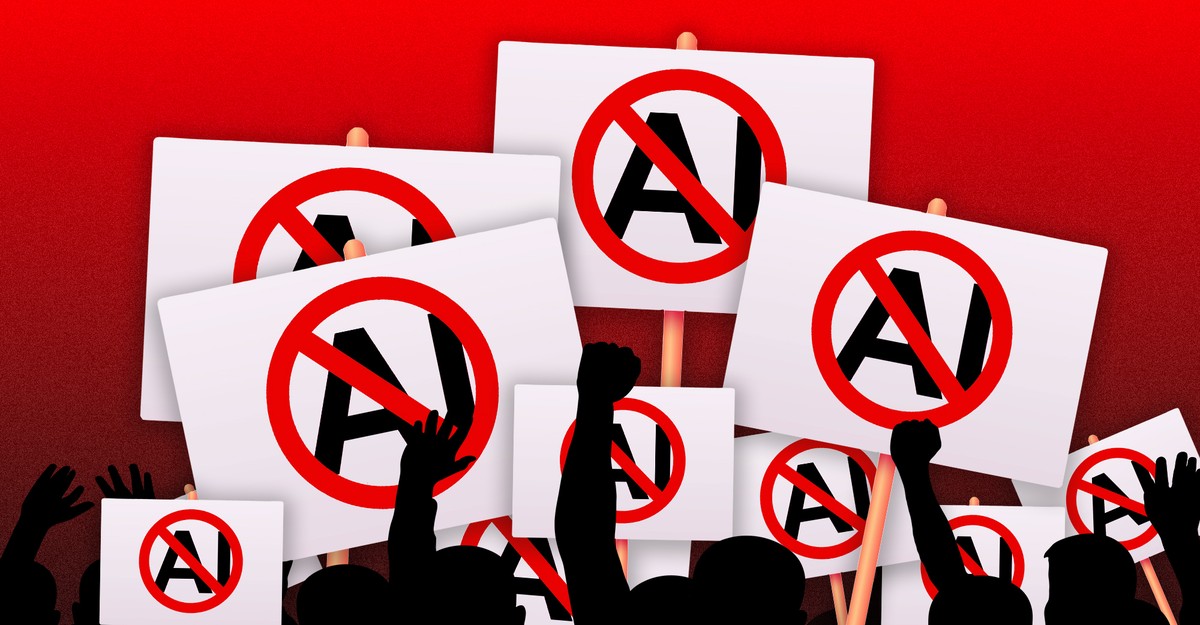
The Atlantic reports growing bipartisan anxiety about AI, with quotes from Senator Bernie Sanders and Steve Bannon decrying AI's impact on workers and communities. The Atlantic reports that Maine passed the country's first statewide data-center moratorium, though the governor vetoed the bill. The Atlantic reports that, nationally, proposed data-center projects were canceled in the first quarter of this year following local pushback. The Atlantic reports isolated episodes of violence and threats linked to anti-AI sentiment, including someone firing 13 rounds at an Indianapolis councilman's house and an alleged Molotov-cocktail attack on OpenAI CEO Sam Altman's home; The Atlantic reports the accused has pleaded not guilty to several charges, including attempted murder. The Atlantic reports polls show the United States ranks among the countries most concerned about AI.
What happened
The Atlantic reports a surge in public and political backlash against AI infrastructure and firms, including bipartisan criticism from Senator Bernie Sanders and Steve Bannon. The Atlantic reports that Maine passed the country's first statewide data-center moratorium, though the governor vetoed the bill. The Atlantic reports that, nationally, proposed data-center projects were canceled in the first quarter of this year following local pushback. The Atlantic reports isolated episodes of violence and threats tied to anti-AI sentiment, including someone firing 13 rounds at an Indianapolis councilman's house and an alleged Molotov-cocktail attack at OpenAI CEO Sam Altman's home; The Atlantic reports the accused has pleaded not guilty to several charges, including attempted murder.
Editorial analysis - technical context
Industry-pattern observations: public concern about AI infrastructure often converges on visible, local targets such as data centers. Communities contesting new facilities typically raise land-use, environmental, and jobs-related objections rather than model-architecture questions. For practitioners, that means infrastructure planners face permitting and community-engagement risks that are independent of model performance.
Industry context
Industry-pattern observations: bipartisan political rhetoric can amplify localized opposition into statewide or national policy actions. Historical precedents show that high-profile incidents and vocal political critiques can accelerate moratoriums, cancellations, and stricter permitting regimes.
What to watch
Industry-pattern observations: observers should track local permitting outcomes, state-level legislation, and any further incidents that draw media attention. Monitoring polling on public attitudes toward AI and statements from local officials offers early signals of regulatory or community-driven obstacles.
Key Points
- 1Industry pattern: Bipartisan criticism of AI increases political pressure, raising permitting and social-licence risks for data-center deployments.
- 2Industry pattern: Localized opposition tends to target visible infrastructure, shifting deployment timelines more than model development cycles.
- 3Industry pattern: High-profile incidents and media attention often accelerate cancellations, moratoriums, and stricter local regulation.
Scoring Rationale
Political backlash and isolated violence against AI infrastructure create material permitting and operational risks for practitioners planning deployments. The story is notable for its potential to slow infrastructure rollouts and influence state-level regulation.
Practice interview problems based on real data
1,625 SQL & Python problems across 15 industry datasets — the exact type of data you work with.
Try 250 free problems