Accenture Invests in General Robotics GRID Platform
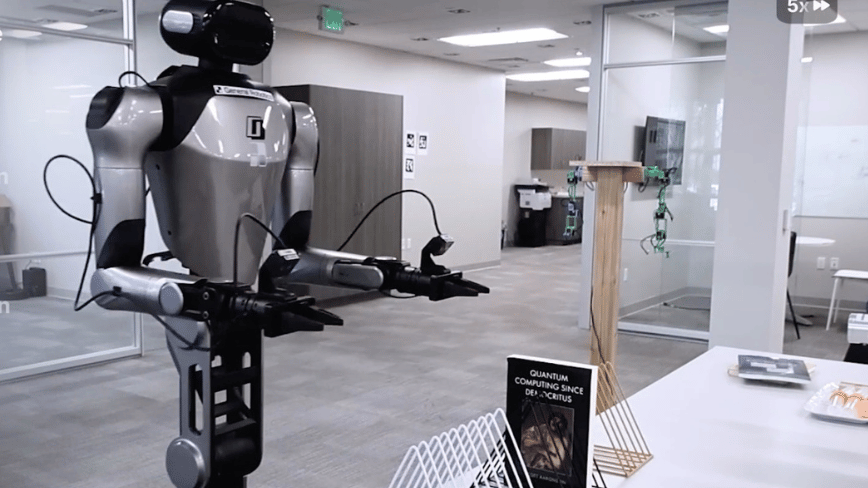
Accenture Ventures has invested in General Robotics to commercialize the company's GRID platform, a unified intelligence layer that deploys modular AI skills across 40+ robots from vendors such as FANUC, Flexiv, Ghost Robotics, Galaxea, and Psyonic. The platform emphasizes cloud-based orchestration, simulation-based training using Isaac Sim, and enterprise data sovereignty to eliminate integration work required when factories mix robot makes and models. Accenture will pair GRID with its physical AI capabilities and industry expertise to accelerate pilots and scaled rollouts across manufacturing, logistics, and asset-intensive industries. Founders include Ashish Kapoor, ex-Microsoft lead of AirSim, underscoring a simulation-first approach to robot learning and deployment.
What happened
Accenture has invested, through Accenture Ventures, in General Robotics, backing the company's GRID unified intelligence platform intended to orchestrate heterogeneous robot fleets across factories and warehouses. The deal gives Accenture a stake in a platform that already supports 40+ robots from manufacturers including FANUC, Flexiv, Ghost Robotics, Galaxea, and Psyonic. Accenture positions the investment as an extension of its physical AI strategy and existing work with NVIDIA-powered orchestration and prior robotics investments.
Technical details
GRID provides a hardware-agnostic intelligence layer that abstracts vendor-specific control stacks into reusable, deployable AI skills. Key technical components and capabilities include:
- •Support for 40+ robot platforms, enabling cross-hardware skill reuse rather than device-by-device programming
- •Cloud-based orchestration for fleet-wide sequencing, monitoring, and rollout management
- •Simulation-based training, integrating Isaac Sim to generate realistic synthetic training episodes and accelerate policy learning
- •Enterprise data sovereignty and IP controls to keep training data and models on-premises or in customer-controlled clouds
The company was founded by Ashish Kapoor, formerly head of autonomous systems and robotics research at Microsoft and creator of AirSim, which explains GRID's emphasis on simulation-first model development and transfer to physical systems.
Context and significance
Manufacturing and logistics remain fragmented by OEM-specific software ecosystems, which increases integration costs and slows scale. By offering a unified intelligence layer, General Robotics targets the exact operational pain point that prevents fleets from scaling: repeated low-level integration and bespoke programming. Accenture brings client access, domain knowledge, and an existing physical AI stack; coupling that with GRID accelerates pilots and helps move proof-of-concept projects toward multi-site rollouts.
This deal ties into three broader trends practitioners should note: first, a shift from isolated robot automation to fleet-level orchestration and reusable AI skills; second, the mainstreaming of simulation-driven training as a path to safer, cheaper real-world learning; and third, enterprise emphasis on data sovereignty when vendors host model training and orchestration services. The investment also signals consultancy-led adoption paths, where systems integrators and global consultancies act as force multipliers for emerging robotics platforms.
What to watch
The near-term metric to track is how GRID performs in multi-site deployments: proof points should include reductions in integration time, percent reuse of skills across robot models, and quantifiable uptime or throughput gains. Also watch how GRID integrates with industrial standards and safety certification processes and whether Accenture drives packages that combine GRID with its NVIDIA-backed Physical AI Orchestrator and other robotics investments for turnkey offerings.
Bottom line
This is a pragmatic move that combines Accenture's client reach and systems-integration muscle with a simulation-native orchestration stack. For practitioners, the meaningful outcomes will be realized not in product marketing but in metrics from pilots scaled across fleets and facilities: integration hours saved, model transfer reliability from simulation to reality, and the degree of vendor-agnostic skill portability.
Key Points
- 1Unified intelligence layer reduces bespoke integration, allowing AI skills to be deployed across diverse robot fleets, cutting deployment time and cost.
- 2Simulation-first training with Isaac Sim and founder expertise from AirSim improves transfer learning, accelerating safe real-world robot behavior adaptation.
- 3Accenture provides go-to-market scale and systems-integration capability, increasing the likelihood of enterprise pilots moving to multi-site production.
Scoring Rationale
The investment is notable because it pairs a simulation-native orchestration platform with Accenture's client reach, improving the cadence of scaled robotics deployments. It is not a frontier-model or market-defining event, but it materially reduces integration friction for industrial automation and signals enterprise adoption pathways.
Sources
Public references used for this report.
Practice interview problems based on real data
1,625 SQL & Python problems across 15 industry datasets — the exact type of data you work with.
Try 250 free problems