Windows 11 Adds Taskbar AI Agents and Xbox Mode
Microsoft released the optional April 2026 non-security preview update, KB5083631, for Windows 11 versions 25H2 and 24H2, the company documents show (Microsoft Support, Windows Insider blog). The update is available via a gradual and normal rollout and includes a new Xbox mode, File Explorer improvements (expanded archive format support and a "preview anyway" button), reliability fixes for explorer.exe, and a new haptic feedback engine (Microsoft Support; Windows Insider). Multiple outlets report the update also introduces support for AI agents on the taskbar and developer-facing APIs that enable third-party agents to surface on the desktop (Windows Central; Yahoo Tech; Thurrott). The Microsoft support page also highlights an upcoming Windows Secure Boot certificate expiration starting June 2026 and recommends administrators review guidance (Microsoft Support).
What happened
Microsoft published the optional April 30, 2026 non-security preview update for Windows 11, listed as KB5083631, for versions 25H2 and 24H2, per the Microsoft Support release notes and the Windows Insider blog. The release notes state the update is rolling out via a gradual rollout followed by a normal rollout (Microsoft Support; Windows Insider). The changelog documents a new Xbox mode for PCs, multiple File Explorer improvements (preserving folder view/sort preferences, removing a white flash in dark mode, expanding archive format support to include uu, cpio, xar, and nupkg, and adding a "preview anyway" button), and reliability fixes targeting explorer.exe processes (Windows Insider; Neowin). Microsoft's release notes also call out a new haptic feedback engine for compatible input devices (Microsoft Support; Neowin).
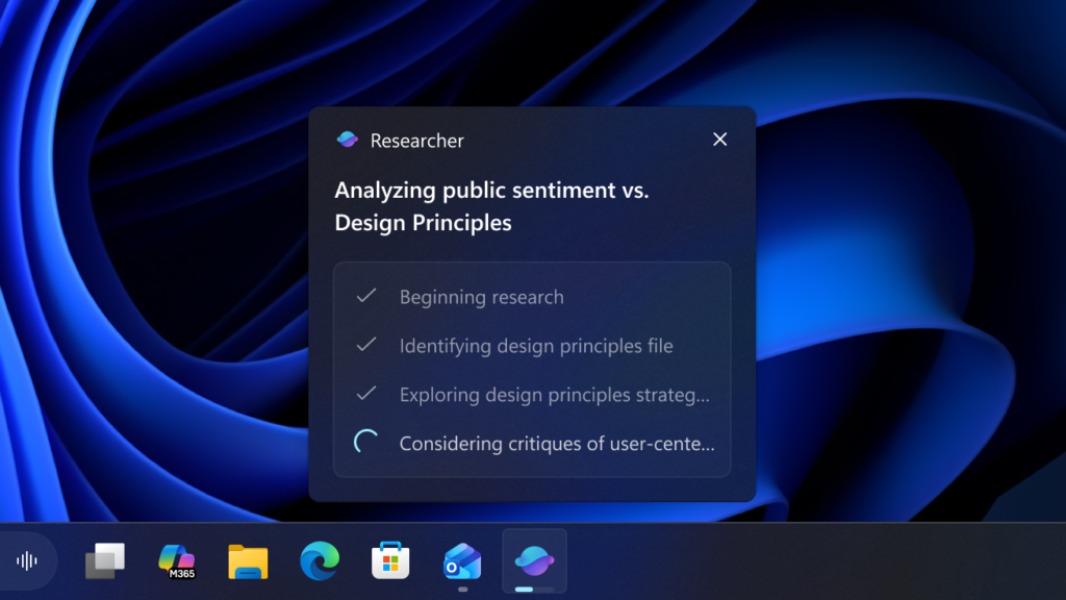
Reporting from Windows Central and other outlets states the update adds support for AI agents on the Taskbar and exposes APIs so AI developers can integrate agent experiences into the desktop UI; multiple reports note this includes first-party and third-party agent support and examples such as the Microsoft 365 Researcher agent appearing in taskbar UI (Windows Central; Yahoo Tech; Thurrott). The Microsoft documentation frames these items as part of broader "AI-powered Windows 11 PC experiences" in the release notes (Microsoft Support).
Editorial analysis - technical context
Industry-pattern observations: Opening the taskbar to external agents effectively provides a persistent, discoverable surface for agent UIs. Developer-facing APIs that surface agents in the taskbar reduce the UI integration work required for third-party tools, which often speeds adoption by making agent interactions visible without invoking separate apps. The explorer.exe reliability fixes target frequent crash and responsiveness vectors that previously disrupted taskbar and File Explorer interactions; improving explorer stability is a prerequisite for a consistently responsive agent surface. The new haptic feedback engine is a platform-level input feature that requires compatible hardware drivers and firmware support; until hardware manufacturers enable those drivers, the feature will remain limited to supported devices (Neowin; Windows Insider).
Industry context
Industry observers have tracked a pattern of OS vendors offering richer integration points to encourage third-party AI services to surface in core UX elements. Providing a standardized agent API and taskbar integration lowers friction for developers to ship agentic features and can change how users discover AI capabilities on their desktops. At the same time, platform-level exposure of third-party agents raises questions about permissioning, privacy, and UX consistency that enterprises and security teams will need to evaluate alongside the rollout.
What to watch
- •Adoption: watch for major app vendors or AI tool vendors updating apps to register agents on the taskbar and for documentation on permission and privacy controls.
- •Stability telemetry: monitoring for reduced explorer.exe crashes and improved responsiveness after devices apply KB5083631 will indicate whether the reliability fixes achieved their goals (Windows Insider; Microsoft Support).
- •Hardware support: supply-chain announcements from OEMs about haptic driver availability will determine how broadly the haptic engine is usable (Neowin).
- •Enterprise impact: follow Microsoft guidance and admin channels for remediation steps around the Secure Boot certificate expiration noted in the release notes (Microsoft Support).
All factual claims above about feature contents, rollout phases, and the Secure Boot item are sourced from Microsoft Support and the Windows Insider blog; reporting about third-party taskbar agents and developer APIs is sourced to Windows Central, Yahoo Tech, and Thurrott.
Key Points
- 1KB5083631 adds taskbar-facing AI agent support and developer APIs, creating a new discovery surface for desktop AI tools.
- 2Explorer.exe reliability fixes and File Explorer improvements are foundational, improving stability for agent and taskbar experiences.
- 3Platform haptics and expanded archive support broaden device UX and developer integration but require OEM driver and app updates.
Scoring Rationale
This is a notable platform update because it exposes a new, persistent UI surface for AI agents and adds developer APIs, which matters to practitioners building desktop AI integrations. The story is not frontier research, so importance is mid-level.
Sources
Public references used for this report.
View 9 more sources
- Latest Windows 11 update brings more reliable explorer.exe, AI agents, and new haptic enginewindowscentral.com
- Windows 11 gets big feature update with Xbox mode, new File Explorer features, and moreneowin.net
- Windows 11 Will Let Third-Party AI Agents Sit on Your Taskbartech.yahoo.com
- Microsoft Is Quietly Opening the Windows 11 Taskbar To Third-Party ...wccftech.com
- Windows 11's New Xbox Mode is Now Available for More Insidersthurrott.com
- Microsoft confirms AI agents are still coming to the Windows 11 ...windowslatest.com
- 31 Hidden Windows 11 Features You Need to Try Right Now | PCMagpcmag.com
- Windows 11 Is Getting THESE NEW Features! (Release Preview)memstechtips.com
- Taskbar gains AI agent monitoring, starting with Microsoft 365 ...threads.com
Practice interview problems based on real data
1,625 SQL & Python problems across 15 industry datasets — the exact type of data you work with.
Try 250 free problems