Vestager Backs AI Safety Institute for Children
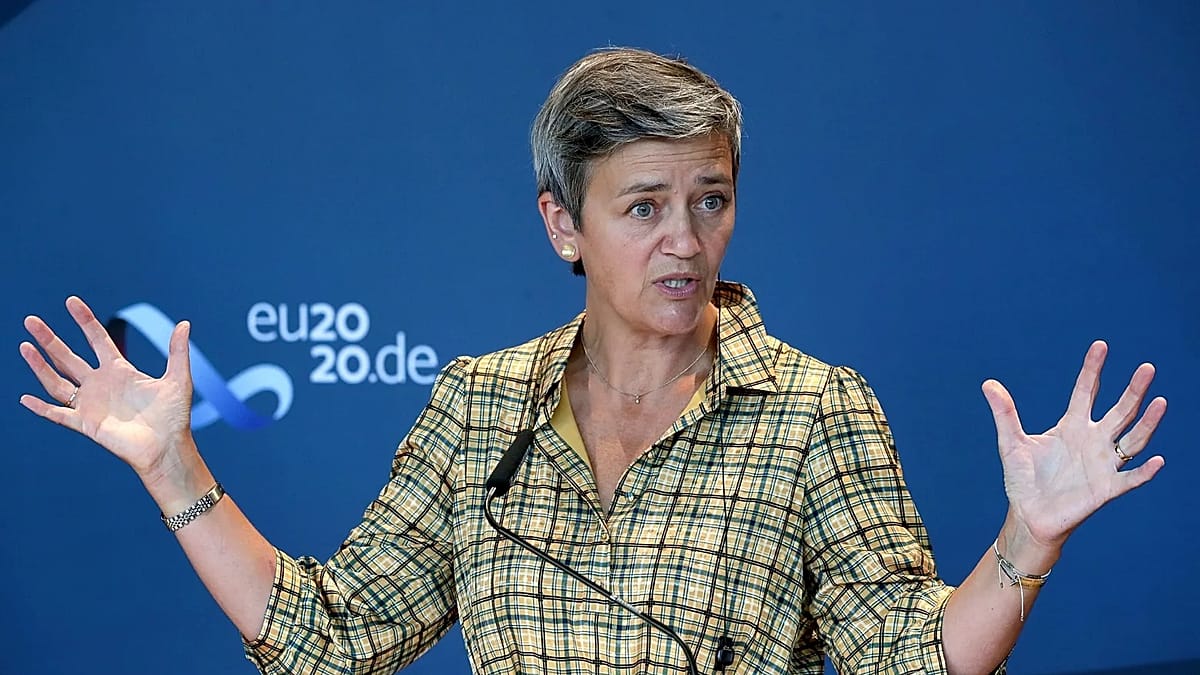
A US nonprofit will formally present a new independent institute dedicated to testing AI products for children at the Danish Parliament, according to Euronews. The initiative, which former European Commission executive vice-president Margrethe Vestager is co-hosting, proposes an approach modelled on independent car "crash-test" ratings, per Euronews. The institute has said it wants to draw funding in part from big tech, according to Euronews reports. Common Sense Media founder and CEO James P. Steyer is quoted in the launch statement saying, "AI is reshaping childhood and adolescence, yet we are making critical decisions about children's futures without the evidence we need to ensure it's safe and in their interest," per Euronews. Industry observers will scrutinise whether a consumer-style rating model can be adapted to rapidly updating, context-sensitive AI services used by children.
What happened
Per Euronews, a US nonprofit is launching an independent institute to evaluate the safety of artificial intelligence products used by children and will be formally presented at the Danish Parliament. The event is being co-hosted by Margrethe Vestager, who served as Executive Vice-President of the European Commission. The institute's stated approach is modelled on independent car "crash-test" ratings, and public reporting says it intends to seek funding that includes contributions from major technology companies. The launch statement quoted Common Sense Media founder and CEO James P. Steyer saying, "AI is reshaping childhood and adolescence, yet we are making critical decisions about children's futures without the evidence we need to ensure it's safe and in their interest," as reported by Euronews. Euronews also notes the institute has not yet published details on what a child-focused "crash-test" would consist of.
Editorial analysis - technical context
Independent, consumer-facing safety ratings work in sectors with standardised inputs and observable failure modes, such as automotive crash testing. AI-driven products present different technical challenges: models and services are often updated continuously, behaviour varies by user context, and safety outcomes depend on content moderation, training data, and downstream integration. Companies and labs attempting comparable evaluations typically need reproducible testbeds, representative user scenarios, and instrumentation that captures both short-term failures and longer-tail harms. These are nontrivial engineering tasks that demand collaboration between domain experts in child development, safety testing, and ML evaluation.
Industry context
Reporting places the launch against an active policy backdrop: EU rules like the Digital Services Act and the UK's Online Safety Act have increased scrutiny of online harms to minors, while the European Commission published nonbinding guidelines on protecting minors online in July 2025, according to Euronews. Public-interest groups and child-safety advocates have been calling for transparent standards and independent testing, a point underlined by the quoted remarks from Common Sense Media's James P. Steyer.
What to watch
Observers should track whether the institute publishes a reproducible testing methodology, the narrow or broad set of product categories it evaluates (apps, chatbots, recommendation systems), and its governance and funding terms if big-tech contributions materialise. Also monitor whether governments or standards bodies reference the institute's outputs when drafting binding rules. For practitioners, published test suites and datasets would be the most actionable deliverables, while opaque methods or industry-funded governance structures would raise credibility questions.
Bottom line
The initiative formalises a push for independent, consumer-facing assessment of child-facing AI. Whether the car crash-test metaphor yields practical, reproducible evaluation standards for modern AI products remains an open, technical question.
Key Points
- 1A US nonprofit will present an independent institute to "crash-test" child-facing AI, with Margrethe Vestager co-hosting, per Euronews.
- 2Industry context: Translating car-style crash tests to AI is technically hard because models update frequently and behaviour is context-dependent.
- 3For practitioners: Reproducible testbeds, public methods, and transparent funding will determine the institute's usefulness to researchers and regulators.
Scoring Rationale
The launch is notable because it ties high-profile regulatory figures to an effort to create consumer-style safety metrics for child-facing AI, which could influence standards and procurement. The technical and governance hurdles mean practical impact depends on methodology and transparency.
Sources
Public references used for this report.
Practice interview problems based on real data
1,625 SQL & Python problems across 15 industry datasets — the exact type of data you work with.
Try 250 free problems