Vermont Health Systems Adopt AI For Clinical Workflows
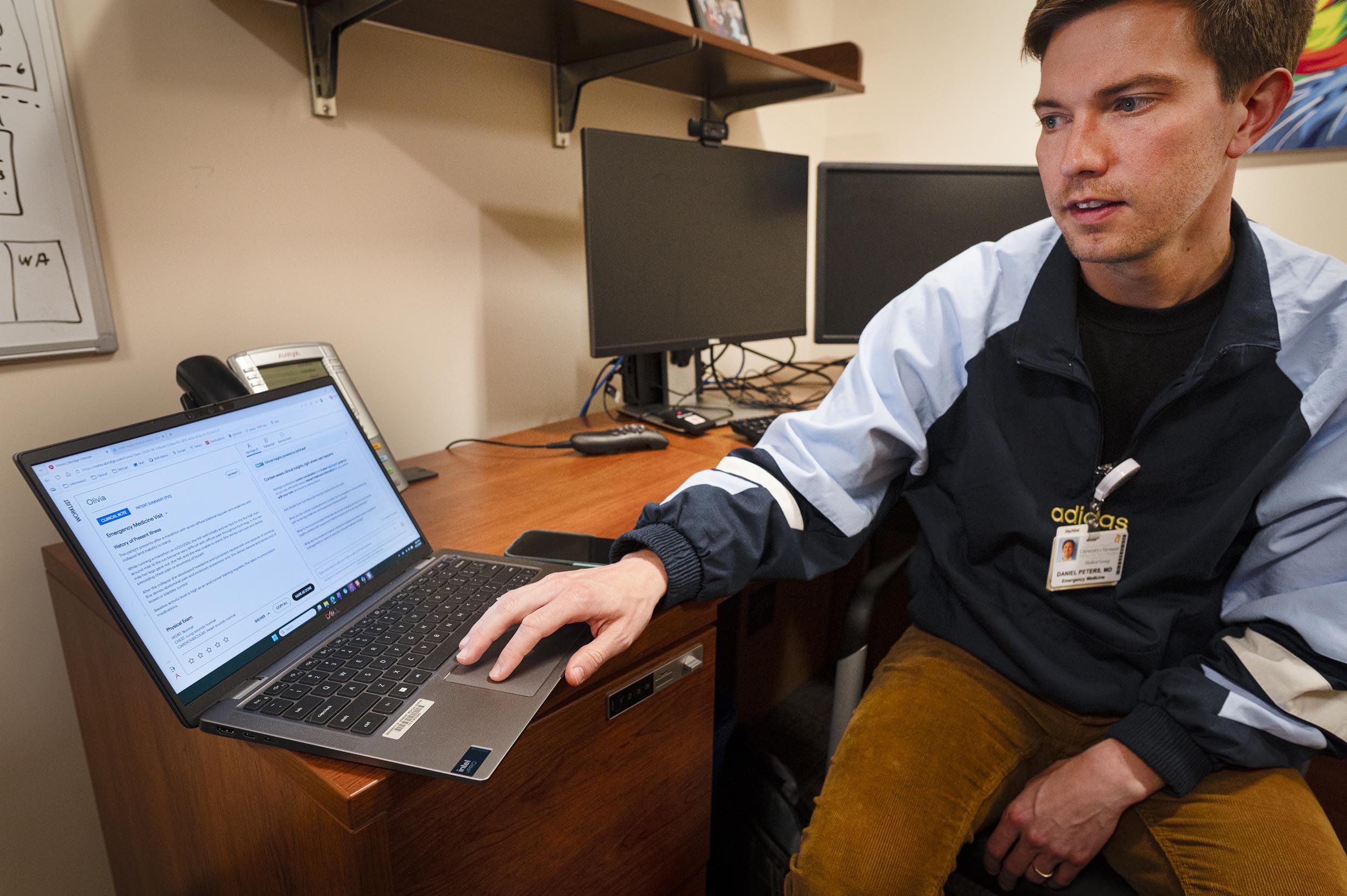
Local health systems and independent practices across Vermont are deploying AI tools to reduce clinician paperwork and speed diagnosis, according to reporting by VTDigger, Seven Days, UVM Health materials, and a Business Wire press release. VTDigger documents emergency physician Dr. Dan Peters using an AI scribe that records visits and generates visit notes; Peters told VTDigger that notewriting often feels like the largest task of a shift. The University of Vermont Health network began using the AI scribe Abridge in 2024, VTDigger reports. OneCare Vermont announced a partnership with Heidi Health to provide 12-month subscriptions to Heidi's AI medical scribe for many independent practices, according to Vermont Business Magazine and a Business Wire/Yahoo press release; the release says Heidi's assistant automates an average of over two hours of daily administrative work and supports nearly 2 million patient interactions per week. Reporting also flags clinician concerns about cost, privacy, and over-reliance on AI for decisions (VTDigger; UVM Health).
What happened
Vermont news outlets and institutional materials report expanding use of artificial intelligence in clinical workflows across the state. VTDigger describes emergency physician Dr. Dan Peters at UVM Medical Center using an AI scribe that records patient encounters and produces full clinical notes; Peters told VTDigger that writing notes can feel like the largest single task in a shift. VTDigger reports the University of Vermont Health network began using the AI scribe Abridge in 2024. Seven Days cites examples where AI tools are used for rapid imaging review in suspected stroke, quoting Dr. Justin Stinnett-Donnelly, chief health information officer for University of Vermont Health, on time-critical benefits in stroke care. Vermont Business Magazine and a Business Wire press release report that OneCare Vermont partnered with Heidi Health to provide 12-month subscriptions of Heidi's AI medical scribe to many independent primary care practices; the press release states Heidi's tool automates an average of over two hours of daily administrative work and supports nearly 2 million patient interactions per week.
Technical details
Editorial analysis - technical context
Reporting describes two classes of deployed tools: ambient documentation (AI scribes) that transcribe and structure clinician-patient conversations, and automated image/triage assistants that flag urgent findings and route alerts to specialists. Vendor materials (Business Wire) emphasize integration with existing electronic health records and personalized note-styles; independent coverage (VTDigger, Seven Days) documents clinician workflows where a smartphone-recorded encounter is converted into a structured note and where imaging AI triggers stroke alerts. Public reporting does not provide model names, training datasets, or performance metrics beyond vendor-stated usage numbers.
Context and significance
Healthcare reporting frames these deployments as responses to widespread clinician burnout and rural provider shortages. Vermont-focused coverage highlights administrative load relief as the primary operational benefit cited by clinicians and vendors. Vendor claims of multi-hour time savings per clinician per day, if realized, would materially affect clinician time budgets and documentation throughput. At the same time, multiple sources raise operational concerns: VTDigger reports clinician worries about affordability and risks of over-reliance on AI for decision-making, and UVM Health materials cite questions about trust, privacy, and vetting. These tensions mirror national debates about safety, regulatory oversight, and how to validate clinical AI in front-line settings.
What to watch
For practitioners
observers should track independent evaluations and validation studies that quantify documentation accuracy, diagnostic sensitivity/specificity for image assistants, and error modes in real-world settings. Monitor payer and health-system procurement terms, since Vermont reporting flags cost and subscription models (OneCare/Heidi partnership). Watch for published integration details that affect data flow and privacy disclosures to patients. Finally, track workforce and quality metrics that vendors and systems publish over time, such as measured changes in clinician burnout, documentation time, coding accuracy, and patient outcomes.
Editorial analysis
Adoption in Vermont illustrates a broader industry pattern where ambulatory and acute-care sites deploy AI first to automate high-volume administrative tasks and to accelerate time-sensitive diagnostics. Companies offering SaaS scribes typically emphasize EHR integration and per-clinician time savings in vendor claims. Independent reporting commonly surfaces three recurring practitioner concerns: transparency of model outputs, budgetary sustainability for smaller practices, and the need for routine human review to catch AI errors. These are practical signals for data scientists and ML engineers designing clinical AI: reproducible evaluation on real-world clinical conversations, clear provenance of generated documentation, and human-in-the-loop safeguards remain central to safe operationalization.
Key Points
- 1Vermont clinicians are using ambient AI scribes and imaging assistants to cut documentation time and speed urgent diagnoses, easing daily workload.
- 2Vendor reports claim over two hours of daily administrative time saved per clinician and nearly 2 million weekly interactions handled, driving procurement interest.
- 3Industry observers note adoption raises routine engineering priorities: real-world validation, EHR integration, privacy safeguards, and human-in-the-loop monitoring.
Scoring Rationale
Notable practitioner relevance: this is a concrete, multi-site deployment of clinical AI affecting workflows and clinician time. The story has operational implications for engineering, validation, and privacy, but it is not a frontier-model or regulatory watershed.
Sources
Public references used for this report.
Practice with real Health & Insurance data
90 SQL & Python problems · 15 industry datasets
250 free problems · No credit card
See all Health & Insurance problems