Verkada Secures NVIDIA Investment to Expand Physical AI Platform
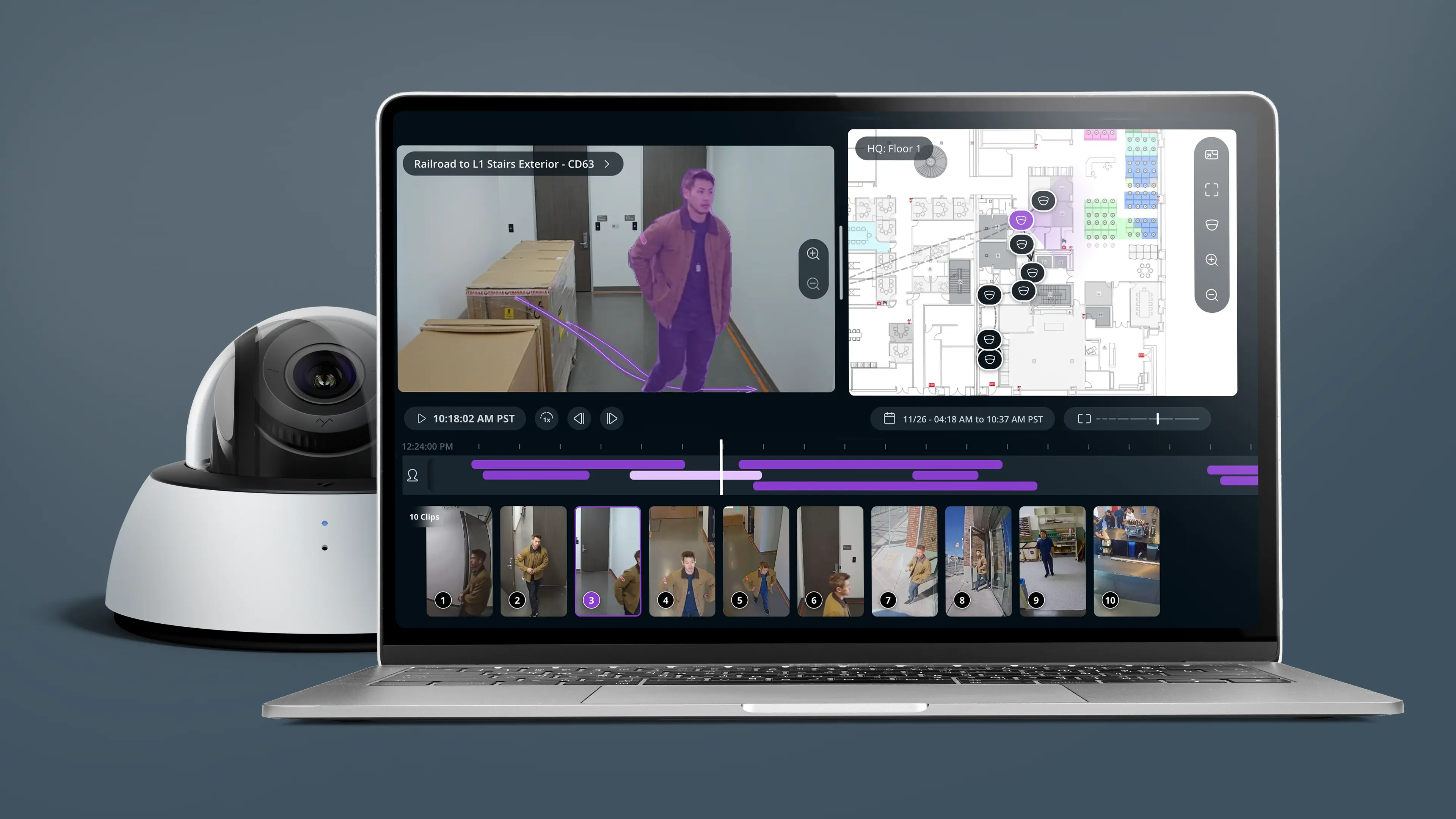
Verkada announced July 1, 2026 that it has taken an undisclosed equity investment from NVIDIA and signed a technical partnership to accelerate its physical AI platform, which runs across 2.4 million connected security devices at 30,000 organizations. Verkada is applying NVIDIA's Cosmos world foundation models and Physical AI Data Factory synthetic-data toolkit to its video-search models, and both companies report a 68% improvement in mean average precision for spatial-temporal search since the collaboration began, per SiliconANGLE and PR Newswire. The deal follows Verkada's late-2025 funding round at a $5.8 billion valuation led by CapitalG, and reflects NVIDIA's broader push to embed its model stack in physical-security and robotics customers.
For engineers and architects building operational AI, this deal is a concrete data point on two practitioner trends: vendor-supplied foundation models accelerating cloud-to-edge inference, and synthetic-data pipelines closing real-world data gaps for rare events. Both carry validation obligations that the headline accuracy number does not capture.
What happened
Physical-security vendor Verkada and NVIDIA announced a technical collaboration and an undisclosed NVIDIA equity investment on July 1, according to a PR Newswire release and independent reporting by SiliconANGLE. Verkada's platform, which spans 2.4 million connected devices (cameras, access control, alarms, sensors, and intercoms) at 30,000 organizations in 170 countries, is adopting NVIDIA's Cosmos family of world foundation models and its Physical AI Data Factory toolkit, which generates synthetic footage to fill gaps in training data. Verkada is applying both to the models behind video search, the task of finding a specific person, object, or moment across large volumes of recorded footage. SiliconANGLE reports that Verkada has improved mean average precision (mAP) for spatial-temporal search queries by 68% since the work began. In the announcement, Verkada co-founder and CEO Filip Kaliszan said: "Verkada has been building and deploying physical AI before the term existed. Working with Nvidia supercharges what we've spent nearly a decade building: AI that keeps students safe in schools, protects workers on factory floors, helps retailers prevent theft and enables organizations to operate more efficiently." The investment size was not disclosed; it follows Verkada's late-2025 funding round at a $5.8 billion valuation led by CapitalG, Alphabet's growth-investing arm, and comes as the company has surpassed $1 billion in annualized bookings.
Industry context
NVIDIA has spent roughly two years courting robotics, autonomous-vehicle, and factory-floor customers with the Cosmos model family and developer tooling, backing a run of startups building on its stack. Verkada, sitting on years of proprietary camera data, is a natural fit for that strategy, and the deal fits a broader pattern of vendors bundling pre-trained foundation models, synthetic-data pipelines, and inference-optimized runtimes to address two persistent constraints in deployed video AI: scarce labeled edge-case footage and real-time compute limits.
For practitioners
Three implications follow for teams running comparable systems. First, synthetic-data pipelines can meaningfully improve recall for rare spatial-temporal queries, but they require holdout sets of real-world data and continuous evaluation to catch domain shift. Second, integrating large foundation models for multimodal embeddings increases vector-database and retrieval workload, so operators should plan for indexing and approximate-nearest-neighbor latency and cost trade-offs. Third, deploying across 2.4 million devices raises on-device-versus-cloud inference partitioning, model-update orchestration, and secure-telemetry questions familiar to anyone managing a large distributed vision fleet. The 68% mAP figure is also worth treating as benchmark-limited: gains of this kind vary by dataset, query type, and augmentation methodology, and neither company has published a reproducible benchmark.
What to watch
Watch for whether NVIDIA publishes technical case studies or reproducible benchmarks for Cosmos in physical-AI workloads, how Verkada validates synthetic-data gains against held-out live footage, and whether customers or regulators raise privacy or retention questions as reasoning models are applied to sensitive environments like schools and factories -- a live concern given that Verkada's own camera feeds were breached by hackers in 2021.
Key Points
- 1Verkada and NVIDIA announced a technical partnership and undisclosed NVIDIA equity investment to accelerate Verkada's physical AI platform.
- 2Verkada is using NVIDIA's Cosmos foundation models and synthetic-data tooling, reporting a 68% mAP gain in spatial-temporal video search.
- 3Vendor-bundled foundation models plus synthetic data speed video-search accuracy but require rigorous real-world validation before teams trust the gains.
Scoring Rationale
A verified vendor partnership (confirmed via PR Newswire and independent SiliconANGLE reporting) pairing a major GPU/foundation-model vendor with a large installed base of physical-security cameras, offering practical, if benchmark-limited, lessons for edge AI deployment. Notable for infrastructure and ops teams, not a frontier-model milestone.
Sources
Public references used for this report.
View 6 more sources
- EXCLUSIVE: Inside Verkada's AI Push To Reinvent Physical Securityfinance.yahoo.com
- Verkada Inc. And NVIDIA Corporation Accelerate Physical AI Platformmarketscreener.com
- Verkada Accelerates Physical AI with NVIDIA - AiThorityaithority.com
- Verkada Accelerates Physical AI with NVIDIA - AOL.comaol.com
- Verkada Working With New Investor Nvidia to Expand its Physical AI Security Platformtheaiinsider.tech
- Verkada Partners with NVIDIA to Advance Physical AI Platformdailyaibrief.com
Practice with real Ad Tech data
90 SQL & Python problems · 15 industry datasets
250 free problems · No credit card
See all Ad Tech problems