Vercel CEO Calls Single-Lab Partnerships Obsolete
Vercel CEO Guillermo Rauch told TechCrunch on July 6, 2026 that AI customers are moving away from one-lab partnerships toward plug-and-play stacks across OpenAI, Anthropic, Gemini, DeepSeek, and GLM-5.2. The practical takeaway is that production AI teams now need model routing, cost monitoring, evals, and secure gateway controls, not just a favored model contract. TechCrunch reported that Vercel sees 6 million deployments a day, about half triggered by coding agents, and more than 1 trillion tokens flowing through its AI gateway daily; Business Insider separately summarized Rauch's comments as a shift from 2025 prototyping to 2026 production-agent constraints.
The useful signal is not that one model vendor is winning or losing. It is that production AI work is becoming an infrastructure discipline: teams need to route tasks across models, enforce data controls, observe cost and latency, and keep agents inside auditable operating boundaries.
What happened
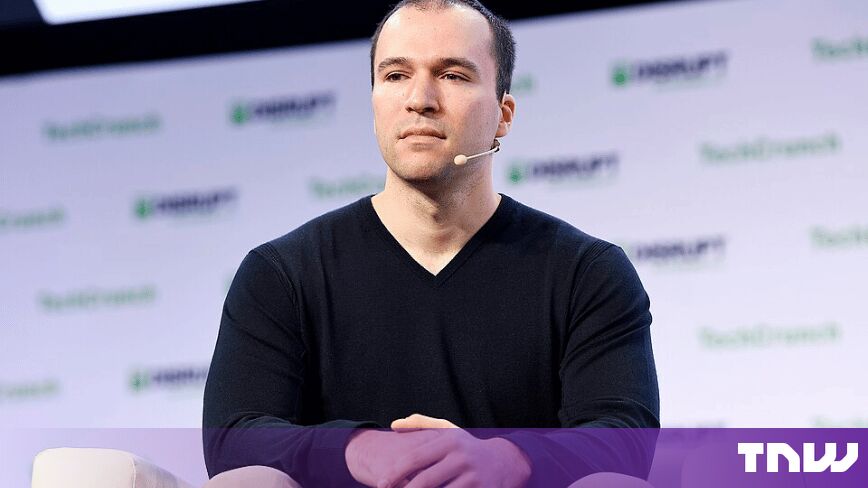
TechCrunch published a July 6 interview with Vercel CEO Guillermo Rauch after ShipNYC. Rauch said companies have moved past choosing one lab partner and now treat the AI stack as separable pieces: model, harness, data platform, sandbox, and gateway. Business Insider then summarized the same comments, emphasizing Rauch's view that teams can mix OpenAI, Anthropic, Gemini, DeepSeek, and GLM-5.2 depending on workload and price-performance needs.
Technical context
The TechCrunch interview gives the stronger source base because it contains the original remarks and concrete platform context. TechCrunch reported that Vercel sees 6 million deployments a day, about half triggered by coding agents, and more than 1 trillion tokens flowing through its AI gateway daily. Those figures make the model-routing argument operational rather than abstract: at that scale, provider choice affects budget controls, fallback behavior, audit trails, and deployment reliability.
For practitioners
The practical implication is to evaluate model providers as interchangeable components inside a governed system. Teams shipping agents should track cost per successful task, latency by workload, provider failure modes, prompt and tool-call auditability, and whether sensitive data can stay inside approved sandboxes. A single preferred lab may still be appropriate for some workloads, but the architecture should not make provider switching or task-specific routing expensive.
What to watch
Watch whether developer platforms turn multi-model routing, gateway observability, and sandbox policy into default features rather than custom glue code. Also watch whether benchmarks shift from raw model capability toward cost-adjusted throughput, reliability under production constraints, and task-level evaluation results.
Key Points
- 1Vercel frames production AI as a routing problem, where teams mix models, gateways, sandboxes, and data controls.
- 2TechCrunch's interview makes the Vercel angle more concrete than the Business Insider summary because it names deployment and token scale.
- 3Practitioners should evaluate model choices with latency, observability, policy enforcement, and cost-per-task metrics rather than lab loyalty.
Scoring Rationale
The event is notable for practitioners because it captures a production AI architecture shift toward model routing, gateways, and sandbox controls from a major developer-platform CEO. It is not a standalone product launch or research breakthrough, so the score stays in the notable-but-not-major range.
Sources
Public references used for this report.
Practice interview problems based on real data
1,625 SQL & Python problems across 15 industry datasets — the exact type of data you work with.
Try 250 free problems